
For children with cerebral palsy (CP), orthopaedic surgery is often recommended to improve mobility, correct bone or joint deformities, and ease muscle stiffness. While the surgery itself is a significant step, what parents worry about most is the recovery process—how long it will take, what to expect, and how they can support their child.
Understanding the journey ahead helps parents feel more prepared and confident in guiding their child through rehabilitation, explains Dr Karthik Gudaru, who is a leading paediatric orthopaedic surgeon and one of the best doctors for Cerebral palsy treatment in Hyderabad and India.
What is Cerebral Palsy in Kids?
Cerebral palsy is a neurological condition that affects movement, posture, and muscle coordination. It occurs due to brain injury or abnormal brain development, usually before or during birth. Children with CP may experience stiff muscles, limited range of motion, difficulty walking, or skeletal deformities as they grow. Orthopaedic surgery becomes necessary in some cases to correct muscle tightness, bone misalignment, or hip and joint problems so that children can move more comfortably and independently.
What are the Different Types of Cerebral Palsy?
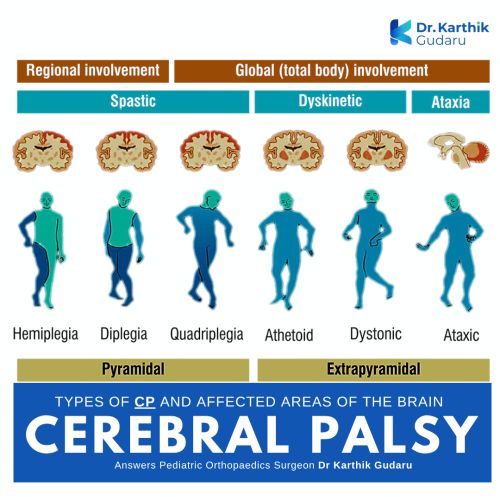
Cerebral palsy is not a single disorder but a group of conditions, classified based on how movement and posture are affected:
- Spastic Cerebral Palsy: The most common type, where muscles are stiff and tight, making movement difficult.
- Dyskinetic Cerebral Palsy: Involves involuntary or uncontrolled movements.
- Ataxic Cerebral Palsy: Affects balance and coordination, leading to shaky or unsteady movements.
- Mixed Type: A combination of two or more movement patterns, often including stiffness and involuntary motion.
Knowing the type helps doctors and parents plan the most effective treatment and therapy strategies.
When to Diagnose Cerebral Palsy?
Cerebral palsy is usually diagnosed within the first 1–2 years of life. Early signs include delayed milestones like sitting, crawling, or walking, stiffness or floppiness in the limbs, or difficulty with coordination. Early diagnosis enables doctors to initiate physiotherapy and medical intervention sooner, thereby helping to prevent severe deformities and improving long-term outcomes.
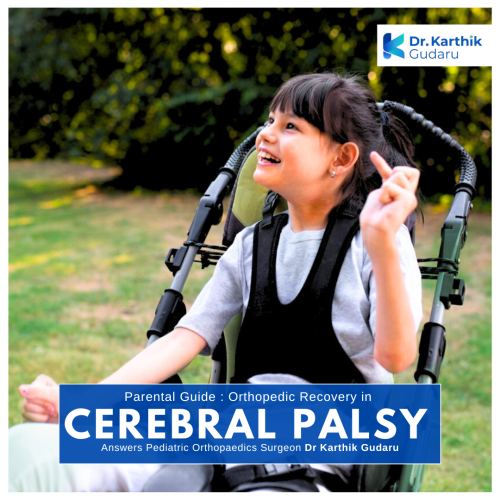
Deformities and Gait Abnormalities in Cerebral Palsy
As children with CP grow, muscle imbalances and tightness can lead to orthopaedic deformities. Common issues include:
- Hip subluxation or dislocation
- Knee contractures
- Foot deformities such as tip-toe walking or flat feet
- Spinal curvature (scoliosis)
- Tight muscles causing elbow flexion (unable to straighten the arm)
- Wrist pronation (unable to move the wrist freely)
- Mental retardation affecting coordination and motor control
Gait abnormalities like scissoring gait, crouched gait, and toe-walking are also frequent. These patterns affect balance, posture, and the child’s ability to walk efficiently. Orthopedic assessment helps identify the right time for corrective surgery to improve mobility and function. Early signs of cerebral palsy may include delayed neck holding, delay in social smile, and delays in sitting, standing, or walking milestones. Recognizing these early helps initiate timely therapy and interventions to support better motor development.
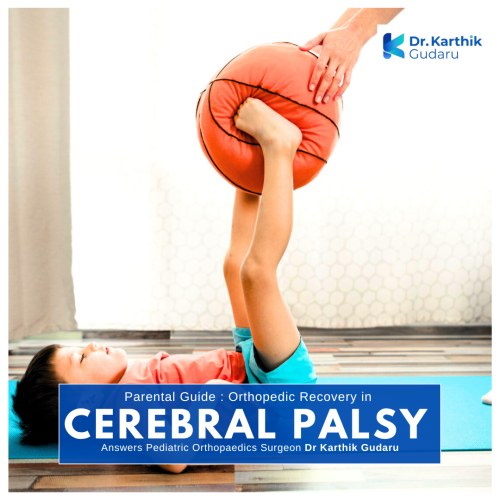
Rehabilitative Care – The Most Important Phase
Rehabilitation is the cornerstone of recovery after orthopedic surgery in cerebral palsy. It includes:
- Physiotherapy: Helps regain strength, coordination, and mobility.
- Occupational therapy: Encourages independence in daily activities.
- Assistive devices: Braces, walkers, or orthotics support correct posture and movement.
- Emotional support: Encouraging motivation and celebrating small milestones keeps the child positive.
Active participation from parents and therapists ensures the best possible recovery outcome.
Orthopaedic Surgeries in Cerebral Palsy
The type of surgery depends on the child’s condition, deformities, and mobility goals. Common procedures include:
- Tendon lengthening: To relieve muscle tightness and improve joint movement.
- Tendon transfer: To redirect muscle pull and correct imbalances.
- Soft tissue releases: To reduce spasticity and increase flexibility.
- Bone surgeries (osteotomies): To realign bones or correct deformities.
These surgeries aim to make walking, sitting, or standing easier and reduce the strain on joints and muscles.
How Long Does Recovery Take After Orthopaedic Surgery in Cerebral Palsy?
The recovery timeline after orthopaedic surgery in cerebral palsy depends on the type of surgery performed, the child’s overall health, and the severity of their condition. Generally:
Initial Recovery (2–6 weeks): Children may need casts, braces, or mobility aids. Pain and swelling are common but improve with medication and care.
Rehabilitation Phase (2–6 months): Physiotherapy becomes the most critical part of recovery. Exercises help rebuild strength, improve flexibility, and train the child to use their joints or muscles effectively.
Long-Term Recovery (6–12 months and beyond): Full recovery and noticeable improvements in mobility may take up to a year or more. Some children adapt quickly, while others may require ongoing therapy and support to maintain results.
Parents should remember that recovery isn’t just about physical healing—it’s also about emotional resilience. Encouragement, small celebrations of progress, and consistent therapy make a huge difference in the outcome.
Orthopaedic surgery in cerebral palsy can greatly enhance a child’s quality of life, but recovery is a gradual process that requires patience, therapy, and strong parental support. While timelines vary, most children show significant improvement within months, with full recovery taking longer. By staying informed, proactive, and supportive, parents can ensure their child gets the best chance at a more independent and fulfilling life.

Dr Karthik Gudaru, MS Orthopaedics, MBBS, Fellowship in Knee and Hip Arthroplasty (USA), Fellowship in Computer-Assisted Navigation Joint Replacement Surgery (Germany), is one of Hyderabad’s leading orthopaedic surgeons with an outstanding reputation for precision, innovation, and excellence in joint replacement and orthopaedic care. Widely recognised as the best knee replacement specialist in Hyderabad, he brings a deep commitment to patient-centred care and cutting-edge surgical techniques.
Dr Karthik Gudaru is currently the Senior Orthopaedic and Joint Replacement Specialist, Department of Orthopaedics at GreenMed Hospital, Srinagar Colony, Hyderabad and Assistant Professor and Consultant Orthopaedic at BIRRD Hospital (Balaji Institute of Surgery, Research and Rehabilitation for the Disabled), Tirupati.
Dr Karthik Gudaru’s Treatment Specialisation are –
Knee Joint Treatments (Including Total Knee Replacement Surgery)
Shoulder Joint Treatments (Including Total Shoulder Replacement Surgery)
Hip Joint Treatments (Including Total Hip Replacement Surgery)
Elbow Joint Treatments (Including Total Elbow Arthroscopy)
Computer-Assisted Knee Replacement Surgery
Stem Cell Therapy for key orthopaedic treatments