


 Telangana and India's Top Elbow Joint Replacement Surgeon, Specialist
Dr. Karthik Gudaru is one of Telangana’s top orthopedic surgeons for Elbow joint surgeries. Having years of experience of doing complicated elbow joint surgeries, he has earned a huge name in the medical fraternity in Hyderabad and Telangana.
Dr. Karthik Gudaru is the top elbow joint surgeon in Hyderabad, Telangana for various types of Elbow joint surgeries that includes Total Elbow Joint Replacement, Elbow Joint Replacement and Elbow Arthroscopy.
Read More Read More
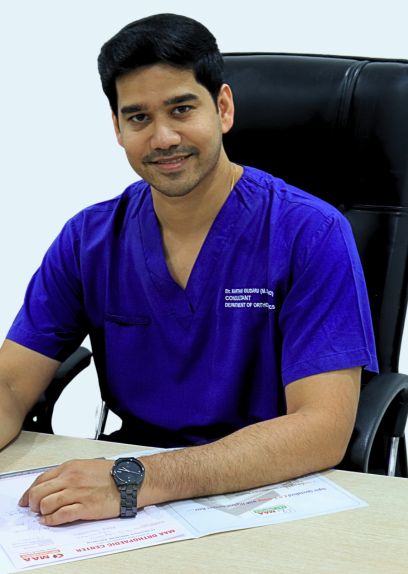
Recognized across South India as an authority in complex joint reconstruction, minimally invasive sports arthroscopy, and upper-extremity trauma, Dr Karthik Gudaru brings international fellowship training and high-volume surgical precision to the management of complex elbow pathologies across Telangana and Andhra Pradesh.
With an elite surgical portfolio encompassing more than 12,000 completed orthopedic procedures, his clinical foundations were developed at leading joint and trauma centers worldwide. He completed advanced subspecialty fellowships in Adult Joint Arthroplasty at Dartmouth Hospital (USA), Computer-Assisted Navigation & Robotic Joint Replacement at Asklepios Hospital (Germany), and AO Complex Trauma & Emergency Care at Guro National Hospital (South Korea).
Today, as Senior Consultant and Specialist in the Department of Orthopedics at GreenMed Hospital (Banjara Hills / Srinagar Colony, Hyderabad), and visiting specialist across regional centers of clinical excellence including Aster Ramesh Hospital (Vijayawada) and Sri Maruthi Hospitals & BIRRD Hospital (Tirupati), Dr Gudaru delivers personalized, protocol-driven elbow care. Utilizing triceps-sparing and paratricipital surgical approaches, high-definition 4K arthroscopic triangulation, prophylactic ulnar nerve neurolysis, and modern linked semi-constrained prostheses, his practice restores painless stability, protects delicate neurovascular bundles, and re-establishes a functional arc of motion.
| Quick Summary for Patients | |
|---|---|
| Surgeon | Dr Karthik Gudaru — MBBS, MS (Orthopaedics), Fellowships in Joint Arthroplasty, Navigation & Complex Trauma (USA, Germany, South Korea). |
| Education & Credentials |
• MBBS:
Kasturba Medical College, Manipal University, Karnataka (Registration No: TSMC/FMR/16001)
• MS (Orthopaedics):
Sri Ramachandra Medical College & Research Institute, Chennai (Registration No: 119525)
• USA Fellowship:
Knee & Hip Arthroplasty / Joint Reconstruction, Dartmouth Hospital, USA (2018)
• Germany Fellowship:
Computer-Assisted Navigation & Joint Arthroplasty, Asklepios Hospital, Germany (2018)
• South Korea Fellowships:
AO Trauma & Emergency Care, Guro National Hospital (2019–2020); Spinal Surgery Observer, Yonsei University (2015)
|
| Appointments |
• Senior Consultant:
Orthopedic & Joint Reconstruction Specialist, GreenMed Hospital, Srinagar Colony / Banjara Hills, Hyderabad.
• Assistant Professor & Consultant:
BIRRD Hospital (Balaji Institute of Surgery, Research and Rehabilitation for the Disabled), Tirupati.
• Visiting Specialist:
Aster Ramesh Hospital (Vijayawada) & Sri Maruthi Hospitals (Tirupati).
|
| Awards & Honors | Recipient of the prestigious "Vaidya Rathna" Award (2023) for excellence in orthopedic care, reconstructive joint surgery, and limb preservation. |
| Core Care Philosophy | Triceps-Preserving Intervals, Complete Intra-Articular 4K Visualization, Micro-Millimeter Linked Bushing Balancing, Routine Ulnar Nerve Protection & Transposition, Targeted Ultrasound-Guided Brachial Plexus Blocks, and Early Controlled Arc Mobilization. |
| Procedures Offered | Total Elbow Replacement (TER / TEA) Primary Elbow Joint Replacement Elbow Arthroscopy Contracture Release Loose Body Removal OCD Debridement Complex Fractures Around Elbow Radial Head Replacement Ligamentous Reconstruction "Terrible Triad" Stabilization Revision Elbow Arthroplasty |
| Consultation Centers |
• Hyderabad:
GreenMed Hospital, 8-3-833/71, Srinagar Colony Main Rd, Kamalapuri Colony, Banjara Hills, Hyderabad, Telangana 500073.
• Vijayawada:
Aster Ramesh Hospital OPD, Orthopedic Department, MG Rd, Labbipet, Vijayawada, Andhra Pradesh 520010.
• Tirupati:
Sri Maruthi Hospitals OPD, 19-3-30/C1, Near RTC Bus Stand, Kennedy Nagar, Tirupati, Andhra Pradesh 517501.
|
| Direct Helpline |
Direct Surgical Coordination Desk & WhatsApp:
+91 62814 22297
|
Elbow surgery is indicated when structural articular cartilage destruction, severe contracture, ligamentous instability, or non-reconstructible comminuted fractures restrict upper-limb function and cease to respond to targeted non-operative treatments (splinting, active-assisted physiotherapy, and ultrasound-guided therapeutic injections). Orthopedic intervention follows a definitive clinical ladder:
Keyhole excision of mechanical impingements, removal of intra-articular loose bodies, debridement of osteochondritis dissecans (OCD) lesions, and circumferential capsular releases to restore lost motion before severe degeneration occurs.
Anatomical realignment and parallel or orthogonal dual-plate osteosynthesis of broken distal humerus, olecranon, radial head, or coronoid structures to enable stable, immediate postoperative range of motion.
Metallic modular replacement of non-reconstructible, comminuted radial head fractures to restore crucial lateral column stability and stop proximal radius migration.
Replacing destroyed articular surfaces of the distal humerus and proximal ulna with a linked, semi-constrained prosthesis when advanced inflammatory arthritis, post-traumatic cartilage collapse, or comminuted fractures in elderly bone cannot be salvaged.
Specialized reconstruction using modular titanium stems, polyethylene bushing exchanges, and impaction structural bone-grafting to treat failed past implants, aseptic loosening, or severe osteolysis.
Total Elbow Arthroplasty is an advanced joint resurfacing procedure indicated for end-stage rheumatoid arthritis, severe primary osteoarthritis, extensive post-traumatic articular collapse, or comminuted intra-articular distal humerus fractures (AO/OTA Type 13C3) in elderly patients where stable bone reconstruction is impossible.
The joint is accessed through a posterior midline approach. Dr Gudaru prioritizes triceps-sparing (Bryan-Morrey or Paratricipital) approaches that avoid detaching the triceps tendon, preserving native elbow extension strength. The ulnar nerve is dissected, neurolysed, and anteriorly transposed to prevent postoperative stretch neuropathy or impingement.
Modern elbow reconstruction relies primarily on Linked, Semi-Constrained Prostheses (such as the Coonrad-Morrey system). Rather than a rigid hinge, the humeral and ulnar stems are joined by a modular hinge pin cushioned by high-density ultra-high-molecular-weight polyethylene (UHMWPE) bushings. This allows 7° to 10° of internal-external rotational play (varus-valgus laxity), dispersing destructive torsional forces directly into soft tissues rather than the bone-cement interface.
The humeral component features an anterior cortical flange. Autologous structural bone graft harvested during bone cuts is wedged between this flange and the anterior humerus cortex, resisting posterior rotational stresses and extending implant survival beyond 15 to 20 years.
Immediately relieves deep, arthritic bone pain, corrects angular deformity, and re-establishes a dependable, functional arc of flexion and extension (typically 30° to 130°).
Elbow Arthroscopy is a specialized, minimally invasive procedure performed through small 4- to 5-millimeter puncture portals under high-definition 4K optical visualization. Because major neurovascular structures—the radial, median, and ulnar nerves, along with the brachial artery—lie just millimeters from the joint capsule, this procedure demands surgical precision and deep anatomical experience.
Post-traumatic scarring or prolonged immobilization often produces severe capsule thickening, locking the joint. Through precise anteromedial, anterolateral, and posterior portals, Dr Gudaru divides the contracted anterior and posterior joint capsules, excises hypertrophic scar tissue, and shaves away impinging bone spurs in the olecranon and coronoid fossae, restoring lost extension and flexion on the operating table.
Bone fragments or chipped cartilage floating in the joint space can cause acute mechanical locking, clicking, and progressive cartilage degradation. These fragments are triangulated, mobilized, and removed through keyhole portals without disrupting stabilizing collateral ligaments.
Common in young gymnasts, throwers, and active athletes, localized vascular compromise can cause cartilage death over the capitellum. Arthroscopic removal of loose cartilage flaps, followed by microfracture or retrograde drilling, stimulates fibrocartilage healing and preserves the natural radiohumeral joint.
For chronic extensor tendon degeneration that fails conservative therapy, the degenerate under-surface of the extensor carpi radialis brevis (ECRB) origin is decompressed and released arthroscopically, leaving the overlying healthy extensor aponeurosis intact.
Fractures around the elbow—involving the distal humerus, olecranon, radial head, and coronoid process—are high-energy trauma injuries that cause rapid, permanent stiffness if not anatomically reduced and stably fixed. Dr Gudaru applies AO-Trauma principles across core fracture patterns:
Reconstructed through a paratricipital or olecranon osteotomy approach using pre-contoured anatomical titanium locking plates configured in parallel or orthogonal 90-90 alignments. Locking compression screws restore the medial and lateral columns, allowing immediate postoperative passive and active motion without external casts.
Simple transverse fractures are stabilized with tension band wiring (TBW) to convert triceps pull into compression forces at the fracture line. Comminuted fractures are realigned and fixed with contoured anatomical olecranon locking plates.
Reconstructible Fractures: Stabilized using countersunk low-profile headless cannulated micro-screws, preserving native joint biology.
Comminuted / Unreconstructible Fractures: When fractured into multiple small fragments, fixing the radial head often leads to avascular necrosis or non-union. The shattered fragments are excised and replaced with a modular metallic Radial Head Hemiarthroplasty. This restores the primary mechanical block against valgus stress and prevents proximal radial migration (Essex-Lopresti injury).
A complex, high-energy injury pattern combining a posterior elbow dislocation, a radial head fracture, and a coronoid process fracture with complete lateral collateral ligament (LCL) disruption. Dr Gudaru performs definitive single-stage reconstruction: repairing or replacing the radial head, fixing the coronoid fragment with suture anchors or pull-out sutures, and re-anchoring the LCL back to the lateral epicondyle using biocomposite anchors to re-establish joint stability.
When previous elbow replacements loosen, develop mechanical instability, or suffer periprosthetic infection, specialized reconstructive techniques are required.
Over 10 to 15 years, polyethylene bushings can wear down, leading to metallosis or component toggle. Dr Gudaru performs modular hinge pin and bushing exchanges before component loosening damages the bone.
Loose humeral or ulnar stems are extracted using specialized ultrasonic tools to safeguard the fragile cortical bone tube. Long-stem revision implants are placed using strut allografts, impaction cancellous bone grafting, and cerclage cable fixation to reconstruct missing structural bone.
For chronic, unstable elbows that give way or click, autologous tendon grafts (such as the palmaris longus or gracilis) are woven through bone tunnels to reconstruct the lateral ulnar collateral ligament (LUCL) or medial collateral ligament (MCL).
| Surgery Type | Primary Clinical Indication | Core Surgical Technique | Hardware / Implants Utilized | In-Hospital Stay | Expected Functional Recovery |
|---|---|---|---|---|---|
| Total Elbow Replacement (TEA / TER) | End-stage rheumatoid arthritis, severe post-traumatic arthritis, elderly comminuted distal humerus fractures | Triceps-sparing/paratricipital linked semi-constrained reconstruction | Cobalt-chrome/titanium linked stems, UHMWPE bushings, PMMA cement | 2 to 3 Days | Early active arc mobilization at 48 hrs; daily independence in 4–6 weeks |
| Elbow Arthroscopy (Preservation & Release) | Chronic joint stiffness/contracture, loose bodies, capitellar OCD, recalcitrant tennis elbow | 4K keyhole capsular release, loose fragment excision & microfracture | High-strength bio-absorbable/PEEK suture anchors, micro-curettes | Day Care / 24 Hours | Immediate continuous passive motion; functional routine in 2–3 weeks |
| Fractures Around Elbow (ORIF) | Displaced distal humerus bicolumnar, olecranon, or coronoid fractures | Anatomical open reduction and rigid dual-column locking fixation | Anatomical titanium locking plates, headless compression screws | 2 to 3 Days | Protected active motion in 7–10 days; solid bony union in 8–12 weeks |
| Radial Head Replacement | Unreconstructible, comminuted Mason Type III/IV fractures, Terrible Triad | Excision of shattered radial head and modular press-fit stem placement | Modular cobalt-chromium / titanium bipolar or monopolar radial head | 1 to 2 Days | Guided pronation/supination within 48 hrs; full routine in 6–8 weeks |
| Complex Revision Elbow Replacement | Failed past implant, bushing wear, aseptic loosening, periprosthetic fracture | Old component extraction, bone bed reconstruction, modular stem revision | Long-stem linked revision prostheses, cortical strut grafts, cerclage cables | 3 to 5 Days | Gradual progressive rehabilitation; functional stabilization in 8–12 weeks |
| Diagnostic Stage & Pathology | Patient Age & Lifestyle | Extent of Articular Damage | Bone Quality & Stability | Recommended Procedure | Primary Clinical Benefit |
|---|---|---|---|---|---|
| Post-Traumatic Elbow Stiffness (Loss of Extension >30°) | Young / active; age 18–50; desk workers, manual laborers | Preserved articular cartilage; thickened, fibrotic joint capsule | Intact bony architecture; impingement by spurs | Arthroscopic Capsular Release & Debridement | Restores functional arc of motion without open surgical disruption |
| Capitellar Osteochondritis Dissecans (OCD) | Adolescents, athletes, gymnasts (age 12–25) | Localized cartilage flap / unstable subchondral bone defect | Stable ulnohumeral joint; healthy radial head | Arthroscopic Debridement & Microfracture / Fixation | Restores smooth articular glide; prevents secondary osteoarthritis |
| Comminuted Radial Head Fracture (Mason III/IV) | Any age; fall on outstretched hand; associated ligament laxity | Multi-fragmented head; non-screwable bone chunks | Concomitant LCL tear or coronoid tip fracture | Modular Metallic Radial Head Replacement | Restores lateral column length; prevents valgus joint collapse |
| The "Terrible Triad" (Dislocation + Radial Head + Coronoid) | Active adults; high-energy road accident or sports trauma | Unstable three-point disruption of elbow stabilisers | Severe acute dislocation with joint subluxation | Comprehensive Single-Stage Trauma Reconstruction | Re-establishes concentric stability; permits immediate motion |
| End-Stage Rheumatoid Arthritis (Mayo Grade III/IV) | Age 55+; severe pain, joint destruction, bone loss | Complete loss of joint space; eroded trochlea and notch | Osteoporotic bone; intact or attenuated triceps | Semi-Constrained Total Elbow Replacement (TEA) | Eliminates arthritic pain; dependable 30°–130° functional arc |
| Comminuted Distal Humerus Fracture in Elderly (13C3) | Age 65+; low-demand; osteoporotic ground-level fall | Severely comminuted articular block; poor screw hold | Fragile osteoporotic bone with high non-union risk | Primary Total Elbow Arthroplasty for Trauma | Avoids non-union and prolonged casting; immediate arm use |
| Surgical Parameter | Conventional Open Elbow Surgery | Modern 4K Elbow Arthroscopy | Linked Semi-Constrained Elbow Arthroplasty |
|---|---|---|---|
| Surgical Incision | Large 12–18 cm posterior longitudinal cut | 3 to 4 tiny 5 mm keyhole portals | Optimized 10–12 cm posterior tissue-preserving incision |
| Triceps Muscle Handling | Complete detachment or triceps-splitting often required | Zero triceps detachment; portals pass around soft tissues | Triceps-sparing (Bryan-Morrey or paratricipital) pathways |
| Nerve Protection Protocol | Visual inspection without mobilization | Controlled portal placement outside defined nerve danger zones | Routine prophylactic ulnar neurolysis and anterior transposition |
| Intra-Articular Visualization | Limited to operative retraction field | Complete 360° panoramic 4K visualization of all 3 joints | Wide exposure of humeroulnar joint with bone graft integration |
| Postoperative Pain | Higher due to extensive muscle stripping | Minimal; targeted portals with local infiltration | Controlled via targeted continuous infraclavicular blocks |
| Postoperative Immobilization | 3 to 4 weeks in rigid cast (high stiffness risk) | Protected active motion initiated within 12–24 hours | Gentle active-assisted movement started within 24–48 hours |
| Long-Term Joint Stability | Dependent on natural ligament scarring | Preserves 100% of native stabilizing collateral ligaments | Built-in semi-constrained laxity (7°–10°) absorbs torsional strain |
Choosing an orthopedic surgeon with dedicated upper-limb reconstructive experience is the single most critical factor determining whether an injured or arthritic elbow regains fluid movement or locks into permanent stiffness. Patients across Telangana, Andhra Pradesh, and broader South India consult Dr Karthik Gudaru for seven distinct clinical advantages:
Surgical volume directly correlates with lower complication rates, fewer infections, and improved prosthetic longevity. Having completed more than 12,000 orthopedic procedures, Dr Gudaru brings seasoned surgical judgment to complex upper-extremity reconstructions, severe joint contractures, and revision cases.
Elbow reconstruction operates within tight margins where neurovascular structures run close to bony landmarks. Dr Gudaru's subspecialty training at Dartmouth Hospital (USA) and Asklepios Hospital (Germany) provides him with advanced skills in joint kinematics, while his training at Guro National Hospital (South Korea) gives him deep expertise in fixing complex distal humerus and elbow fractures.
Traditional elbow approaches split or detach the major triceps tendon from the olecranon, often causing long-term extensor weakness or rupture. Dr Gudaru utilizes advanced triceps-sparing and paratricipital surgical techniques that access the joint from the medial and lateral margins without detaching the muscle. This preserves full native extension power and enables safe, immediate active movement.
The ulnar nerve passes directly behind the medial epicondyle through the tight cubital tunnel. During elbow replacement, trauma reconstruction, or contracture release, postoperative swelling can trigger compression neuropathy, leading to hand numbness or clawing. Dr Gudaru routinely identifies, neurolyses, and carefully moves the ulnar nerve anteriorly into a protective subcutaneous bed, preventing nerve injury.
For patients suffering from stiff elbows following prior injuries, open surgery can create new scar tissue that causes stiffness to return. Dr Gudaru utilizes high-definition 4K arthroscopic capsular release techniques to divide contracted tissues and remove impinging bone spurs through tiny keyhole punctures, maximizing motion while minimizing new scar formation.
Serving as an Assistant Professor at BIRRD Hospital (Tirupati), Dr Gudaru routinely treats severe post-traumatic malunions, chronic joint dislocations, and complex bone deformities. His background with adult and pediatric reconstructive cases gives him exceptional technical skill when treating comminuted "Terrible Triad" injuries, non-unions, and multi-fragmented fractures.
Working closely with dedicated upper-extremity anesthesiologists, Dr Gudaru utilizes ultrasound-guided supraclavicular or infraclavicular brachial plexus nerve blocks alongside multimodal pain protocols. This eliminates severe surgical pain while keeping the patient comfortable, allowing over 90% of elbow surgery patients to begin gentle, active motion within 24 to 48 hours.
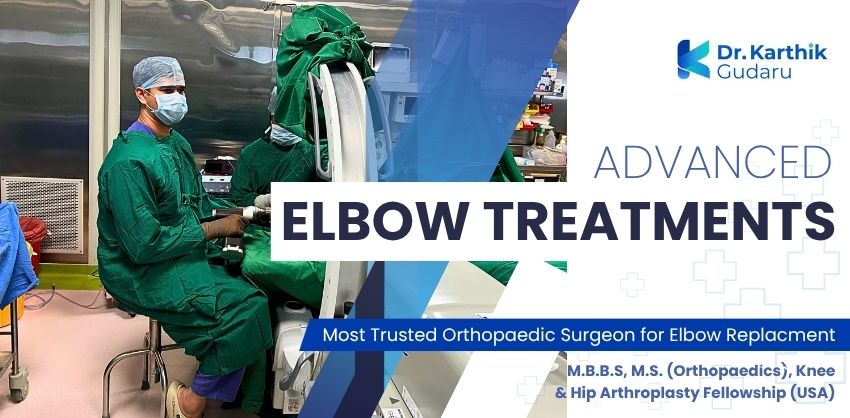
Dr Karthik Gudaru incorporates a standardized Enhanced Recovery After Surgery (ERAS) pathway to prevent joint stiffness and accelerate functional rehabilitation:
Pre-emptive ultrasound-guided regional nerve blocks provide targeted pain relief to the arm. The elbow is placed in an ergonomic resting splint in comfortable extension. Active hand, wrist, and finger movements are started immediately to reduce swelling and maintain distal circulation.
The rigid splint is stepped down to an active-motion sling. Under the supervision of dedicated upper-limb physical therapists, guided gentle passive and active-assisted flexion and extension within a safe arc (typically 30° to 100°) begin. Patients transition to oral pain tablets and are discharged home within 24 to 48 hours.
Home physiotherapy focuses on achieving progressive terminal extension and flexion without forceful manipulation. Cryotherapy wraps control local swelling. Forearm pronation and supination exercises are performed with the elbow tucked safely at the side.
Patients discontinue the sling and progress to unassisted active range-of-motion exercises. Light isometric muscle activation begins for the biceps, triceps, and forearm muscles. Patients safely resume typing, light desk work, driving, and independent personal care.
Progressive strengthening is phased in. For Total Elbow Replacement patients, lifelong joint protection protocols (avoiding repetitive single-arm lifting exceeding 5 to 10 lbs) are reinforced to maximize prosthetic longevity. Trauma and arthroscopy patients continue progressive conditioning to return to unrestricted active daily routines.
Hip Joint 
Dr. Karthik Gudaru is a renowned for his expertise in complex joint replacements, including the elbow—a procedure that requires a deep understanding of joint alignment, nerve protection, and functional restoration......
Choosing the right surgeon is crucial for the success of total elbow replacement surgery. Dr. Karthik Gudaru – Head of the Orthopedics Department at GreenMed Hospital, Srinagar Colony, Hyderabad is widely recognized......
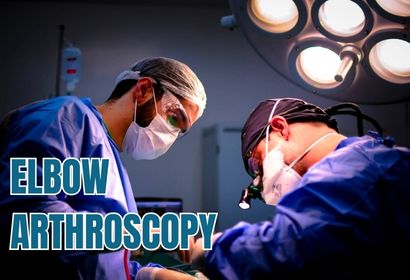
Dr Karthik Gudaru, widely recognized as one of the best orthopedic surgeons for elbow care, recommends arthroscopy when non-surgical treatments such as physiotherapy, medications, or injections fail to relieve symptoms.......
AboutBeing India’s best Elbow joint surgeon, specialist in Hyderabad, he ensures all his patients gets the confidence that helps them both before and after surgery.


Plus Successful Surgeries

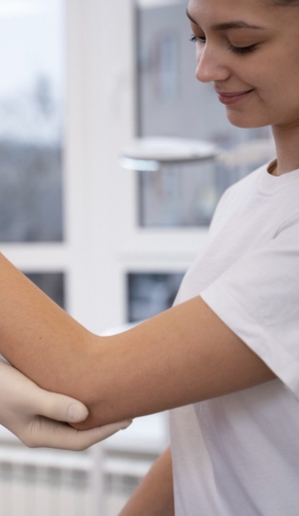

Post-surgery, patients are assisted with customized physiotherapy programs aimed at regaining motion, strength, and confidence in elbow use.
This ensures for an accurate implant alignment, finest joint stability, and long-lasting results.
Dr. Karthik has a high success rate for elbow joint surgeries, that makes him the number elbow joint surgeon in Hyderabad.
As a patient you will best medical facilities not just in Hyderabad or Telangana but in entire India.
 ReviewsFrequently Asked Questions
The goal of reconstructive elbow surgery is to restore the functional arc defined by the Mayo Clinic: 30° of extension to 130° of flexion, along with 50° of pronation and 50° of supination. This range allows patients to perform almost all activities of daily living—such as eating, washing their face, grooming their hair, reaching their back pocket, and typing on a computer—without pain.
In simple isolated injuries, removing the radial head may occasionally be tolerated; however, in complex fractures or those accompanied by ligament tears (such as the Terrible Triad), the radial head serves as the vital secondary stabilizer against valgus stress and longitudinal arm migration. Removing it without replacement allows the radius to shift upward toward the wrist (Essex-Lopresti injury), causing severe wrist pain, elbow instability, and rapid joint wear. A metallic radial head prosthesis maintains normal arm length and stabilizes the joint.
Yes. Arthroscopic capsular release is an effective, minimally invasive treatment for post-traumatic elbow stiffness (arthrofibrosis). By entering the joint through 5 mm portals, Dr. Karthik Gudaru divides the thickened, contracted anterior and posterior capsules and removes impinging bone spurs in the coronoid and olecranon fossae. Because this technique avoids large open incisions, it minimizes new postoperative scar formation and allows patients to begin range-of-motion exercises the next day.
In patients over 65 with low bone density (osteoporosis) who sustain severe, comminuted intra-articular fractures (AO Type 13C3), fixing the small bone fragments with plates and screws carries a high risk of non-union, screw cut-out, and failure. For these cases, primary Total Elbow Replacement provides a reliable solution: it bypasses non-healing bone fragments, avoids prolonged cast immobilization, relieves pain, and allows the patient to use their arm for daily tasks within days of surgery.
Yes. Total elbow replacements, elbow arthroscopy, radial head replacements, and open reduction internal fixation (ORIF) for complex elbow trauma are recognized, medically necessary procedures. They are covered by all major corporate health insurance providers, private TPAs, and state health schemes. Dedicated on-site insurance coordination desks provide cashless hospitalization support at GreenMed Hospital (Hyderabad), Aster Ramesh Hospital (Vijayawada), and Sri Maruthi Hospitals (Tirupati).
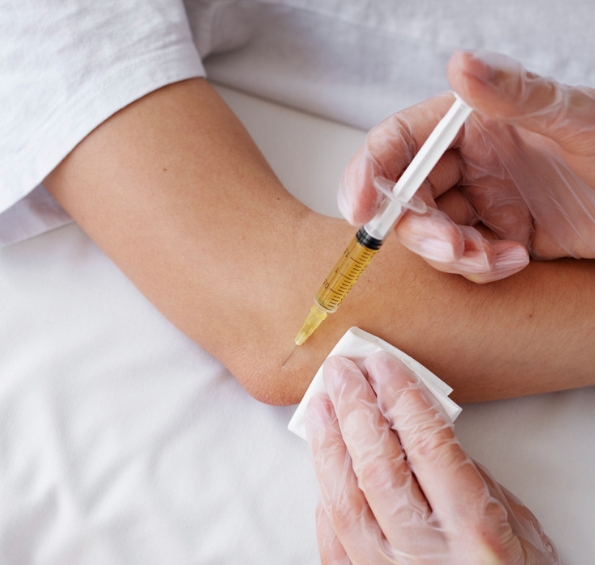 Book Your Appointment with
Being India’s best Elbow joint surgeon, specialist in Hyderabad, he ensures all his patients gets the confidence that helps them both before and after surgery
Requesting A Call:
Sunday - Saturday:
8-3-833/71, Srinagar Colony Main Rd, Kamalapuri Colony, Banjara Hills,
`
What is the difference between Total and Partial Knee Replacement? Answers Dr Karthik Gudaru, who is one of the best knee replacement surgeons in Hyderabad
View More
we’ll explain what hip replacement surgery is and share a complete preparation checklist that guides you through the medical, physical, emotional, and practical steps before surgery
View More
Recognizing the right time for surgery can make all the difference in restoring mobility, reducing pain, and improving quality of life says Dr Karthik Gudaru, orthopaedic surgeon
View More