
Knee pain, especially on the inner side of the joint, has become increasingly common among individuals in their 30s, 40s, and 50s. Whether due to early osteoarthritis, past injuries, or lifestyle factors, many people begin experiencing pain long before they reach the typical age for joint replacement. In such cases, surgery often seems like an inevitable step. But what if the knee could be preserved instead of replaced?
This is where High Tibial Osteotomy (HTO) emerges as a joint-saving revolution—an advanced, biologically friendly procedure that restores alignment, reduces pain, and prolongs the natural life of the knee, explains Dr Karthik Gudaru, a top orthopaedic surgeon and one of best total knee joint replacement surgeons in Hyderabad and India.
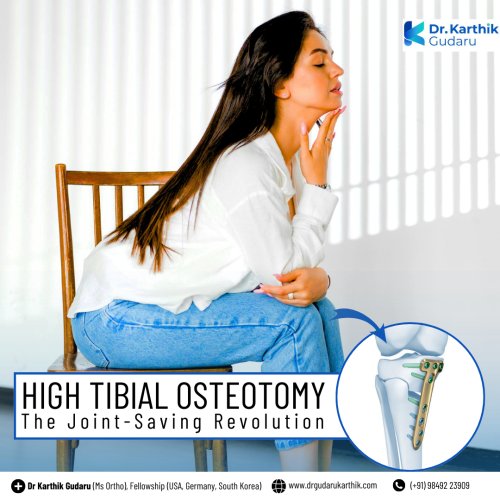
What Is High Tibial Osteotomy?
High Tibial Osteotomy is a surgical procedure performed to correct the alignment of the knee by reshaping the upper part of the tibia (shinbone). When a person has a condition called varus deformity—commonly referred to as “bow-leggedness”—the body weight disproportionately loads the inner (medial) part of the knee joint. This uneven stress accelerates wear and tear, leading to cartilage loss and early arthritis on one side of the knee.
The purpose of HTO is to shift this load from the damaged inner compartment to the healthier outer side. By doing so, the surgery reduces pain, slows down degeneration, and improves knee function without the need to replace the joint.
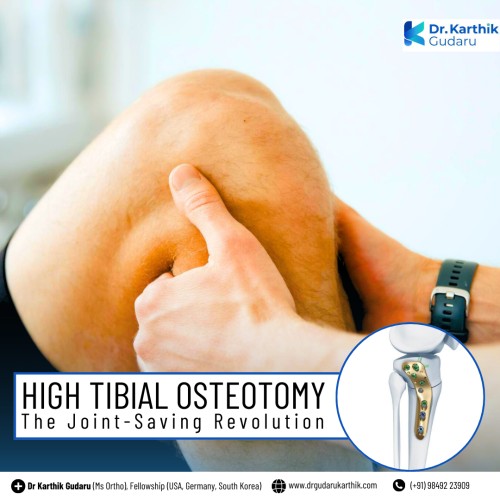
Why HTO Matters? A Joint-Preserving Approach
For decades, knee replacement was considered the ultimate solution for chronic knee pain. However, joint replacements are not ideal for younger or very active patients because artificial implants have a limited lifespan. HTO, in contrast, preserves the natural joint, cartilage, and ligaments.
It works with the body rather than replacing part of it, making it a preferred option for patients who wish to maintain an active lifestyle.
Another major advantage is that HTO delays or even eliminates the need for knee replacement in the future. Many patients enjoy an additional 10–15 years—or more—of comfortable movement after the procedure.
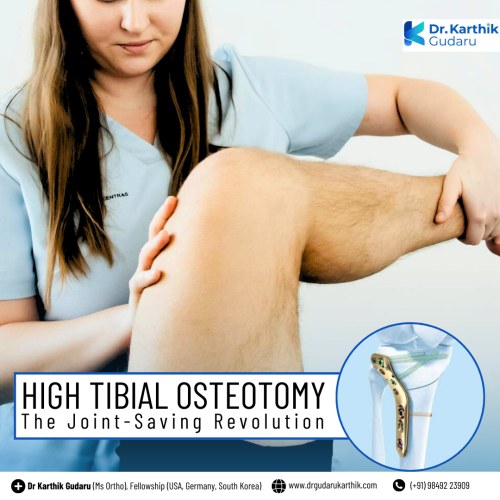
How the High Tibial Osteotomy Surgery Works?
During High Tibial Osteotomy, the surgeon makes a precise cut in the upper tibia. Depending on the deformity and desired correction, the surgeon may either open a small wedge (opening wedge osteotomy) or remove a thin wedge of bone (closing wedge osteotomy). Once the alignment is corrected, the new position is fixed using metal plates and screws.
Modern techniques have made HTO far more accurate thanks to 3D planning, digital alignment systems, and high-precision implants. This accuracy ensures optimal weight distribution across the joint, which is essential for long-term success.
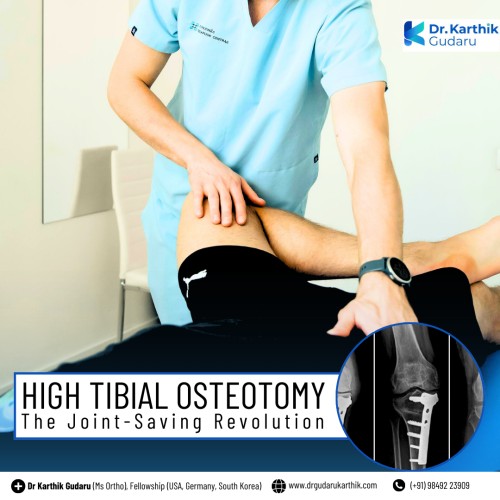
Ideal Candidates for High Tibial Osteotomy
HTO is particularly suitable for:
- Individuals between 30 and 60 years old
- Patients with early-to-moderate medial knee arthritis
- People with varus alignment (bow-legs)
- Those who are active or wish to avoid an early knee replacement
- Patients who have intact ligaments and relatively healthy lateral cartilage
For younger patients, athletes, and those who do not want to compromise mobility, HTO offers the perfect balance of pain relief and joint preservation.
Recovery and Life After HTO
Recovery after High Tibial Osteotomy is gradual but rewarding. Patients usually under the guidance of Dr Karthik begin to mobilise full weight bearing within 48 hours followed by physiotherapy to regain strength and mobility. Full recovery may take a few months, but the improvement in pain and function continues long after rehabilitation ends.
Many individuals return to sports like cycling, swimming, trekking, and even running. Because the natural knee joint is preserved, mobility feels more natural than after joint replacement. Over time, the corrected alignment also prevents further cartilage damage.
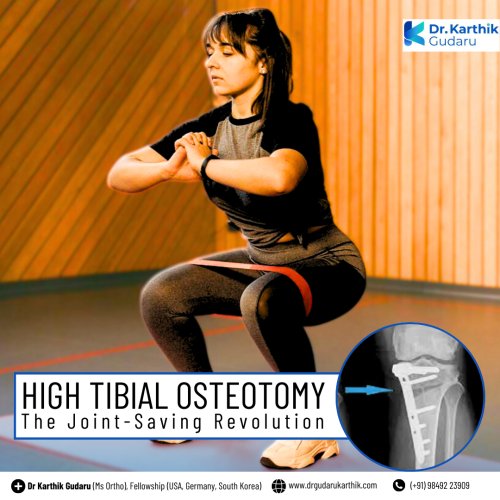
Why Is HTO Called a Joint-Saving Revolution?
High Tibial Osteotomy stands out as a revolutionary procedure because it flips the script on traditional knee treatment. Instead of focusing on replacing the damaged joint, it aims to preserve and protect it. The surgery corrects the root cause—misalignment—rather than simply treating the symptoms.
By restoring the mechanical axis of the leg, HTO enhances joint longevity, postpones major surgery, and gives patients a new chance at maintaining an active lifestyle. In an era where people seek mobility, freedom, and long-term solutions, High Tibial Osteotomy truly represents a breakthrough in orthopaedic care.

Dr Karthik Gudaru, MS Orthopaedics, MBBS, Fellowship in Knee and Hip Arthroplasty (USA), Fellowship in Computer-Assisted Navigation Joint Replacement Surgery (Germany), is one of Hyderabad’s leading orthopaedic surgeons with an outstanding reputation for precision, innovation, and excellence in joint replacement and orthopaedic care. Widely recognised as the best knee replacement specialist in Hyderabad, he brings a deep commitment to patient-centred care and cutting-edge surgical techniques.
Dr Karthik Gudaru is currently the Senior Orthopaedic and Joint Replacement Specialist, Department of Orthopaedics at GreenMed Hospital, Srinagar Colony, Hyderabad and Assistant Professor and Consultant Orthopaedic at BIRRD Hospital (Balaji Institute of Surgery, Research and Rehabilitation for the Disabled), Tirupati.
Dr Karthik Gudaru’s Treatment Specialisation are –
Knee Joint Treatments (Including Total Knee Replacement Surgery)
Shoulder Joint Treatments (Including Total Shoulder Replacement Surgery)
Hip Joint Treatments (Including Total Hip Replacement Surgery)
Elbow Joint Treatments (Including Total Elbow Arthroscopy)
Computer-Assisted Knee Replacement Surgery
Stem Cell Therapy for key orthopaedic treatments