
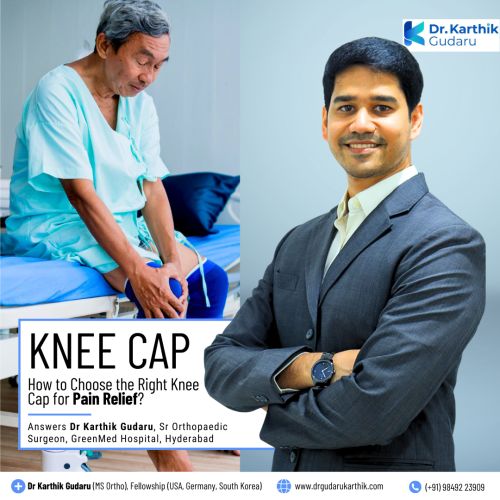
Knee pain is one of the most common complaints affecting people across all age groups—from athletes and fitness enthusiasts to working professionals and senior citizens. Whether the discomfort is caused by an injury, arthritis, ligament strain, or long hours of standing and walking, knee pain can significantly affect daily activities and overall quality of life, says Dr Karthik Gudaru, one of the most successful knee joint surgeons in Hyderabad.
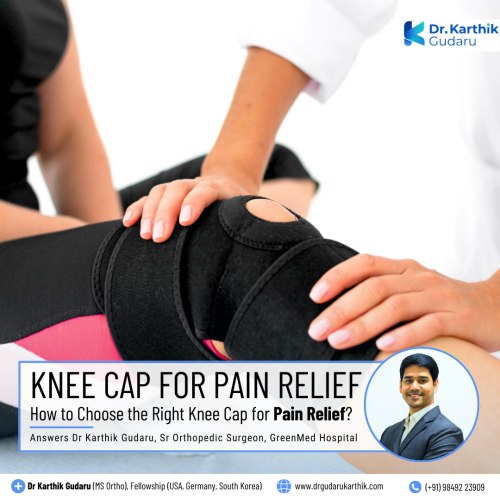
One of the simplest and most widely recommended solutions for managing knee pain is the use of a knee cap, also known as a knee support or knee brace. However, with so many types available in the market, choosing the right knee cap for effective pain relief can be confusing. Understanding why a knee cap is needed and how to select the right one is essential for achieving comfort, stability, and long-term relief.
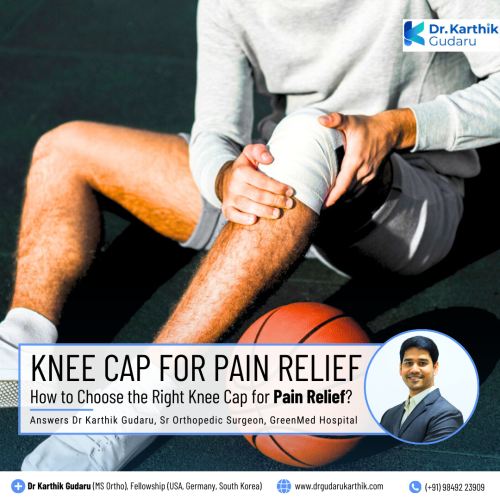
Why is a Knee Cap needed for Knee Pain?
The knee joint is one of the most complex and heavily used joints in the human body. It supports body weight, enables movement, and absorbs shock during activities such as walking, running, climbing stairs, and even sitting down or standing up. Because of this constant stress, the knee is highly vulnerable to wear and tear, injuries, and degenerative conditions.
A knee cap is often recommended to provide external support to the joint. It helps stabilise the knee, reduces excessive movement, and distributes pressure evenly across the joint. For individuals suffering from pain due to ligament injuries, cartilage damage, meniscus tears, or osteoarthritis, a knee cap can significantly reduce discomfort by limiting strain on the affected structures. It also improves blood circulation around the knee, which helps reduce swelling and promotes faster healing.
In many cases, knee caps are used as a preventive measure as well. Athletes and people with physically demanding jobs use them to protect the knee from overuse injuries. Older adults often rely on knee supports to manage age-related joint weakness and instability. When used correctly, a knee cap can enhance confidence in movement and prevent further damage, opines Hyderabad’s top orthopedic surgeon for the total knee joint replacement, Dr Karthik Gudaru.
Understanding Different Types of Knee Caps
Choosing the right knee cap starts with understanding that not all knee supports serve the same purpose. Some are designed for mild pain and daily use, while others provide rigid support for serious injuries.
Elastic or compression (Knee Caps)
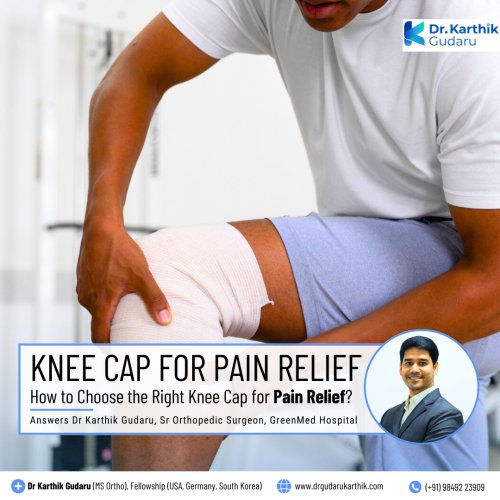
Elastic or compression knee caps are commonly used for mild pain, stiffness, and swelling. These knee caps are lightweight, flexible, and comfortable for extended wear. They work by providing gentle compression that improves circulation and reduces inflammation. People with early-stage arthritis, minor sprains, or general knee discomfort often benefit from this type.
Patellar support (Knee Caps)
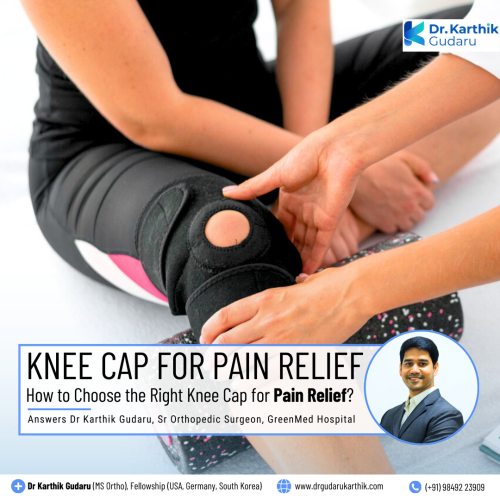
Patellar support knee caps are designed to stabilise the kneecap itself. They usually feature a circular opening or padded ring around the patella to keep it properly aligned. This type is particularly useful for individuals experiencing patellofemoral pain syndrome, runner’s knee, or kneecap tracking issues.
Hinged (Knee Caps)
Hinged knee caps offer a higher level of support and are often recommended for ligament injuries such as ACL or MCL tears. These braces have metal or plastic hinges on the sides that limit sideways movement while allowing controlled bending and straightening. They are typically used during recovery after injury or surgery.
Open (Knee Caps)
Open knee caps are helpful when swelling or direct pressure on the kneecap causes discomfort. By leaving the kneecap exposed, they reduce irritation while still providing support to the surrounding structures.
How to Choose the Right Knee Cap for Pain Relief?
The first and most important factor in choosing a knee cap is identifying the cause and severity of your knee pain. Mild pain caused by overuse or fatigue usually requires only a simple compression knee cap. On the other hand, chronic pain, instability, or injury-related discomfort may require a more structured or specialised brace. Consulting a doctor or orthopaedic specialist can help determine the appropriate level of support.
Fit and size play a crucial role in the effectiveness of a knee cap. A knee support that is too tight can restrict blood flow and cause discomfort, while one that is too loose will fail to provide adequate support. Measuring the circumference of your knee as per the manufacturer’s guidelines ensures a proper fit. A well-fitted knee cap should feel snug but not restrictive.
Material quality is another key consideration. Breathable, skin-friendly materials such as neoprene blends or moisture-wicking fabrics are ideal for daily wear. Good-quality material prevents skin irritation, excessive sweating, and odor, making it comfortable for long-term use.
The level of activity should also influence your choice. If you lead an active lifestyle or play sports, opt for a knee cap that offers flexibility along with stability. For daily activities or office use, a lightweight and discreet knee cap that fits easily under clothing may be more suitable.
Ease of use is often overlooked but is especially important for elderly individuals. Knee caps that are easy to wear and remove, with adjustable straps or slip-on designs, offer convenience without compromising support.
When and How to Use a Knee Cap Effectively?
Using a knee cap correctly is just as important as choosing the right one. It should be worn during activities that trigger pain or place stress on the knee, such as walking long distances, exercising, or standing for extended periods. However, wearing a knee cap continuously for long hours without medical advice is not always recommended, as overdependence can weaken the surrounding muscles.
A knee cap works best when combined with other supportive measures such as physiotherapy, strengthening exercises, weight management, and proper footwear. It should be seen as a part of a broader pain management and rehabilitation strategy rather than a standalone solution.
Choosing the right knee cap for pain relief requires a clear understanding of your knee condition, lifestyle needs, and comfort preferences. The right knee support can reduce pain, improve stability, and help you stay active without fear of further injury. However, an incorrect choice can lead to discomfort and limited benefits. Paying attention to fit, material, level of support, and intended use ensures that the knee cap serves its purpose effectively. For persistent or severe knee pain, professional medical guidance is essential to ensure that the knee cap complements proper treatment and promotes long-term joint health.

Dr Karthik Gudaru, MS Orthopaedics, MBBS, Fellowship in Knee and Hip Arthroplasty (USA), Fellowship in Computer-Assisted Navigation Joint Replacement Surgery (Germany), is one of Hyderabad’s leading orthopaedic surgeons with an outstanding reputation for precision, innovation, and excellence in joint replacement and orthopaedic care. Widely recognised as the best knee replacement specialist in Hyderabad, he brings a deep commitment to patient-centred care and cutting-edge surgical techniques.
Dr Karthik Gudaru is currently the Senior Orthopaedic and Joint Replacement Specialist, Department of Orthopaedics at GreenMed Hospital, Srinagar Colony, Hyderabad and Assistant Professor and Consultant Orthopaedic at BIRRD Hospital (Balaji Institute of Surgery, Research and Rehabilitation for the Disabled), Tirupati.
Dr Karthik Gudaru’s Treatment Specialisation are –
Knee Joint Treatments (Including Total Knee Replacement Surgery)
Shoulder Joint Treatments (Including Total Shoulder Replacement Surgery)
Hip Joint Treatments (Including Total Hip Replacement Surgery)
Elbow Joint Treatments (Including Total Elbow Arthroscopy)
Computer-Assisted Knee Replacement Surgery
Stem Cell Therapy for key orthopaedic treatments