
Key Summary
- Meal Timing Impacts Bone Health: Skipping breakfast or taking dinner late disrupts nutrient absorption and hormonal balance, weakening bones over time.
- Nutrients and Lifestyle Matter: Adequate intake of calcium, vitamin D, protein, and regular physical activity, coupled with proper sleep, are essential for strong bones.
- Early Intervention Is Key: Persistent bone pain, frequent fractures, or other warning signs require consultation with an orthopaedic surgeon to prevent long-term skeletal issues.
Your daily meal schedule does more than just regulate your weight—it plays a vital role in bone metabolism. Skipping your morning meal or pushing dinner late into the night can disrupt nutrient absorption and hormonal balance, potentially leading to weakened bones over time. Explore the science of meal timing for better orthopedic health.
This Article is Medically Reviewed by Dr Karthik Gudaru, MS Orthopaedics, Fellowship in Computer-Assisted Navigation and Joint Replacement Surgery (Germany), HOD Orthopaedic Department, GreenMed Hospitals, Hyderabad.
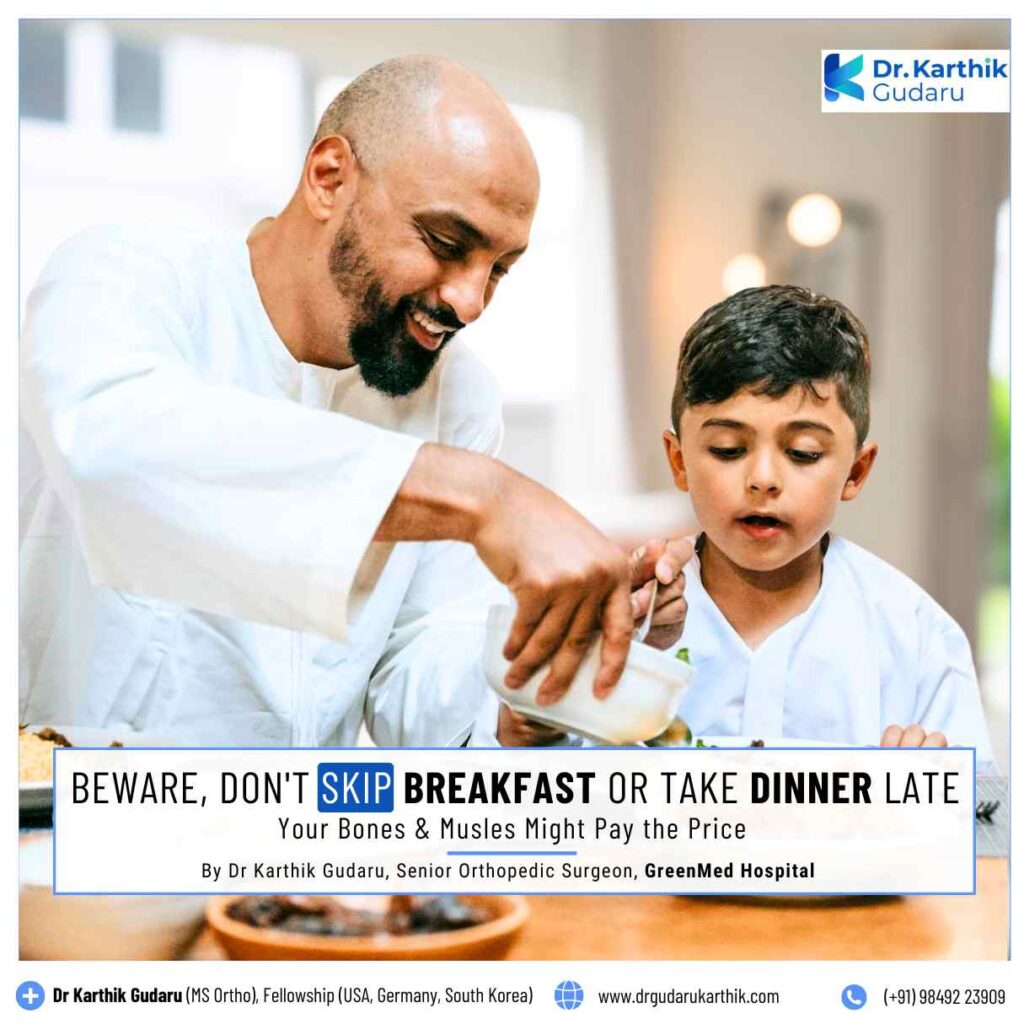
Our daily routines often overlook a critical factor in long-term health: the timing of our meals. While many focus on calorie counts or nutrient balance, when we eat can be just as important as what we eat—especially for our bones. Skipping breakfast or delaying dinner is more than a minor inconvenience; according to orthopaedic specialists, these habits may accelerate bone weakness and increase the risk of conditions like osteoporosis.
Understanding the connection between meal timing and bone health is crucial, especially in a world where busy schedules often dictate eating patterns, shares Dr Karthik Gudaru, a Senior Orthopaedic Doctor and a specialist knee replacement surgeon in Hyderabad.

How Does Skipping Breakfast Affect Bone Strength?
Breakfast has long been touted as the most important meal of the day, and research supports this claim for bone health as well. When we skip breakfast, our bodies experience prolonged fasting that disrupts calcium absorption and bone metabolism. Bones are living tissues that constantly undergo remodelling, a process where old bone is broken down and new bone is formed.
This process requires adequate nutrients at regular intervals, particularly calcium, vitamin D, and protein. Skipping breakfast means depriving the body of these essential nutrients during the morning, which can slow down bone formation and lead to gradual weakening over time.
Moreover, breakfast provides the energy needed for daily activity. Physical movement, even light exercise, stimulates bone growth and maintains bone density. Without breakfast, energy levels drop, and physical activity decreases, indirectly impacting bone strength. Dr Karthik, an orthopaedic surgeon, explains that over months and years, consistently skipping breakfast can contribute to reduced bone mass and make bones more susceptible to fractures.
Orthopedic surgeon Dr Karthik says, “Strong bones are not built overnight—they are the result of consistent care, mindful nutrition, timely meals, and attentive living. Neglecting the rhythm of your day, whether by skipping breakfast or eating late dinners, silently weakens the very framework that supports your life. Your body remembers every choice, and your bones bear the proof—invest in them today for strength, mobility, and vitality tomorrow.”

What Happens When Dinner Is Taken Late at Night?
Eating dinner late is another habit that poses risks to skeletal health. When we eat close to bedtime, the digestive system remains active during hours meant for rest and repair. The body’s circadian rhythm, which governs various biological functions, also affects bone remodelling. Late-night meals disrupt this rhythm, altering hormone levels such as cortisol and growth hormone, which are vital for bone maintenance. High cortisol levels at night can lead to increased bone resorption—the process of breaking down bone tissue—without the compensatory formation of new bone, resulting in net bone loss over time.
Late dinners often come with heavy or processed foods, which are low in nutrients that support bone health. This further compounds the problem, depriving bones of the calcium, magnesium, and vitamin K they require. Orthopaedic experts caution that consistently eating late may accelerate age-related bone density loss, increasing susceptibility to osteoporosis and fractures.

The Role of Nutrients and Meal Timing
Beyond meal timing, the nutrient content of breakfast and dinner is crucial. Foods rich in calcium, vitamin D, protein, and phosphorus form the building blocks of healthy bones. Breakfast should ideally include dairy products, fortified cereals, eggs, or plant-based alternatives that supply these nutrients. For dinner, lighter meals that are nutrient-dense rather than calorie-heavy support digestion and allow the body’s repair mechanisms to function optimally during sleep. Consistent timing paired with nutrient-rich foods ensures bones receive continuous support throughout the day.
Lifestyle Choices That Complement Bone Health
Meal timing is only one piece of the puzzle. Physical activity, adequate sleep, and avoiding excessive caffeine or alcohol are equally important. Weight-bearing exercises like walking, jogging, or resistance training stimulate bone formation. Sleep, especially in alignment with natural circadian rhythms, allows growth hormone release that promotes bone repair. A lifestyle that combines timely meals, exercise, and quality sleep strengthens bones and reduces the risk of osteoporosis.
When Should You See an Orthopaedic Surgeon?
Even with a proper diet and lifestyle, some individuals may still face bone issues. Signs like persistent bone pain, frequent fractures from minor injuries, joint swelling, or loss of height could indicate underlying problems like osteoporosis or other bone disorders. Early consultation with an orthopaedic surgeon can help detect these issues before they become severe. They may recommend bone density tests, nutritional guidance, or lifestyle modifications tailored to individual needs. Timely professional intervention not only prevents further damage but also improves long-term skeletal health.
| Aspect | Impact on Bone Health | Recommendations |
|---|---|---|
| Skipping Breakfast | Reduces nutrient absorption, slows bone formation, lowers energy for physical activity | Eat a nutrient-rich breakfast including calcium, vitamin D, protein |
| Late Dinner | Disrupts circadian rhythm, increases bone resorption, interferes with repair during sleep | Have dinner at least 2–3 hours before bedtime, prefer lighter, nutrient-dense meals |
| Nutrient Intake | Calcium, vitamin D, protein, phosphorus critical for bone remodeling | Include dairy, eggs, fortified cereals, leafy greens, and protein sources daily |
| Physical Activity | Stimulates bone formation, maintains bone density | Engage in weight-bearing exercises like walking, jogging, or resistance training |
| Lifestyle Factors | Poor sleep, excessive caffeine/alcohol accelerate bone weakening | Maintain consistent sleep, limit caffeine/alcohol, follow healthy lifestyle habits |
| Warning Signs | Persistent pain, frequent fractures, loss of height | Consult an orthopaedic surgeon for evaluation and bone density testing |

Our bones silently bear the brunt of lifestyle choices, often revealing the damage only after years of neglect. Skipping breakfast or taking dinner late disrupts the delicate balance of bone metabolism, reducing nutrient absorption, altering hormonal rhythms, and ultimately weakening skeletal integrity. Orthopaedic surgeons emphasise that consistent meal timing, along with a nutrient-rich diet and healthy lifestyle, is essential for maintaining strong bones. By prioritising when and what we eat, and seeking professional help when warning signs appear, we can protect our bones and ensure a life of mobility and vitality.

Dr Karthik Gudaru, MS Orthopaedics, MBBS, Fellowship in Knee and Hip Arthroplasty (USA), Fellowship in Computer-Assisted Navigation Joint Replacement Surgery (Germany), is one of Hyderabad’s leading orthopaedic surgeons with an outstanding reputation for precision, innovation, and excellence in joint replacement and orthopaedic care. Widely recognised as the best knee replacement specialist in Hyderabad, he brings a deep commitment to patient-centred care and cutting-edge surgical techniques.
Dr Karthik Gudaru is currently the Senior Orthopaedic and Joint Replacement Specialist, Department of Orthopaedics at GreenMed Hospital, Srinagar Colony, Hyderabad and Assistant Professor and Consultant Orthopaedic at BIRRD Hospital (Balaji Institute of Surgery, Research and Rehabilitation for the Disabled), Tirupati.
Dr Karthik Gudaru’s Treatment Specialisation are –
Knee Joint Treatments (Including Total Knee Replacement Surgery)
Shoulder Joint Treatments (Including Total Shoulder Replacement Surgery)
Hip Joint Treatments (Including Total Hip Replacement Surgery)
Elbow Joint Treatments (Including Total Elbow Arthroscopy)
Computer-Assisted Knee Replacement Surgery
Stem Cell Therapy for key orthopaedic treatments