

Summary
- Choose a properly fitted backpack and keep its weight within safe limits.
- Encourage children to use both shoulder straps and maintain good posture.
- Consult a pediatric orthopaedic surgeon if back pain persists or affects daily activities.
This Article is Medically Reviewed by Dr Karthik Gudaru, MS Orthopaedics, Fellowship in Computer-Assisted Navigation and Joint Replacement Surgery (Germany), HOD, Orthopaedic Department, GreenMed Hospitals, Hyderabad.
As children return to school each year, one common concern often goes unnoticed—the weight of their school bags. Carrying an overloaded backpack every day can place excessive strain on a growing spine, leading to neck pain, shoulder discomfort, poor posture, and back pain.
While a heavy school bag may not always cause permanent damage, repeated stress over time can contribute to musculoskeletal problems if not addressed early. Understanding how to protect your child’s back can help prevent pain and support healthy growth, shares Dr Karthik Gudaru, an eminent Senior Pediatric Orthopaedic Surgeon in Hyderabad, Tirupati and in India.
How Can You Protect Your Child’s Back from Heavy School Bags?
Protecting your child’s back begins with choosing the right backpack, packing it correctly, and encouraging healthy carrying habits. Small changes in daily routines can significantly reduce the pressure placed on the spine and shoulders, allowing children to stay comfortable throughout the school day.
“A school bag should carry books—not the burden of back pain. Healthy backpack habits today can protect a child’s growing spine for years to come.” Says a highly experienced pediatric orthopedic surgeon in Hyderabad, Tirupati, Telangana Dr Karthik Gudaru.
Choose the Right School Bag
A well-designed backpack provides better support than a single-strap bag. Look for a backpack with two wide, padded shoulder straps, a padded back panel, and adjustable straps that allow the bag to sit comfortably against the child’s back. The size of the backpack should match your child’s body rather than being oversized.
Keep the Bag as Light as Possible
A school bag should ideally weigh no more than 10–15% of your child’s body weight. Encourage your child to carry only the books and supplies needed for the day. Removing unnecessary items, using school lockers when available, and keeping water bottles only when required can help reduce the overall weight.
Pack the Bag Properly
How a backpack is packed is just as important as how much it weighs. Place heavier books closest to the back so the weight stays near the spine. Lighter items can be placed in the outer compartments to distribute the load evenly and improve balance while walking.
Wear Both Shoulder Straps
Many children sling their backpacks over one shoulder because it feels convenient or fashionable. However, carrying the bag on one shoulder places uneven stress on the neck, shoulders, and spine. Using both shoulder straps helps distribute the weight evenly and reduces the risk of muscle strain.
Adjust the Backpack Correctly
A backpack should rest in the middle of the back and should not hang below the waist. Tightening the shoulder straps keeps the load closer to the body, reducing unnecessary pulling on the back muscles and helping maintain good posture.
Encourage Good Posture
Children should avoid leaning forward while carrying a heavy backpack. Standing upright with relaxed shoulders and walking normally helps minimise stress on the spine. At home, encourage activities that strengthen the back and core muscles, as these muscles play an important role in supporting the spine.
Watch for Early Warning Signs
Persistent back pain, shoulder pain, neck stiffness, tingling in the arms, visible strap marks, or changes in posture should never be ignored. If your child frequently complains about discomfort after carrying their school bag or avoids wearing it because of pain, it may indicate excessive strain on the spine or muscles.
When Should You Visit a Pediatric Orthopaedic Surgeon?
Occasional muscle soreness may improve with rest, but persistent or recurring pain requires medical evaluation. Consult a pediatric orthopaedic surgeon if your child experiences back or neck pain lasting more than a few days, has difficulty walking comfortably, develops uneven shoulders or poor posture, experiences numbness or weakness in the arms, or if the pain interferes with daily activities or sports. Early assessment can identify underlying problems and prevent long-term complications in the growing spine.
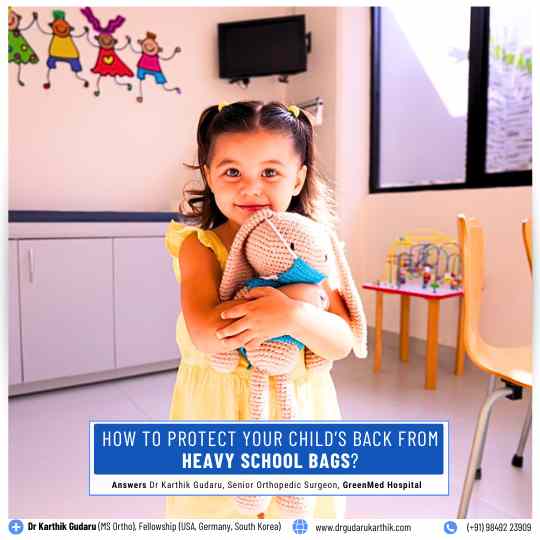
Parents should also seek medical advice if the child has pain even after reducing the backpack’s weight or if discomfort returns repeatedly during the school year. A pediatric orthopaedic specialist can evaluate your child’s spine, posture, and overall musculoskeletal health and recommend appropriate treatment or preventive measures.
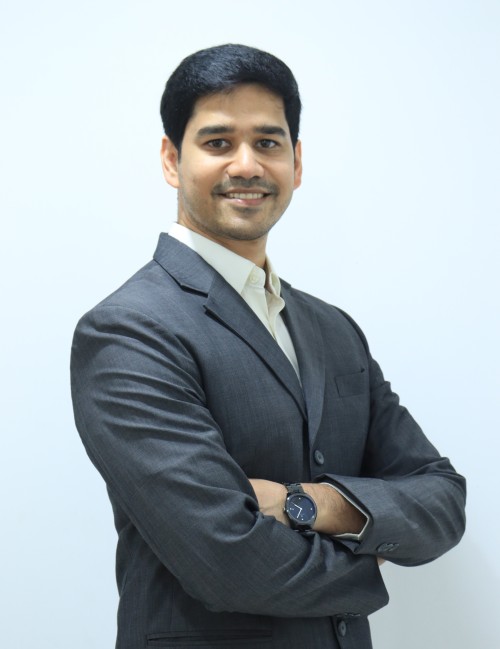
Dr Karthik Gudaru, MS Orthopaedics, MBBS, Fellowship in Knee and Hip Arthroplasty (USA), Fellowship in Computer-Assisted Navigation Joint Replacement Surgery (Germany), is one of Hyderabad’s leading orthopaedic surgeons with an outstanding reputation for precision, innovation, and excellence in joint replacement and orthopaedic care. Widely recognised as the best knee replacement specialist in Hyderabad, he brings a deep commitment to patient-centred care and cutting-edge surgical techniques.
Dr Karthik Gudaru is currently the Senior Orthopaedic and Joint Replacement Specialist, Department of Orthopaedics at GreenMed Hospital, Srinagar Colony, Hyderabad; Assistant Professor and Consultant Orthopaedic at BIRRD Hospital (Balaji Institute of Surgery, Research and Rehabilitation for the Disabled), Tirupati; and Joint Replacement & Pediatric Orthopaedic Specialist at Sri Maruthi Hospitals, Tirupati.
Dr Karthik Gudaru’s treatment specialisations –
Total Knee Replacement Surgery.
Total Shoulder Replacement Surgery.
Hip Joint Treatments
Total Elbow Arthroscopy.
Computer-Assisted Knee Replacement Surgery.
Stem Cell Therapy for key orthopaedic treatments.
Pediatric Orthopaedics Treatments for Cerebral Palsy, Congenital Anomalies, Poliomyelitis & Metabolic Bone Diseases
Hospital Affiliations
OPD, GreenMed Hospital, 8-3-833/71, Srinagar Colony Main Rd, Kamalapuri Colony, Banjara Hills, Hyderabad, Telangana
Durgabai Deshmukh Hospital, Vidyanagar, Hyderabad
Sri Maruthi Hospitals, OPD, 19-3-30/C1, Near RTC Bus Stand, Kennedy Nagar, Tirupati, 517501
BIRRD Hospital, Tirupati (Consultant & Asst. Professor)
Education and Affiliation
MBBS: Kasturba Medical College, Manipal University, Karnataka (2012), Registration No: TSMC/FMR/16001
MS (Orthopaedics): Sri Ramachandra Medical College & Research Institute, Chennai (2016), Registration No: 119525
Knee & Hip Arthroplasty Fellowship: Dartmouth Hospital, USA (2018)
Robotic & Computer-Assisted Joint Replacement Fellowship: Asklepios Hospital, Germany (2018)
AO Trauma & Emergency Orthopaedic Care Fellowship: Guro National Hospital, South Korea (2019–2020)
Spinal Surgery Observer Training: Yonsei University, South Korea (2015)