

Summary
- Calcium is essential, but protein also supports bone structure.
- Vitamin D, nutrition, and exercise all matter.
- Persistent bone problems or repeated fractures need evaluation.
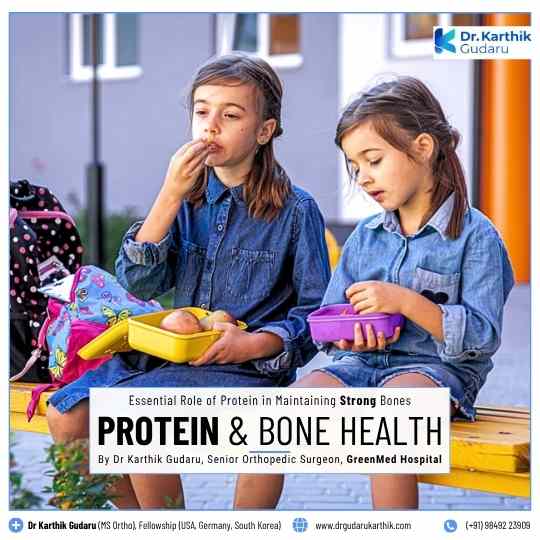
When parents think about strong bones, calcium is often the first nutrient that comes to mind. While calcium is essential for building and maintaining healthy bones, it is only one part of the picture. A child’s growing skeleton also needs adequate protein, vitamin D, other nutrients, and regular physical activity to develop properly.
Childhood and adolescence are particularly important periods for bone development because the body is actively building bone mass. The stronger the foundation created during these years, the better the potential for healthy bones later in life, shares Dr Karthik Gudaru, Sr orthopedic Surgeon, Knee Replacement Specialist & Pediatric Orthopedic In Hyderabad and Tirupati.
Why Does Protein Matter for Growing Bones?
Protein is an important structural component of bone. Bone contains a collagen framework that provides flexibility and acts as a foundation into which minerals such as calcium and phosphate are incorporated. Calcium contributes hardness and strength, while the protein-based framework helps give bone its structure.
This means focusing only on calcium can overlook another important part of healthy skeletal development.
Calcium and Protein Work Together
Calcium and protein do different jobs, but both contribute to overall bone health. Calcium is needed for bone mineralisation, while protein contributes to the structural framework of bone and supports muscles.
Adequate protein intake is therefore part of a balanced approach to nutrition rather than a calcium replacement. Research suggests protein intake may have beneficial effects on some measures of bone health, although evidence in children is still developing and protein should be considered as one component of overall nutrition.
“Strong bones are built through more than calcium alone; they need the right balance of nutrients, movement, and healthy growth.” –
Dr Karthik Gudaru, MS orthopedics, MBBS, Fellowship in Knee and Hip Arthroplasty (USA), Fellowship in Computer Assisted Navigation Joint Replacement Surgery (Germany)
What Happens When a Child Does Not Get Enough Protein?
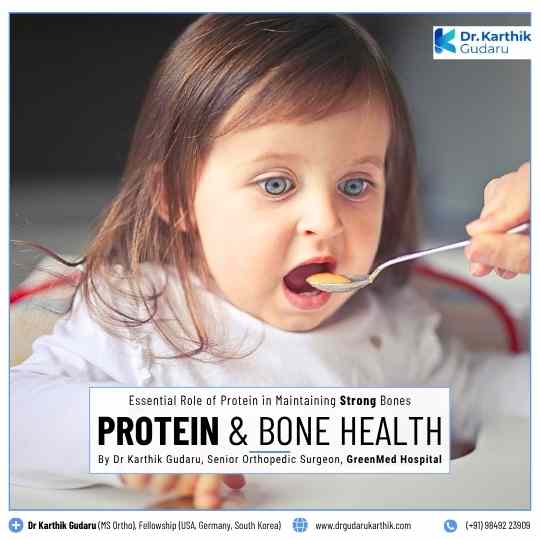
Children need protein for much more than bone development. It supports muscles, tissues, enzymes, hormones, and normal growth. If a child’s overall diet is inadequate, insufficient protein may become one part of a broader nutritional problem.
Good nutrition becomes particularly important during periods of rapid growth, when the body has greater demands for energy and nutrients. A varied diet that provides sufficient protein, calcium, vitamin D, and other essential nutrients can support healthy development.
Which Foods Provide Protein for Children?
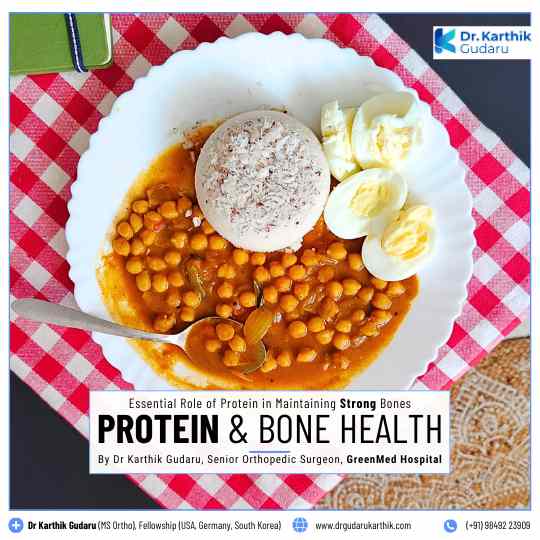
Protein does not have to come from one particular food. Depending on dietary preferences, children can obtain protein from milk, yogurt, cheese, eggs, fish, poultry, meat, beans, lentils, soy foods, nuts, seeds, and other protein-rich foods.
Dairy foods can be particularly useful because they can provide both protein and calcium. A balanced meal can combine different food groups rather than relying on a single nutrient or food source.
Why Vitamin D Is Also Important
Even when a child’s diet contains enough calcium, vitamin D is important because it helps the body absorb calcium. Insufficient vitamin D can interfere with normal bone mineralisation and, in severe cases, contribute to conditions such as rickets.
This is why children’s bone health should be viewed as a complete picture rather than a calcium-only concern.
Physical Activity Strengthens Growing Bones
Nutrition is only one side of healthy bone development. Physical activity also plays an important role. Weight-bearing activities such as running, jumping, dancing, gymnastics, and many sports place healthy loads on growing bones and can support bone development.
Regular activity also strengthens the muscles surrounding the skeleton, helping children develop better physical strength and coordination.
Should Parents Give Calcium or Protein Supplements?
Not necessarily. A healthy child who eats a varied diet may be able to obtain the nutrients needed for normal growth through food. The American Academy of Pediatrics has emphasized meeting calcium needs through dietary intake rather than routinely supplementing healthy children and adolescents.
Supplements should not be started simply because a parent is concerned about bone strength. If a child has restricted eating, poor growth, repeated fractures, an underlying medical condition, or a suspected nutritional deficiency, a pediatrician can determine whether dietary changes, testing, or supplementation is appropriate.
What Can Parents Do for Better Bone Health?
Supporting healthy bones does not require complicated routines. Encourage a varied diet containing adequate protein and calcium, ensure appropriate vitamin D intake, and make regular physical activity part of the child’s daily life.
It is also important to pay attention to growth and development. Persistent nutritional problems, unusually frequent fractures, ongoing bone pain, or concerns about physical development deserve professional evaluation rather than being managed through supplements alone.
When Should You Consult a Pediatric orthopedic Doctor or Surgeon?
Consult a pediatric orthopaedic doctor or surgeon if your child has repeated fractures, persistent bone or joint pain, difficulty walking or participating in activities, noticeable limb or skeletal deformity, or concerns about abnormal bone or physical development.

Dr Karthik Gudaru, MS Orthopaedics, MBBS, Fellowship in Knee and Hip Arthroplasty (USA), Fellowship in Computer-Assisted Navigation Joint Replacement Surgery (Germany), is one of Hyderabad’s leading orthopaedic surgeons with an outstanding reputation for precision, innovation, and excellence in joint replacement and orthopaedic care. Widely recognised as the best knee replacement specialist in Hyderabad, he brings a deep commitment to patient-centred care and cutting-edge surgical techniques.
Dr Karthik Gudaru is currently the Senior Orthopaedic and Joint Replacement Specialist, Department of Orthopaedics at GreenMed Hospital, Srinagar Colony, Hyderabad; Assistant Professor and Consultant Orthopaedic at BIRRD Hospital (Balaji Institute of Surgery, Research and Rehabilitation for the Disabled), Tirupati; and Joint Replacement & Pediatric Orthopaedic Specialist at Sri Maruthi Hospitals, Tirupati.
Dr Karthik Gudaru’s treatment specialisations –
Total Knee Replacement Surgery.
Total Shoulder Replacement Surgery.
Hip Joint Treatments
Total Elbow Arthroscopy.
Computer-Assisted Knee Replacement Surgery.
Stem Cell Therapy for key orthopaedic treatments.
Pediatric Orthopaedics Treatments for Cerebral Palsy, Congenital Anomalies, Poliomyelitis & Metabolic Bone Diseases
Hospital Affiliations
OPD, GreenMed Hospital, 8-3-833/71, Srinagar Colony Main Rd, Kamalapuri Colony, Banjara Hills, Hyderabad, Telangana
Durgabai Deshmukh Hospital, Vidyanagar, Hyderabad
Sri Maruthi Hospitals, OPD, 19-3-30/C1, Near RTC Bus Stand, Kennedy Nagar, Tirupati, 517501
BIRRD Hospital, Tirupati (Consultant & Asst. Professor)
Education and Affiliation
MBBS: Kasturba Medical College, Manipal University, Karnataka (2012), Registration No: TSMC/FMR/16001
MS (Orthopaedics): Sri Ramachandra Medical College & Research Institute, Chennai (2016), Registration No: 119525
Knee & Hip Arthroplasty Fellowship: Dartmouth Hospital, USA (2018)
Robotic & Computer-Assisted Joint Replacement Fellowship: Asklepios Hospital, Germany (2018)
AO Trauma & Emergency Orthopaedic Care Fellowship: Guro National Hospital, South Korea (2019–2020)
Spinal Surgery Observer Training: Yonsei University, South Korea (2015)