
This Article is Medically Reviewed by Dr Karthik Gudaru, MS Orthopaedics, Fellowship in Computer-Assisted Navigation and Joint Replacement Surgery (Germany), HOD Orthopaedic Department, GreenMed Hospitals, Hyderabad
As an orthopedic surgeon, I often tell my patients that recovery from an osteotomy is a journey, not a sprint. While the initial healing phase takes about six to twelve weeks, reaching full strength and returning to an active lifestyle typically spans six months to a year. In this guide, I break down what you can expect at every stage—from those first few weeks of limited weight-bearing to the final milestones of regaining total mobility and joint function. – Dr Karthik Gudaru
Osteotomy is a widely used joint-preserving surgery that helps realign bones, reduce pain, and delay the need for joint replacement—especially in younger, active individuals. Since the procedure involves cutting and reshaping bones, recovery is gradual and happens in multiple stages. Understanding what an osteotomy is and how long healing takes can help patients prepare realistically for the journey ahead, explains Dr Karthi Gudaru, senior orthopaedic surgeon and specialist knee replacement surgeon in Hyderabad and Telangana for Osteotomy surgery.
What Is an Osteotomy?
Dr Karthik Gudaru, who is an MS (Orthopaedic) and Fellowship in Computer Assisted Navigation Joint Replacement (Germany), Fellowship in Knee and Hip Arthroplasty fellowship, (USA ) and HOD Orthopaedic Department, GreenMed Hospital, says that an osteotomy is a surgical procedure in which a bone is cut and repositioned to correct alignment, improve joint mechanics, and relieve pressure from damaged areas. It is commonly performed around the knee, hip, or spine, with High Tibial Osteotomy (HTO) being one of the most frequently recommended techniques for patients who have early-stage arthritis on one side of the knee.
Instead of replacing the joint, the surgeon shifts the body’s weight to the healthier part of the joint. This not only reduces pain but also protects the remaining cartilage and can delay knee replacement surgery for many years. Osteotomy is generally suggested for younger patients, people with misaligned legs such as bow-legs or knock-knees, and individuals who want to maintain their active lifestyle without opting for an artificial joint.
How Long Does Osteotomy Recovery Take?
Recovery from osteotomy is not instant—it progresses in phases and can take anywhere between six months to a full year, depending on the patient’s age, bone quality, healing rate, and physical activity level.
First Few Weeks
The initial two weeks mainly focus on wound healing and pain control. Swelling, discomfort, and restricted movement are common. Patients usually depend on crutches, and weight-bearing is limited to protect the newly realigned bone. Stitches are removed around the second week, and the knee or operated area remains supported with a brace.
Weeks 3 to 6
During this period, gentle physiotherapy begins. The goal is to restore basic movement, reduce stiffness, and slowly build muscle strength. Patients may gradually start putting limited weight on the leg, depending on how the bone is healing. By the end of six weeks, X-rays usually show early signs of bone healing, which allows the surgeon to increase rehabilitation intensity.
Weeks 6 to 12
Mobility improves significantly in this stage. Most patients transition to full weight-bearing by the eighth to tenth week. Physiotherapy becomes more structured, focusing on balance, muscle control, and strengthening. Many individuals can resume office work or lighter duties during this period, although strenuous activities are still avoided.
3 to 6 Months
By this time, the bone has healed enough to allow a return to most everyday activities. Walking becomes comfortable, pain reduces substantially, and confidence in movement grows. Low-impact exercises such as cycling, swimming, and slow jogging are usually permitted after the surgeon’s approval. Muscle conditioning continues to play a crucial role.
6 to 12 Months
This is the final phase of recovery when patients regain full strength, mobility, and function. Many people return to sports and high-demand activities close to the one-year mark. Complete bone remodelling, muscle rebuilding, and joint adaptation take time, so patience is essential. Most patients experience long-term pain relief and improved alignment by the end of this period.
Tips for a Smooth and Successful Recovery
Consistency with physiotherapy is the single most important factor in healing well after an osteotomy. Following the surgeon’s instructions on weight-bearing, maintaining a balanced diet rich in calcium and protein, avoiding smoking, and monitoring any unusual pain or swelling also contribute to faster recovery.
The recovery timeline after an osteotomy generally ranges from six months to a year. While the process is slow and requires commitment, the long-term benefits—improved alignment, reduced pain, and delayed need for joint replacement—make the journey worthwhile. With proper rehabilitation and disciplined post-operative care, most patients regain a high level of function and return to their active lifestyle.
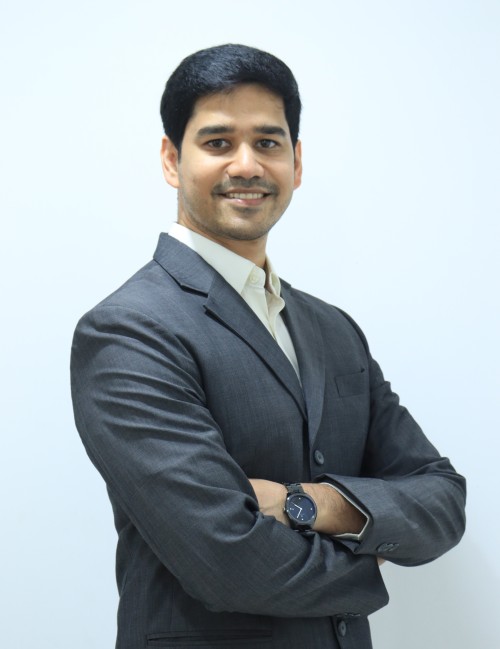
Dr Karthik Gudaru, MS Orthopaedics, MBBS, Fellowship in Knee and Hip Arthroplasty (USA), Fellowship in Computer-Assisted Navigation Joint Replacement Surgery (Germany), is one of Hyderabad’s leading orthopaedic surgeons with an outstanding reputation for precision, innovation, and excellence in joint replacement and orthopaedic care. Widely recognised as the best knee replacement specialist in Hyderabad, he brings a deep commitment to patient-centred care and cutting-edge surgical techniques.
Dr Karthik Gudaru is currently the Senior Orthopaedic and Joint Replacement Specialist, Department of Orthopaedics at GreenMed Hospital, Srinagar Colony, Hyderabad, Assistant Professor and Consultant Orthopaedic at BIRRD Hospital (Balaji Institute of Surgery, Research and Rehabilitation for the Disabled), Tirupati and Joint Replacement & Pediatric Orthopedic Specialist at Sri Maruthi Hospitals, Tirupati.
Dr Karthik Gudaru’s Treatment Specialisation are –
Knee Joint Treatments (Including Total Knee Replacement Surgery).
Shoulder Joint Treatments (Including Total Shoulder Replacement Surgery).
Hip Joint Treatments (Including Total Hip Replacement Surgery).
Elbow Joint Treatments (Including Total Elbow Arthroscopy).
Computer-Assisted Knee Replacement Surgery.
Stem Cell Therapy for key orthopaedic treatments.
Pediatric Orthopedics Surgeon for Cerebral Palsy, Congenital Anomalies, Poliomyelitis & Metabolic Bone Diseases