
Platelet-Rich Plasma (PRP) therapy has gained tremendous popularity in recent years, especially among athletes, fitness enthusiasts, and individuals seeking non-surgical solutions for joint and soft tissue problems. Known for its ability to accelerate healing naturally, PRP therapy uses the patient’s own blood components to repair tissues, reduce pain, and restore mobility. With growing clinical evidence and widespread acceptance, PRP is now considered one of the most promising regenerative treatments in orthopaedics, says Dr Karthik Gudaru, a leading orthopaedic surgeon for sports injuries and a specialist doctor for PRP Therapy in Hyderabad.
What is PRP Therapy?
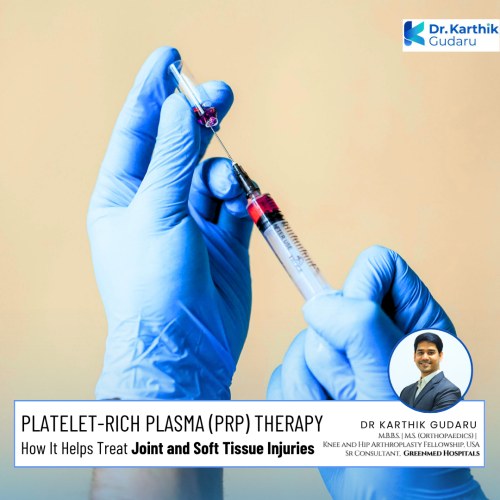
PRP therapy involves drawing a small amount of your blood, spinning it in a centrifuge, and separating the platelet-rich portion from other blood components. Platelets contain growth factors—proteins responsible for tissue repair, inflammation control, and regeneration. When this concentrated platelet solution is injected into an injured area, it boosts the body’s natural healing process.
Because PRP uses the patient’s own cells, the treatment is safe, minimally invasive, and has a low risk of allergic reactions or complications. It is commonly used for knee arthritis, tendon injuries, ligament sprains, muscle tears, and persistent soft tissue inflammation.
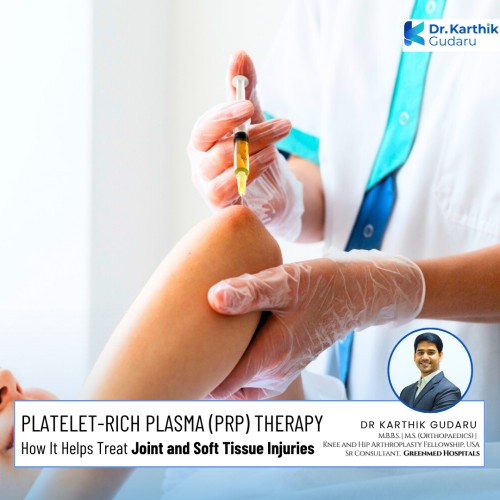
How PRP Helps Heal Joint and Soft Tissue Injuries?
As per Dr Karthik Gudaru, who is an MS (Orthopaedic) and Fellowship in Computer Assisted Navigation Joint Replacement (Germany), Fellowship in Knee and Hip Arthroplasty fellowship, (USA ), there are a few ways in which PRP helps to heal joint and soft tissue injuries:
1. Accelerates Natural Tissue Repair
PRP contains a high concentration of growth factors such as PDGF, VEGF, TGF-β, and EGF. These stimulate cell regeneration, collagen formation, and blood vessel development. When injected into injured areas, PRP jump-starts the healing cascade, helping damaged tissues recover faster and more efficiently.
2. Reduces Pain and Inflammation
Chronic joint and soft tissue injuries often cause persistent inflammation. PRP injections help regulate inflammatory responses, offering long-lasting pain relief without relying on painkillers or steroid injections. Many patients experience gradual but steady improvement within weeks.
3. Improves Joint Function
In conditions like osteoarthritis, cartilage wear leads to pain, stiffness, and limited mobility. PRP enhances lubrication in the joint, reduces friction, and supports cartilage health. This leads to better range of motion and improved daily function.
4. Promotes Stronger Tissue Healing
Unlike medicines that only manage symptoms, PRP helps tissues heal stronger by supporting collagen remodelling. This is especially beneficial for chronic tendon injuries (like tennis elbow or Achilles tendinitis) where the tissue has weakened over time.
5. Minimally Invasive Alternative to Surgery
For many patients, PRP serves as a bridge between conservative treatments and surgical procedures. It is ideal for individuals who want to avoid surgery, reduce downtime, or enhance post-surgical healing.
Conditions Commonly Treated with PRP Therapy
PRP therapy is widely used in orthopaedics and sports medicine. Some of the most frequent applications include:
- Knee osteoarthritis
- Tennis elbow and golfer’s elbow
- Rotator cuff injuries
- Achilles tendinitis
- Plantar fasciitis
- Ligament sprains (ankle, knee)
- Muscle tears due to sports injuries
- Patellar tendinitis (jumper’s knee)
Many of these conditions respond well because PRP addresses the root cause—the damaged tissue—rather than just masking symptoms.
What to Expect During and After PRP Treatment?
The procedure is simple and typically completed within 30–45 minutes. After the injection, mild soreness or swelling is common for a day or two, as the healing process begins. Depending on the severity of the injury, patients may require 1–3 sessions spaced a few weeks apart.
Most people notice improvement within 3–6 weeks, with continued progress over several months as tissues regenerate.
Is PRP Therapy Effective?
Clinical studies show that PRP can significantly reduce pain and improve function, especially for knee arthritis and tendon-related injuries. While results vary based on age, severity of the condition, and overall health, PRP offers a regenerative advantage that traditional treatments cannot provide.
Platelet-Rich Plasma (PRP) therapy is a powerful, natural healing option for joint and soft tissue injuries. By using your own blood’s regenerative properties, PRP boosts tissue repair, reduces inflammation, and offers long-term relief. Whether you’re dealing with chronic tendon pain, early-stage arthritis, or a sports injury, PRP provides a safe and effective alternative to surgery and long-term medication.
With its growing acceptance in orthopedic care, PRP is becoming a go-to treatment for patients seeking faster, more sustainable healing and a return to active living.
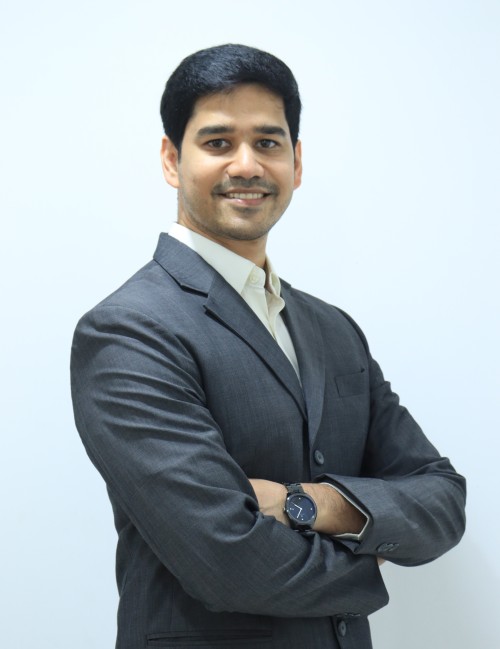
Dr Karthik Gudaru, MS Orthopaedics, MBBS, Fellowship in Knee and Hip Arthroplasty (USA), Fellowship in Computer-Assisted Navigation Joint Replacement Surgery (Germany), is one of Hyderabad’s leading orthopaedic surgeons with an outstanding reputation for precision, innovation, and excellence in joint replacement and orthopaedic care. Widely recognised as the best knee replacement specialist in Hyderabad, he brings a deep commitment to patient-centred care and cutting-edge surgical techniques.
Dr Karthik Gudaru is currently the Senior Orthopaedic and Joint Replacement Specialist, Department of Orthopaedics at GreenMed Hospital, Srinagar Colony, Hyderabad, Assistant Professor and Consultant Orthopaedic at BIRRD Hospital (Balaji Institute of Surgery, Research and Rehabilitation for the Disabled), Tirupati and Joint Replacement & Pediatric Orthopedic Specialist at Sri Maruthi Hospitals, Tirupati.
Dr Karthik Gudaru’s Treatment Specialisation are –
Knee Joint Treatments (Including Total Knee Replacement Surgery).
Shoulder Joint Treatments (Including Total Shoulder Replacement Surgery).
Hip Joint Treatments (Including Total Hip Replacement Surgery).
Elbow Joint Treatments (Including Total Elbow Arthroscopy).
Computer-Assisted Knee Replacement Surgery.
Stem Cell Therapy for key orthopaedic treatments.
Pediatric Orthopedics Surgeon for Cerebral Palsy, Congenital Anomalies, Poliomyelitis & Metabolic Bone Diseases