
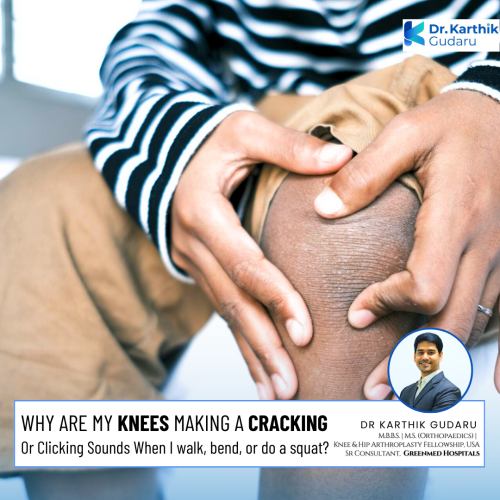
Hearing a cracking, popping, or clicking sound from your knees can be unsettling, especially when it happens frequently during walking, bending, climbing stairs, or standing up. While knee noises (known as crepitus) are extremely common, many people worry they indicate something serious.
The truth is, knee sounds can be completely harmless—or sometimes a sign that your joints need more attention. Understanding what causes these sounds can help you manage them better and know when to seek medical advice, as explained by Dr Karthik Gudaru, a senior orthopaedic doctor and one of the best surgeons for knee replacement surgeries in Hyderabad and India.
Why Do Knees Crack or Click?
Knee joints are complex structures made up of bones, cartilage, ligaments, tendons, and fluid-filled spaces. When any of these components move, shift, or rub during motion, they can produce sounds. Most of the time, knee noises are normal, but persistent or painful clicking may indicate an underlying issue.
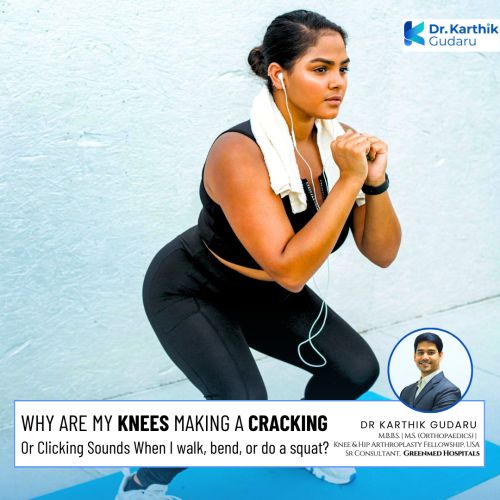
Understanding Why Knees Make Noise
The knee is a complex hinge joint made up of bones, cartilage, ligaments, tendons, and fluid-filled spaces that allow smooth movement. When any of these structures rub, shift, or stretch, a sound may occur. Not all knee noises indicate damage, but certain patterns can point toward underlying issues.
One of the most common and harmless causes is the formation and release of gas bubbles in the synovial fluid—the natural lubricant inside the joint. When you bend or straighten your knee, pressure changes within the joint cause these tiny bubbles to burst, producing a popping sound. This is very similar to cracking your knuckles and doesn’t signal any problem.
Another reason for clicking is the movement of tendons or ligaments over the bony surfaces of the knee. When these tissues become tight or overworked, they may momentarily catch and release during motion, creating a snapping sensation. This can happen when you suddenly stand up, climb stairs, or change direction quickly, and it often improves with stretching and strengthening.
As you age, you may notice knee sounds becoming more frequent. This usually relates to natural wear and tear of cartilage, which makes the joint surfaces less smooth. Without smooth cartilage, movement may produce a mild grinding or crackling noise. Although this can be normal, it’s also a sign to pay more attention to your knee health to prevent further deterioration.
Sometimes, knee sounds can indicate a specific problem. A torn meniscus—one of the shock-absorbing cartilages inside the knee—can cause clicking along with pain, swelling, or a feeling that the knee might get stuck. Meniscus tears often occur due to twisting injuries but can also develop gradually with age. Another issue that creates noise is patellofemoral syndrome, where the kneecap does not track properly over the joint. When the kneecap rubs unevenly, you may feel and hear grinding, especially when climbing stairs or sitting for long periods.
In more severe cases, knee sounds can be linked to osteoarthritis. When cartilage becomes significantly worn down, the bones may rub directly against each other, leading to loud crunching noises, stiffness in the morning, and pain that increases with activity. While osteoarthritis cannot be reversed, early intervention can slow its progression and improve comfort.
When Should You Be Concerned?
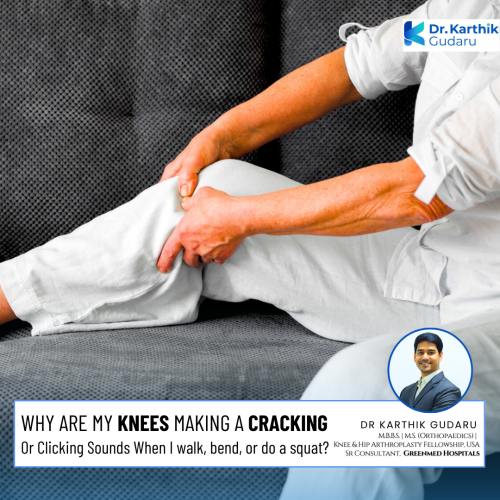
Occasional cracking without pain is usually harmless. However, knee sounds accompanied by pain, swelling, stiffness, instability, or difficulty bending the knee should not be ignored. If you recently injured your knee and the clicking persists, it’s wise to consult an orthopaedic specialist. Persistent pain or locking of the knee can indicate structural damage that may require treatment.
How to Reduce Knee Cracking Naturally?
Although knee noises don’t always need treatment, keeping your joints strong and mobile can significantly reduce these sounds. Regular strengthening exercises for the quadriceps, hamstrings, and calves improve joint stability. Stretching the surrounding muscles reduces tension and helps tendons glide more smoothly. Maintaining a healthy weight also lowers the pressure on your knees during daily activities. Staying active with low-impact exercises like cycling, swimming, or brisk walking helps keep the joints lubricated. Avoiding sudden, jerky movements and warming up before exercise further protects the knee structures.
Knee cracking or clicking is a normal experience for many people and is often just a part of how our joints function. Most of the time, it’s not something to worry about. But if the sounds are new, painful, or affecting how you move, your knees may be signalling that they need attention. Understanding the cause is the first step toward better knee health, and with the right care, you can keep your joints comfortable, strong, and functioning smoothly for years to come.

Dr Karthik Gudaru, MS Orthopaedics, MBBS, Fellowship in Knee and Hip Arthroplasty (USA), Fellowship in Computer-Assisted Navigation Joint Replacement Surgery (Germany), is one of Hyderabad’s leading orthopaedic surgeons with an outstanding reputation for precision, innovation, and excellence in joint replacement and orthopaedic care. Widely recognised as the best knee replacement specialist in Hyderabad, he brings a deep commitment to patient-centred care and cutting-edge surgical techniques.
Dr Karthik Gudaru is currently the Senior Orthopaedic and Joint Replacement Specialist, Department of Orthopaedics at GreenMed Hospital, Srinagar Colony, Hyderabad, Assistant Professor and Consultant Orthopaedic at BIRRD Hospital (Balaji Institute of Surgery, Research and Rehabilitation for the Disabled), Tirupati and Joint Replacement & Pediatric Orthopedic Specialist at Sri Maruthi Hospitals, Tirupati.
Dr Karthik Gudaru’s Treatment Specialisation are –
Knee Joint Treatments (Including Total Knee Replacement Surgery).
Shoulder Joint Treatments (Including Total Shoulder Replacement Surgery).
Hip Joint Treatments (Including Total Hip Replacement Surgery).
Elbow Joint Treatments (Including Total Elbow Arthroscopy).
Computer-Assisted Knee Replacement Surgery.
Stem Cell Therapy for key orthopaedic treatments.
Pediatric Orthopedics Surgeon for Cerebral Palsy, Congenital Anomalies, Poliomyelitis & Metabolic Bone Diseases