
Healthy bones are the foundation of normal growth and physical development in children. From infancy through adolescence, bones continuously grow, remodel, and strengthen to support height gain, movement, and overall posture. When this delicate process is disrupted, it can have long-lasting consequences. Metabolic bone diseases are a group of disorders that interfere with normal bone formation, mineralisation, or maintenance.
In children, these conditions not only weaken bones but can also affect growth patterns, cause deformities, and lead to significant orthopaedic problems if not identified early. Understanding how metabolic bone diseases impact a child’s growth and orthopaedic health is crucial for parents, caregivers, and healthcare providers alike, says Dr Karthik Gudaru, who is one of the senior pediatric orthopaedic surgeons and a specialist in treating Metabolic Bone Diseases in Hyderabad and Telangana.
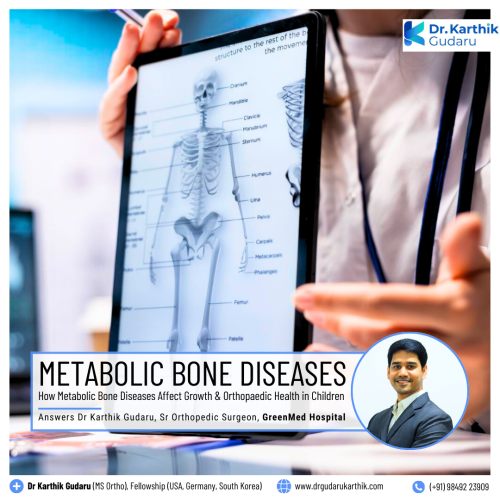
What Is Metabolic Bone Disease?
Metabolic bone disease refers to a group of conditions in which the bones become weak, soft, or abnormally formed due to problems with minerals such as calcium and phosphorus, or with hormones and vitamins that regulate bone metabolism. In children, these diseases occur while bones are still growing, which makes their effects more profound than in adults.
Common pediatric metabolic bone diseases include rickets (often due to vitamin D deficiency), osteogenesis imperfecta, hypophosphatemic rickets, and bone disorders associated with chronic kidney or liver disease. These conditions may be inherited, nutritional, or secondary to other medical illnesses. Regardless of the cause, the central issue is impaired bone strength and structure during a critical phase of growth.
Understanding Metabolic Bone Disease in Children
In a growing child, bones lengthen at growth plates—areas of cartilage near the ends of long bones. These growth plates are highly sensitive to nutritional and hormonal imbalances. Metabolic bone diseases interfere with the normal process of mineral deposition, leading to bones that are softer or more fragile than they should be.
For example, in Vitamin-D related rickets, insufficient vitamin D leads to poor absorption of calcium from the diet. As a result, bones cannot mineralise properly and remain soft. In genetic conditions like osteogenesis imperfecta, the collagen framework of bone is defective, making bones brittle even if mineral levels are normal.
Because children are active and still developing, weakened bones are more likely to bend, deform, or fracture under normal physical stress. Over time, these abnormalities can alter posture, gait, and overall skeletal alignment.
Impact on Growth and Height
One of the most significant effects of metabolic bone disease in children is impaired growth. Healthy bone growth depends on strong, well-mineralised growth plates. When these plates are affected, linear growth slows or becomes uneven.
Children with untreated metabolic bone disease may show delayed milestones, such as late walking, or appear shorter than their peers. In some cases, growth may initially appear normal but slows progressively as bone deformities worsen. Bowing of the legs or knock knees, commonly seen in rickets, can further affect height by altering the normal alignment of the lower limbs.
In severe or prolonged cases, permanent short stature can result, even after the underlying metabolic problem is corrected. This is why early diagnosis and timely treatment are essential to preserve normal growth potential.
Effects on Orthopaedic Health
Metabolic bone diseases have a direct and often visible impact on a child’s orthopaedic health. Soft or fragile bones are prone to deformities such as bowed legs, curved spine (scoliosis or kyphosis), widened wrists and ankles, and chest wall abnormalities. These skeletal changes can affect balance, coordination, and mobility.
Fractures are another major concern. Children with weakened bones may experience fractures from minor falls or even routine activities. Recurrent fractures can lead to pain, prolonged immobilisation, missed school days, and psychological stress for both the child and family.
Joint health may also be compromised. Abnormal bone alignment places extra stress on joints, increasing the risk of early joint pain and reduced range of motion. Over time, this can interfere with physical activity and sports participation, which are important for a child’s overall health and social development.
Long-Term Consequences if Left Untreated
If metabolic bone disease is not identified and managed early, the consequences can extend into adulthood. Persistent bone deformities may require corrective orthopaedic surgery later in life. Chronic pain, reduced physical endurance, and an increased risk of arthritis are also possible outcomes.
In addition, children who grow up with untreated bone disease may develop low bone density, making them more susceptible to fractures as adults. Beyond physical effects, visible deformities and limitations in activity can affect self-esteem and emotional well-being.
Diagnosis and Management
Early recognition is key to minimising the impact of metabolic bone diseases. Diagnosis usually involves a combination of clinical examination, blood tests to assess calcium, phosphorus, vitamin D, and hormone levels, and imaging studies such as X-rays to evaluate bone structure and growth plates.
Treatment depends on the underlying cause. Nutritional deficiencies are addressed with dietary changes and supplements. Genetic and chronic conditions may require long-term medical management, physical therapy, and close monitoring of growth and bone health. Orthopedic care plays a vital role in managing deformities, preventing fractures, and supporting normal mobility.
When to Seek a Pediatric Orthopaedic Surgeon
As per Hyderabad’s top paediatric orthopaedic surgeon, Dr Karthik Gudaru, parents should consider consulting a paediatric orthopaedic surgeon if a child shows signs such as persistent bone pain, repeated fractures from minor injuries, visible limb deformities, abnormal walking patterns, or delayed growth compared to peers. Referral is also important when a child diagnosed with a metabolic bone disease develops skeletal deformities that affect movement or daily activities. Early orthopaedic evaluation can help determine whether bracing, physical therapy, or surgical intervention is needed to correct alignment, support growth, and improve long-term outcomes.
Metabolic bone diseases can significantly affect a child’s growth and orthopaedic health, especially if they occur during critical periods of development. While these conditions can be serious, early diagnosis, appropriate medical treatment, and timely orthopaedic care can greatly reduce their impact. With proper management, many children can achieve better growth, improved mobility, and a higher quality of life. Awareness among parents and healthcare providers is the first step toward ensuring that growing bones get the care they need to stay strong and healthy.

Dr Karthik Gudaru, MS Orthopaedics, MBBS, Fellowship in Knee and Hip Arthroplasty (USA), Fellowship in Computer-Assisted Navigation Joint Replacement Surgery (Germany), is one of Hyderabad’s leading orthopaedic surgeons with an outstanding reputation for precision, innovation, and excellence in joint replacement and orthopaedic care. Widely recognised as the best knee replacement specialist in Hyderabad, he brings a deep commitment to patient-centred care and cutting-edge surgical techniques.
Dr Karthik Gudaru is currently the Senior Orthopaedic and Joint Replacement Specialist, Department of Orthopaedics at GreenMed Hospital, Srinagar Colony, Hyderabad, Assistant Professor and Consultant Orthopaedic at BIRRD Hospital (Balaji Institute of Surgery, Research and Rehabilitation for the Disabled), Tirupati and Joint Replacement & Pediatric Orthopedic Specialist at Sri Maruthi Hospitals, Tirupati.
Dr Karthik Gudaru’s Treatment Specialisation are –
Knee Joint Treatments (Including Total Knee Replacement Surgery).
Shoulder Joint Treatments (Including Total Shoulder Replacement Surgery).
Hip Joint Treatments (Including Total Hip Replacement Surgery).
Elbow Joint Treatments (Including Total Elbow Arthroscopy).
Computer-Assisted Knee Replacement Surgery.
Stem Cell Therapy for key orthopaedic treatments.
Pediatric Orthopedics Surgeon for Cerebral Palsy, Congenital Anomalies, Poliomyelitis & Metabolic Bone Diseases