

Understanding Tailbone Pain: Causes, Symptoms & Treatment with Hyderabad’s Top Orthopedic Surgeon – Dr Karthik Gudaru
Key Summary
- Understanding Coccydynia: Identifying common causes such as trauma, repetitive strain, or poor posture.
- Non-Surgical Solutions: The role of specialised cushions, pelvic floor physical therapy, and anti-inflammatory management.
- Advanced Interventions: When to consider local injections or nerve blocks for chronic pain management.
- The Hyderabad Advantage: Accessing world-class orthopaedic diagnostics and personalised recovery plans with Dr. Gudaru Karthik.
- Lifestyle Adjustments: Proactive steps to reduce pressure on the tailbone during daily activities.
Coccydynia, or tailbone pain, can turn simple tasks like sitting or standing into a painful ordeal. This guide explores the leading orthopedic treatments available in Hyderabad, covering everything from ergonomic adjustments and physical therapy to advanced medical interventions. Learn how a specialist approach can help you regain comfort and mobility.
This Article is Medically Reviewed by Dr Karthik Gudaru, MS Orthopaedics, Fellowship in Computer-Assisted Navigation and Joint Replacement Surgery (Germany), HOD Orthopaedic Department, GreenMed Hospitals, Hyderabad
Tailbone pain, medically known as coccydynia, is a condition that can significantly affect daily comfort and mobility. The tailbone, or coccyx, is a small triangular bone at the base of the spine that helps support the body while sitting and serves as an attachment point for muscles, ligaments, and tendons.
Pain in this area may range from mild discomfort to sharp, persistent pain that interferes with sitting, standing, or even sleeping. Although tailbone pain is often not serious, understanding its causes, symptoms, and treatment options is essential for effective relief, says Dr Karthik Gudaru, who is a leading orthopaedic surgeon for the spine in Hyderabad.
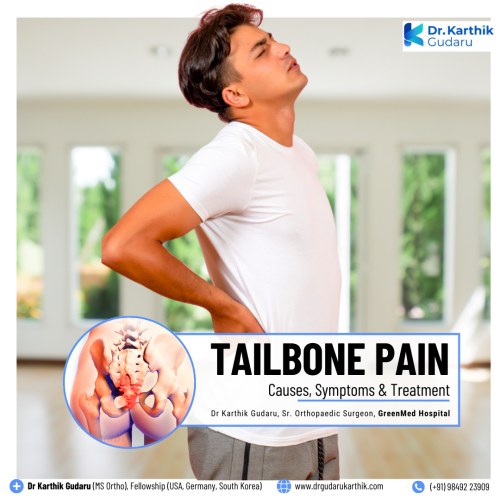
Understanding Tailbone Pain
The coccyx is made up of three to five small fused bones and plays a role in weight-bearing when a person sits and leans backwards. Because of its position, it is vulnerable to injury and strain. Tailbone pain often develops gradually but may also appear suddenly after trauma. In many cases, the exact cause may not be immediately obvious, which can make the condition frustrating for patients.
What are the Common Causes of Tailbone Pain?
One of the most frequent causes of tailbone pain is direct trauma. Falls onto the buttocks, slipping on stairs, or sports-related injuries can bruise, fracture, or dislocate the coccyx. Even minor injuries may result in lingering pain due to inflammation of surrounding tissues.
Prolonged sitting is another major contributor. Sitting for long hours on hard or narrow surfaces puts continuous pressure on the tailbone, leading to irritation and discomfort. Poor posture, especially slouching while sitting, increases stress on the coccyx and surrounding ligaments.
Childbirth is a well-known cause of tailbone pain in women. During vaginal delivery, the coccyx may be stretched, displaced, or injured as the baby passes through the birth canal. Pain may persist for weeks or months after delivery, particularly if there was prolonged labour or use of forceps.
Degenerative changes in the spine can also lead to tailbone pain. As people age, the joints and discs around the coccyx may wear down, causing instability or inflammation. Conditions such as arthritis can affect the coccygeal joints, leading to chronic discomfort.
In some cases, infections, tumours, or cysts near the tailbone may be responsible. A pilonidal cyst, which forms near the crease of the buttocks, can cause localised pain, swelling, and infection. Although rare, tumours involving the coccyx or surrounding structures may also present as persistent tailbone pain and require thorough medical evaluation.
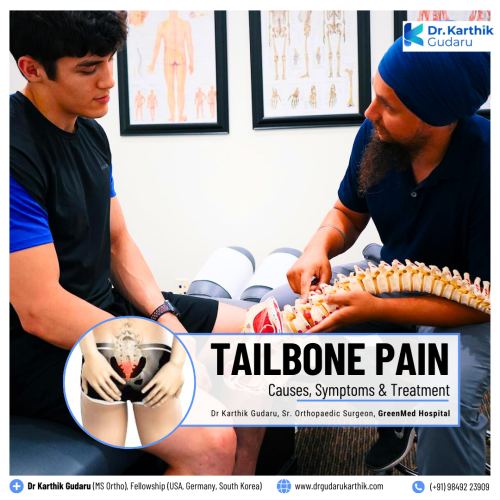
What are the Symptoms of Tailbone Pain?
The hallmark symptom of coccydynia is pain at the base of the spine, particularly when sitting or rising from a seated position. The pain may feel dull and achy or sharp and stabbing, depending on the cause and severity.
Many people notice that pain worsens with prolonged sitting, especially on hard surfaces. Leaning backwards while seated often increases discomfort, while leaning forward may provide temporary relief. Activities such as standing up from a chair, climbing stairs, or bending can also trigger pain.
Some patients experience tenderness or swelling over the tailbone area. In certain cases, pain may radiate to the lower back, hips, or buttocks. Women may notice increased pain during menstruation or sexual intercourse, while bowel movements can also become uncomfortable due to pressure on the coccyx.
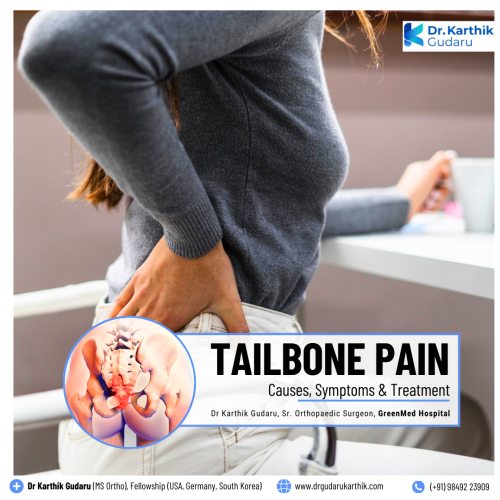
Diagnosis of Tailbone Pain
Diagnosis usually begins with a detailed medical history and physical examination. The doctor may gently examine the area to assess tenderness, swelling, or abnormal movement of the coccyx. Understanding when the pain started and what activities worsen or relieve it is key to identifying the underlying cause.
Imaging tests such as X-rays or MRI scans may be recommended if pain is severe, persistent, or associated with trauma. These tests help rule out fractures, dislocations, infections, or tumours and provide a clearer picture of the coccyx and surrounding tissues.
Treatment Options for Tailbone Pain
Treatment for tailbone pain depends on the cause and severity, but is usually conservative in most cases. Rest and activity modification are often the first steps. Avoiding prolonged sitting and using proper posture can significantly reduce strain on the coccyx.
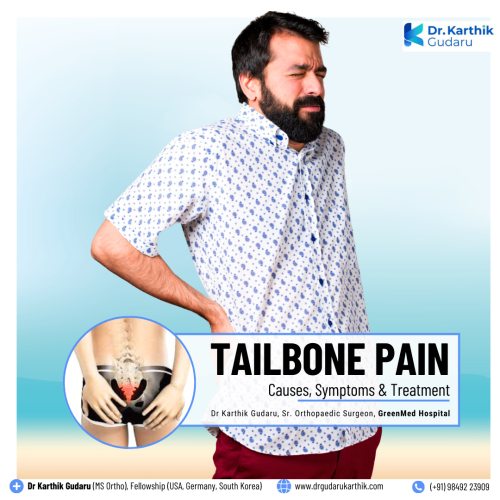
Using a specially designed cushion, such as a donut or wedge-shaped cushion, helps relieve pressure on the tailbone while sitting. Applying ice packs in the initial stages can reduce inflammation, while heat therapy may help relax muscles in chronic cases.
Medications such as nonsteroidal anti-inflammatory drugs (NSAIDs) are commonly used to relieve pain and inflammation. In cases of severe pain, doctors may prescribe stronger pain relievers or muscle relaxants for short-term use.
Physical therapy plays an important role in recovery. Therapists may guide patients through stretching and strengthening exercises to improve posture, flexibility, and pelvic floor muscle function. Manual manipulation techniques may also help realign the coccyx in selected cases.
For persistent pain that does not respond to conservative treatment, injections may be considered. Corticosteroid injections or local anaesthetic blocks around the coccyx can provide significant pain relief by reducing inflammation and nerve irritation.
Surgery is rarely required and is considered only when all other treatments fail. Coccygectomy, the surgical removal of the coccyx, is reserved for severe, chronic cases and requires careful patient selection due to the risk of complications.
When to Seek Medical Help?
Tailbone pain that lasts more than a few weeks, worsens over time, or is accompanied by fever, unexplained weight loss, or severe swelling should not be ignored. Prompt medical evaluation helps rule out serious underlying conditions and ensures appropriate treatment.
Tailbone pain can be uncomfortable and disruptive, but it is often manageable with the right approach. Understanding the causes and recognising symptoms early allows for timely treatment and faster recovery. With proper care, lifestyle adjustments, and medical guidance, most people with tailbone pain can return to normal activities and enjoy improved comfort and mobility.

Dr Karthik Gudaru, MS Orthopaedics, MBBS, Fellowship in Knee and Hip Arthroplasty (USA), Fellowship in Computer-Assisted Navigation Joint Replacement Surgery (Germany), is one of Hyderabad’s leading orthopaedic surgeons with an outstanding reputation for precision, innovation, and excellence in joint replacement and orthopaedic care. Widely recognised as the best knee replacement specialist in Hyderabad, he brings a deep commitment to patient-centred care and cutting-edge surgical techniques.
Dr Karthik Gudaru is currently the Senior Orthopaedic and Joint Replacement Specialist, Department of Orthopaedics at GreenMed Hospital, Srinagar Colony, Hyderabad; Assistant Professor and Consultant Orthopaedic at BIRRD Hospital (Balaji Institute of Surgery, Research and Rehabilitation for the Disabled), Tirupati; and Joint Replacement & Pediatric Orthopaedic Specialist at Sri Maruthi Hospitals, Tirupati.
Dr Karthik Gudaru’s treatment specialisations –
Total Knee Replacement Surgery.
Total Shoulder Replacement Surgery.
Hip Joint Treatments
Total Elbow Arthroscopy.
Computer-Assisted Knee Replacement Surgery.
Stem Cell Therapy for key orthopaedic treatments.
Pediatric Orthopaedics Treatments for Cerebral Palsy, Congenital Anomalies, Poliomyelitis & Metabolic Bone Diseases
Hospital Affiliations
OPD, GreenMed Hospital, 8-3-833/71, Srinagar Colony Main Rd, Kamalapuri Colony, Banjara Hills, Hyderabad, Telangana
Durgabai Deshmukh Hospital, Vidyanagar, Hyderabad
Sri Maruthi Hospitals, OPD, 19-3-30/C1, Near RTC Bus Stand, Kennedy Nagar, Tirupati, 517501
BIRRD Hospital, Tirupati (Consultant & Asst. Professor)
Education and Affiliation
MBBS: Kasturba Medical College, Manipal University, Karnataka (2012), Registration No: TSMC/FMR/16001
MS (Orthopaedics): Sri Ramachandra Medical College & Research Institute, Chennai (2016), Registration No: 119525
Knee & Hip Arthroplasty Fellowship: Dartmouth Hospital, USA (2018)
Robotic & Computer-Assisted Joint Replacement Fellowship: Asklepios Hospital, Germany (2018)
AO Trauma & Emergency Orthopaedic Care Fellowship: Guro National Hospital, South Korea (2019–2020)
Spinal Surgery Observer Training: Yonsei University, South Korea (2015)