

Key takeaways
- People with diabetes can undergo knee replacement safely if their blood sugar levels are well-controlled before and after surgery.
- Proper pre-surgical evaluation and ongoing glucose management significantly reduce risks like infection and delayed healing.
- Successful surgery can improve mobility, which may also help in better long-term diabetes management.
This Article is Medically Reviewed by Dr Karthik Gudaru, MS Orthopaedics, Fellowship in Computer-Assisted Navigation and Joint Replacement Surgery (Germany), HOD Orthopaedic Department, GreenMed Hospitals, Hyderabad

Living with diabetes often means paying close attention to multiple aspects of your health, especially when it comes to joints and mobility. Over time, conditions like osteoarthritis can worsen, making everyday activities painful and limiting independence. For many people, knee replacement surgery becomes a viable solution to restore movement and improve the quality of life.
However, if you have diabetes, you may wonder whether undergoing such a major procedure is safe or even possible. The good news is that having diabetes does not automatically disqualify you from getting a knee replacement—but it does require careful planning and management, shares Dr Karthik Gudaru, HOD orthopaedic department at GreenMed Hospital, Hyderabad and a specialist orthopaedic knee replacement surgeon in Hyderabad and India.
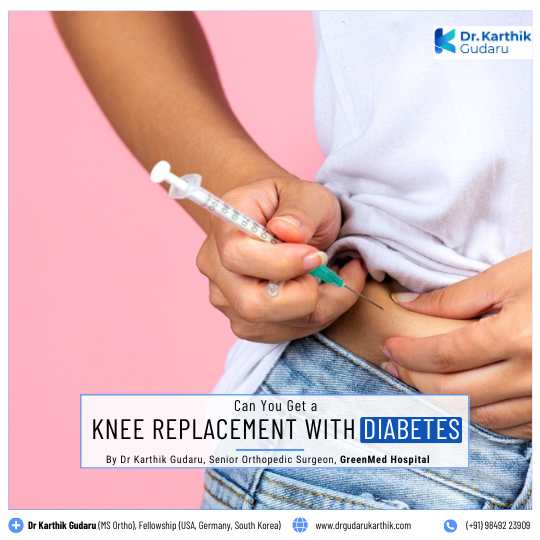
Can people with diabetes safely undergo knee replacement surgery?
Yes, people with diabetes can safely undergo knee replacement surgery, provided their condition is well-managed. Doctors typically assess blood sugar levels, overall health, and the presence of complications before approving surgery. Controlled diabetes significantly reduces the risk of complications, while poorly managed diabetes can increase the chances of infection, delayed healing, and other surgical risks. Therefore, the key factor is not just having diabetes, but how effectively it is controlled before and after the procedure.
Dr Karthik Gudaru, an orthopedic knee joint surgeon says, “Knee replacement surgery in individuals with diabetes is not a question of possibility, but of preparation and control. When blood sugar levels are managed effectively, the risks associated with surgery become comparable to those in non-diabetic patients. The journey, however, requires a more disciplined approach—one that combines medical supervision, lifestyle adjustments, and patient awareness.
Diabetes may influence healing and recovery, but it does not have to limit access to life-changing procedures. With the right precautions, patients can experience not only relief from chronic knee pain but also a renewed sense of mobility and independence. In fact, improved movement after surgery can contribute positively to diabetes management itself. Ultimately, success lies in a collaborative effort between the patient and healthcare providers, ensuring that both joint health and metabolic health are addressed together for the best possible outcome.”
Understanding the Link Between Diabetes and Joint Health
Diabetes can have a direct and indirect impact on joint health. High blood sugar levels over time can lead to inflammation, which may worsen joint degeneration. Additionally, people with diabetes are more prone to obesity, a major risk factor for knee osteoarthritis. This combination often accelerates the need for interventions like knee replacement.
Another important aspect is that diabetes can affect nerves and blood circulation. Poor circulation may slow down healing after surgery, while nerve damage can affect recovery and rehabilitation. These factors make it essential to address diabetes as part of the overall treatment plan rather than viewing knee problems in isolation.
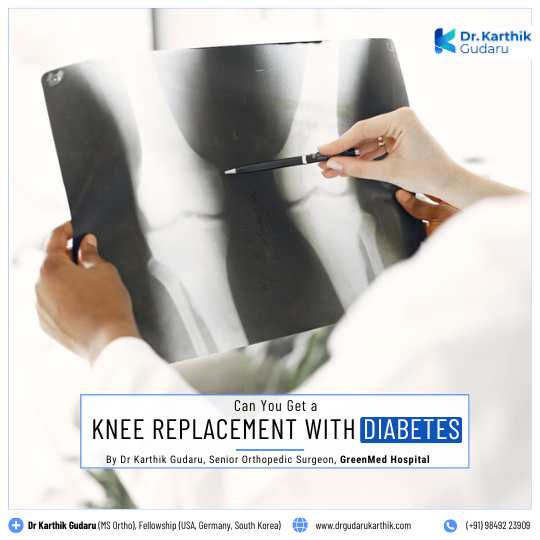
Pre-Surgical Evaluation and Preparation
Before recommending knee replacement, doctors conduct a thorough evaluation. This includes checking HbA1c levels, which reflect average blood sugar over the past few months. Ideally, this level should be within a controlled range to minimize risks.
Patients may also undergo cardiovascular assessments, kidney function tests, and infection screenings. If blood sugar levels are too high, surgery may be postponed until better control is achieved. In some cases, adjustments to medication, diet, or insulin therapy are recommended weeks or even months before surgery.
Preparation also involves lifestyle changes. Maintaining a balanced diet, engaging in light physical activity, and quitting smoking (if applicable) can significantly improve surgical outcomes. These steps not only prepare the body for surgery but also support faster recovery.
Risks Associated with Knee Replacement in Diabetic Patients
While knee replacement is generally safe, diabetes can increase certain risks. One of the primary concerns is infection. Elevated blood sugar levels can weaken the immune system, making it harder for the body to fight infections at the surgical site.
Delayed wound healing is another common issue. High glucose levels can impair the body’s natural repair mechanisms, leading to longer recovery times. There is also a slightly higher risk of blood clots and cardiovascular complications in diabetic patients.
However, it’s important to note that these risks are significantly reduced when diabetes is well-controlled. Advances in surgical techniques and post-operative care have also improved outcomes for diabetic patients over the years.
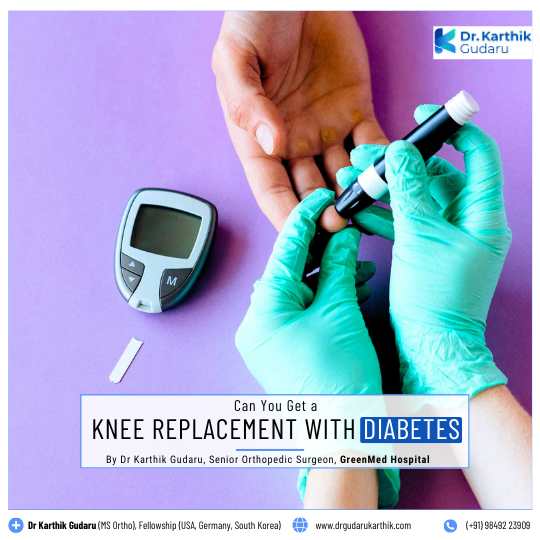
The Importance of Blood Sugar Control
Blood sugar management is the most critical factor in determining the success of knee replacement surgery for diabetic patients. Both pre-operative and post-operative glucose levels need to be carefully monitored.
During surgery, medical teams often use insulin or other medications to keep blood sugar within a safe range. After surgery, maintaining stable glucose levels helps prevent infections and supports proper wound healing.
Patients are usually advised to monitor their blood sugar more frequently during the recovery period. Close coordination between the orthopaedic surgeon and the physician managing diabetes ensures a smoother healing process.
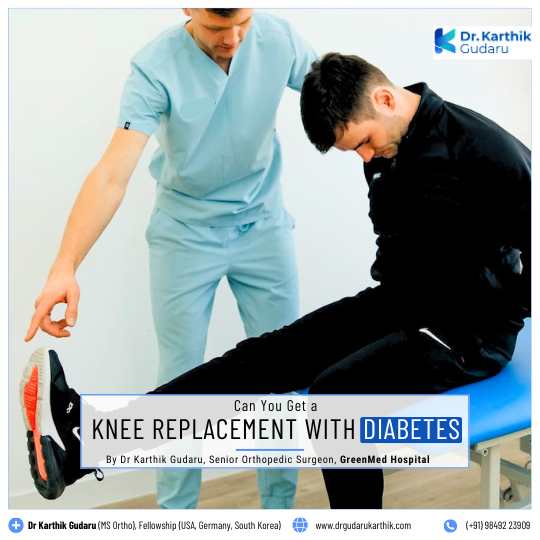
Recovery and Rehabilitation After Surgery
Recovery from knee replacement involves physical therapy, pain management, and gradual return to normal activities. For diabetic patients, this phase requires additional attention.
Physical therapy helps restore strength and mobility, but it must be balanced with careful monitoring of blood sugar levels. Pain, stress, and reduced activity can all affect glucose control, so medication adjustments may be necessary.
Wound care is another critical aspect. Keeping the surgical site clean and monitoring for signs of infection—such as redness, swelling, or unusual discharge—is essential. Early detection of complications can prevent more serious issues.
Long-Term Outcomes and Benefits
Despite the additional precautions required, knee replacement surgery can offer significant benefits for people with diabetes. Reduced pain, improved mobility, and better quality of life are common outcomes.
Many patients find that increased mobility after surgery helps them manage their diabetes more effectively. Being able to exercise regularly can lead to better blood sugar control, weight management, and overall health improvement.
Long-term success largely depends on continued diabetes management and adherence to medical advice. Regular follow-ups with healthcare providers ensure that both joint health and diabetes remain under control.
| Aspect | Details |
|---|---|
| Eligibility | Possible if diabetes is well-controlled |
| Main Risk Factors | Infection, delayed healing, blood sugar fluctuations |
| Pre-Surgery Requirement | Stable HbA1c levels and overall health assessment |
| Blood Sugar Management | Crucial before, during, and after surgery |
| Recovery Focus | Wound care, physical therapy, glucose monitoring |
| Long-Term Benefits | Pain relief, improved mobility, better diabetes control |
| Success Factor | Coordination between patient, surgeon, and diabetes specialist |
Having diabetes does not mean you have to live with chronic knee pain or limited mobility. Knee replacement surgery is a viable option for many diabetic patients, as long as the condition is well-managed. The key lies in proper preparation, strict blood sugar control, and coordinated care between healthcare providers.
By taking the necessary precautions and staying committed to your health, you can safely undergo knee replacement and enjoy a more active, pain-free life.

Dr Karthik Gudaru, MS Orthopaedics, MBBS, Fellowship in Knee and Hip Arthroplasty (USA), Fellowship in Computer-Assisted Navigation Joint Replacement Surgery (Germany), is one of Hyderabad’s leading orthopaedic surgeons with an outstanding reputation for precision, innovation, and excellence in joint replacement and orthopaedic care. Widely recognised as the best knee replacement specialist in Hyderabad, he brings a deep commitment to patient-centred care and cutting-edge surgical techniques.
Dr Karthik Gudaru is currently the Senior Orthopaedic and Joint Replacement Specialist, Department of Orthopaedics at GreenMed Hospital, Srinagar Colony, Hyderabad; Assistant Professor and Consultant Orthopaedic at BIRRD Hospital (Balaji Institute of Surgery, Research and Rehabilitation for the Disabled), Tirupati; and Joint Replacement & Pediatric Orthopaedic Specialist at Sri Maruthi Hospitals, Tirupati.
Dr Karthik Gudaru’s treatment specialisations –
Total Knee Replacement Surgery.
Total Shoulder Replacement Surgery.
Hip Joint Treatments
Total Elbow Arthroscopy.
Computer-Assisted Knee Replacement Surgery.
Stem Cell Therapy for key orthopaedic treatments.
Pediatric Orthopaedics Treatments for Cerebral Palsy, Congenital Anomalies, Poliomyelitis & Metabolic Bone Diseases
Hospital Affiliations
OPD, GreenMed Hospital, 8-3-833/71, Srinagar Colony Main Rd, Kamalapuri Colony, Banjara Hills, Hyderabad, Telangana
Durgabai Deshmukh Hospital, Vidyanagar, Hyderabad
Sri Maruthi Hospitals, OPD, 19-3-30/C1, Near RTC Bus Stand, Kennedy Nagar, Tirupati, 517501
BIRRD Hospital, Tirupati (Consultant & Asst. Professor)
Education and Affiliation
MBBS: Kasturba Medical College, Manipal University, Karnataka (2012), Registration No: TSMC/FMR/16001
MS (Orthopaedics): Sri Ramachandra Medical College & Research Institute, Chennai (2016), Registration No: 119525
Knee & Hip Arthroplasty Fellowship: Dartmouth Hospital, USA (2018)
Robotic & Computer-Assisted Joint Replacement Fellowship: Asklepios Hospital, Germany (2018)
AO Trauma & Emergency Orthopaedic Care Fellowship: Guro National Hospital, South Korea (2019–2020)
Spinal Surgery Observer Training: Yonsei University, South Korea (2015)