
Key Takeaways
- Juvenile Idiopathic Arthritis is a chronic autoimmune condition in children that causes joint inflammation, stiffness, and potential long-term complications if untreated.
- Early symptoms such as joint swelling, morning stiffness, limp, and fatigue are often subtle but crucial for timely diagnosis.
- Proper management through medications, physical therapy, and specialist care helps control symptoms and allows children to lead active lives.
Juvenile Idiopathic Arthritis (JIA) is more than just joint pain; it’s a chronic autoimmune condition requiring specialized care. This guide covers early warning signs—including morning stiffness and limping—the diagnostic process, and how a combination of medical and physical therapy helps children in Hyderabad maintain an active, thriving lifestyle.
This Article is Medically Reviewed by Dr Karthik Gudaru, MS Orthopaedics, Fellowship in Computer-Assisted Navigation and Joint Replacement Surgery (Germany), HOD Orthopaedic Department, GreenMed Hospitals, Hyderabad.
Juvenile Idiopathic Arthritis (JIA) is a chronic inflammatory condition that affects children under the age of 16, causing persistent joint pain, swelling, and stiffness. Unlike adult arthritis, this condition is not simply due to wear and tear; it is considered an autoimmune disorder, where the body’s immune system mistakenly attacks its own healthy tissues. As a result, inflammation develops in the joints and sometimes in other parts of the body.
JIA can vary widely in severity, from mild cases that resolve over time to more complex forms that require long-term medical management. Early recognition and timely care are crucial to prevent joint damage and ensure a better quality of life for the child, shares Dr Karthik Gudaru, a Senior Pediatric Orthopaedic surgeon and a specialist in Hyderabad.
What are the early signs and symptoms of Juvenile Idiopathic Arthritis?
The early symptoms of Juvenile Idiopathic Arthritis can often be subtle and easily overlooked, especially because children may not clearly express their discomfort. One of the most common signs is persistent joint swelling, which may or may not be painful initially. Parents may notice that the child has difficulty performing routine activities such as walking, running, or even holding objects.
Morning stiffness is another important indicator, in which the child may appear unusually stiff or slow to move after waking up. This stiffness tends to improve as the day progresses, but can recur after periods of inactivity. Some children may develop a limp without any history of injury, which should raise concern.
In addition to joint-related symptoms, systemic features such as fever, fatigue, and loss of appetite may also be present in certain types of JIA. In some cases, eye inflammation can occur, which may not cause obvious symptoms but can lead to serious complications if left untreated. Recognising these early warning signs plays a critical role in initiating timely diagnosis and treatment.
Dr Karthik Gudaru says “Juvenile Idiopathic Arthritis may begin quietly, but early recognition, timely treatment, and consistent care can transform a child’s journey from chronic discomfort to a life of mobility, growth, and resilience.”
Understanding the causes and risk factors
The exact cause of Juvenile Idiopathic Arthritis remains unknown, which is why it is termed “idiopathic.” However, it is widely believed to result from a combination of genetic predisposition and environmental triggers. Instead of protecting the body, the immune system mistakenly targets the synovium, the lining of the joints, leading to inflammation and swelling.
Certain infections or environmental exposures may act as triggers in genetically susceptible children. While JIA is not contagious, having a family history of autoimmune diseases may slightly increase the risk. It is important to understand that this condition is not caused by physical activity, injury, or diet, which are common misconceptions among parents.
How is Juvenile Idiopathic Arthritis diagnosed?
Diagnosing Juvenile Idiopathic Arthritis can be challenging because there is no single definitive test for the condition. Doctors rely on a combination of clinical evaluation, medical history, and diagnostic investigations. Persistent joint swelling lasting more than six weeks is one of the key criteria considered during diagnosis.
Blood tests may be conducted to assess inflammation levels and to rule out other conditions. Imaging studies, such as X-rays or MRI scans, can help evaluate joint damage and inflammation. In some cases, eye examinations are also recommended to detect silent inflammation that could affect vision.
Early diagnosis is essential, as delayed treatment can lead to joint deformities, growth disturbances, and long-term disability. With proper management, many children with JIA can lead active and fulfilling lives.
What are the treatment approaches and long-term outlook?
The management of Juvenile Idiopathic Arthritis focuses on controlling inflammation, relieving pain, and preventing joint damage. Treatment plans are usually individualised based on the severity and type of JIA. Medications may include anti-inflammatory drugs, disease-modifying agents, and in some cases, biologic therapies that target specific components of the immune system.
Alongside medical treatment, physical therapy plays a vital role in maintaining joint function and muscle strength. Regular exercise, guided by healthcare professionals, helps improve mobility and prevent stiffness. Emotional and psychological support is equally important, as living with a chronic condition can impact a child’s mental well-being.
The long-term outlook for children with JIA has improved significantly with advances in medical care. Many children achieve remission or experience significant symptom control with appropriate treatment and monitoring.
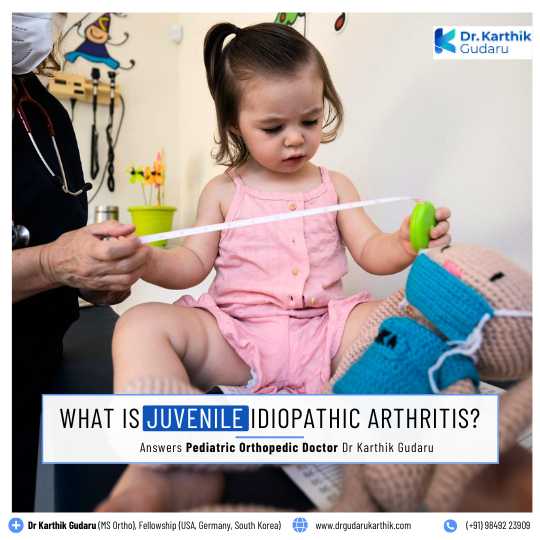
When should you consult a pediatric orthopaedic surgeon?
Consulting a pediatric orthopaedic surgeon becomes important when a child shows persistent joint swelling, pain, or difficulty in movement that does not improve over time. If the child develops joint deformities, unequal limb growth, or significant limitations in daily activities, specialised evaluation is necessary.
| Aspect | Details |
|---|---|
| Condition | Autoimmune inflammatory joint disease in children under 16 |
| Early Symptoms | Joint swelling, stiffness, limp, fatigue |
| Additional Signs | Fever, eye inflammation, reduced activity |
| Causes | Unknown; linked to immune system dysfunction |
| Risk Factors | Genetic predisposition, environmental triggers |
| Diagnosis Methods | Clinical exam, blood tests, imaging (X-ray/MRI), eye screening |
| Treatment Options | Medications, physical therapy, lifestyle management |
| When to See Specialist | Persistent joint issues, deformity, growth concerns, mobility problems |
| Long-term Outlook | Manageable with early treatment; many children achieve good outcomes |
A pediatric orthopaedic surgeon works closely with pediatric rheumatologists to assess joint health and determine if any surgical intervention or advanced management is required. Early consultation ensures that complications are minimized and that the child receives comprehensive care tailored to their condition.
Juvenile Idiopathic Arthritis is a complex but manageable condition when identified early. Understanding its symptoms, causes, and treatment options empowers parents to seek timely medical care. With the right approach and consistent follow-up, children with JIA can continue to grow, play, and thrive despite the challenges posed by the condition.

Dr Karthik Gudaru, MS Orthopaedics, MBBS, Fellowship in Knee and Hip Arthroplasty (USA), Fellowship in Computer-Assisted Navigation Joint Replacement Surgery (Germany), is one of Hyderabad’s leading orthopaedic surgeons with an outstanding reputation for precision, innovation, and excellence in joint replacement and orthopaedic care. Widely recognised as the best knee replacement specialist in Hyderabad, he brings a deep commitment to patient-centred care and cutting-edge surgical techniques.
Dr Karthik Gudaru is currently the Senior Orthopaedic and Joint Replacement Specialist, Department of Orthopaedics at GreenMed Hospital, Srinagar Colony, Hyderabad and Assistant Professor and Consultant Orthopaedic at BIRRD Hospital (Balaji Institute of Surgery, Research and Rehabilitation for the Disabled), Tirupati.
Dr Karthik Gudaru’s Treatment Specialisation are –
Knee Joint Treatments (Including Total Knee Replacement Surgery)
Shoulder Joint Treatments (Including Total Shoulder Replacement Surgery)
Hip Joint Treatments (Including Total Hip Replacement Surgery)
Elbow Joint Treatments (Including Total Elbow Arthroscopy)
Computer-Assisted Knee Replacement Surgery
Stem Cell Therapy for key orthopaedic treatments