

Summary
- Text Neck is a posture-related condition caused by prolonged use of smartphones, tablets, and computers while looking downward.
- Common symptoms include neck pain, stiffness, headaches, shoulder tension, and reduced mobility that can worsen over time.
- Maintaining proper posture, taking regular screen breaks, and seeking early orthopaedic evaluation can help prevent long-term spinal problems.
This Article is Medically Reviewed by Dr Karthik Gudaru, MS Orthopaedics, Fellowship in Computer-Assisted Navigation and Joint Replacement Surgery (Germany), HOD Orthopaedic Department, GreenMed Hospitals, Hyderabad.

Smartphones, tablets, and laptops have become an inseparable part of modern life. Whether you are working, studying, scrolling through social media, or watching videos, chances are you spend several hours each day looking down at a screen. While technology has made life more convenient, it has also introduced a growing health concern known as “Text Neck.”
Text Neck is a repetitive stress injury caused by prolonged forward head posture while using digital devices. What may begin as occasional neck stiffness can gradually develop into chronic pain, reduced mobility, headaches, and even long-term spinal problems if left unaddressed, says Dr Karthik Gudaru, Senior Orthopaedic Surgeon and a specialist in Orthopaedic Surgeon for Shoulder Joint Treatments in Hyderabad, Tirupati and in India.

Could Your Daily Screen Habits Be Damaging Your Neck?
The human head weighs approximately 4.5 to 5.5 kilograms when positioned correctly over the spine. However, when the head tilts forward while looking at a phone or tablet, the strain on the neck increases significantly. The further the head moves away from its natural alignment, the more pressure is placed on the muscles, ligaments, and cervical spine.
Many people spend hours every day in this position without realising the cumulative stress they are placing on their neck and upper back. Over time, this constant strain can lead to discomfort that extends beyond the neck itself.
“Your screen may be smart, but your spine still needs protection. The posture habits you build today will shape the health of your neck tomorrow.”

What Exactly Is Text Neck?
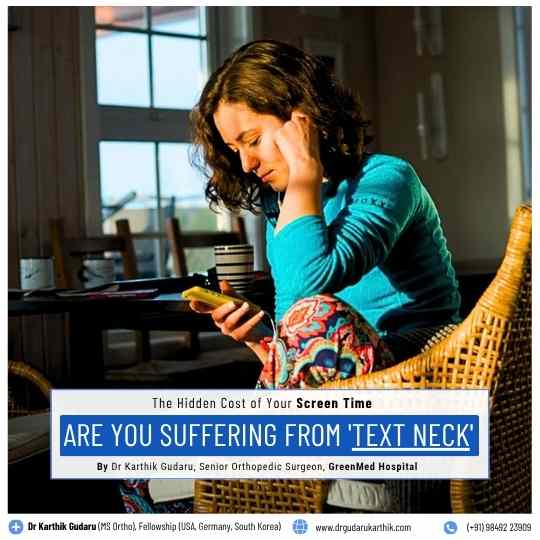
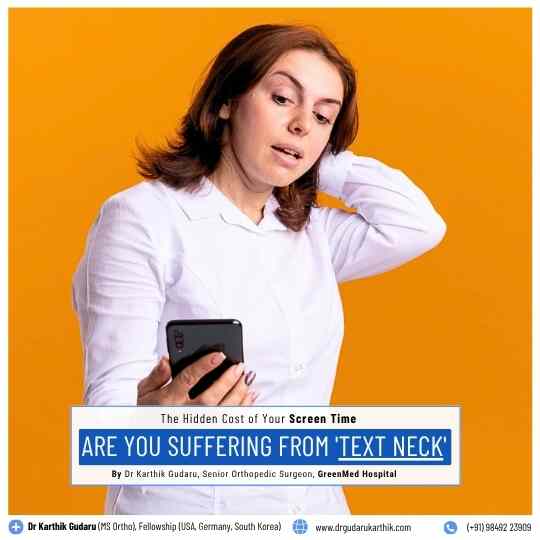
Text Neck refers to a posture-related condition that develops when a person repeatedly bends their neck forward while using electronic devices. This sustained posture places excessive stress on the cervical spine and surrounding muscles.
Unlike a sudden injury, Text Neck develops gradually. Symptoms often begin subtly and may worsen over months or years. Because digital device usage is so common, many individuals dismiss early warning signs until the discomfort begins interfering with daily activities.
Common Symptoms of Text Neck
Neck pain is often the first and most noticeable symptom. Many people also experience stiffness that makes it difficult to turn their head comfortably. Shoulder tightness and upper back discomfort frequently accompany these symptoms because the surrounding muscles work harder to support the misaligned posture.
Some individuals develop frequent headaches, especially at the base of the skull, due to tension in the neck muscles. Others may notice reduced flexibility, muscle fatigue, or a persistent feeling of soreness after extended screen use. In more advanced cases, nerve irritation may cause tingling, numbness, or pain radiating into the shoulders and arms.
Why Is Text Neck Becoming So Common?
The rise of smartphones and remote work has dramatically increased the amount of time people spend looking down at screens. Many individuals check their phones hundreds of times each day, often maintaining poor posture for prolonged periods.
Children, teenagers, and young adults are also spending more time on digital devices than ever before. As a result, orthopaedic specialists are seeing posture-related neck problems in increasingly younger age groups. The combination of extended screen time, poor workstation ergonomics, and limited physical activity has created the perfect environment for Text Neck to develop.

How Can Text Neck Affect Your Long-Term Health?
Persistent forward head posture can lead to more than temporary discomfort. Over time, the abnormal stress on the cervical spine may contribute to accelerated wear and tear of spinal structures.
Muscles can become chronically tight and fatigued, while joints and discs in the neck experience increased pressure. This may result in recurring pain episodes, reduced neck mobility, and difficulty maintaining proper posture even when not using a device. If left untreated, severe cases can affect overall spinal alignment, potentially contributing to pain in the shoulders, upper back, and even the lower back.
Preventing Text Neck Starts with Better Habits
One of the simplest ways to reduce strain is to hold devices at eye level whenever possible. This helps maintain a more natural head position and reduces stress on the neck. Taking regular breaks throughout the day is equally important. Standing up, stretching, and changing positions can help relieve muscle tension before it becomes problematic.
Creating an ergonomic workstation also plays a significant role. Computer monitors should be positioned at eye level, and chairs should provide adequate support for the spine. Regular physical activity and exercises that strengthen the neck, shoulders, and upper back can improve posture and reduce the risk of developing chronic symptoms.
Can Text Neck Be Treated?
The good news is that most cases of Text Neck respond well to early intervention. Treatment often focuses on correcting posture, reducing inflammation, improving flexibility, and strengthening supportive muscles.
Physical therapy exercises can help restore proper movement patterns and alleviate discomfort. Heat therapy, posture correction techniques, and activity modifications are frequently recommended depending on symptom severity.
For individuals experiencing persistent or worsening pain, a thorough orthopaedic evaluation may be necessary to rule out underlying spinal conditions and develop a personalised treatment plan.

When Should You Visit an Orthopaedic Doctor for Neck Pain?
If your neck pain continues despite rest and posture correction, it is important not to ignore the symptoms. You should consider consulting an orthopaedic surgeon if you experience persistent pain lasting several weeks, recurring headaches associated with neck discomfort, restricted neck movement, or pain that radiates into the shoulders and arms.
Medical evaluation becomes especially important if you notice numbness, tingling, weakness in the arms or hands, or symptoms that interfere with your daily activities and quality of life. An orthopaedic specialist can assess the health of your cervical spine, identify the underlying cause of your symptoms, and recommend the most appropriate treatment before the condition progresses further.
In a world where screens are unavoidable, protecting your neck has become more important than ever. Small changes in posture and device usage today can help prevent years of discomfort tomorrow.

Dr Karthik Gudaru, MS Orthopaedics, MBBS, Fellowship in Knee and Hip Arthroplasty (USA), Fellowship in Computer-Assisted Navigation Joint Replacement Surgery (Germany), is one of Hyderabad’s leading orthopaedic surgeons with an outstanding reputation for precision, innovation, and excellence in joint replacement and orthopaedic care. Widely recognised as the best knee replacement specialist in Hyderabad, he brings a deep commitment to patient-centred care and cutting-edge surgical techniques.
Dr Karthik Gudaru is currently the Senior Orthopaedic and Joint Replacement Specialist, Department of Orthopaedics at GreenMed Hospital, Srinagar Colony, Hyderabad; Assistant Professor and Consultant Orthopaedic at BIRRD Hospital (Balaji Institute of Surgery, Research and Rehabilitation for the Disabled), Tirupati; and Joint Replacement & Pediatric Orthopaedic Specialist at Sri Maruthi Hospitals, Tirupati.
Dr Karthik Gudaru’s treatment specialisations –
Total Knee Replacement Surgery.
Total Shoulder Replacement Surgery.
Hip Joint Treatments
Total Elbow Arthroscopy.
Computer-Assisted Knee Replacement Surgery.
Stem Cell Therapy for key orthopaedic treatments.
Pediatric Orthopaedics Treatments for Cerebral Palsy, Congenital Anomalies, Poliomyelitis & Metabolic Bone Diseases
Hospital Affiliations
OPD, GreenMed Hospital, 8-3-833/71, Srinagar Colony Main Rd, Kamalapuri Colony, Banjara Hills, Hyderabad, Telangana
Durgabai Deshmukh Hospital, Vidyanagar, Hyderabad
Sri Maruthi Hospitals, OPD, 19-3-30/C1, Near RTC Bus Stand, Kennedy Nagar, Tirupati, 517501
BIRRD Hospital, Tirupati (Consultant & Asst. Professor)
Education and Affiliation
MBBS: Kasturba Medical College, Manipal University, Karnataka (2012), Registration No: TSMC/FMR/16001
MS (Orthopaedics): Sri Ramachandra Medical College & Research Institute, Chennai (2016), Registration No: 119525
Knee & Hip Arthroplasty Fellowship: Dartmouth Hospital, USA (2018)
Robotic & Computer-Assisted Joint Replacement Fellowship: Asklepios Hospital, Germany (2018)
AO Trauma & Emergency Orthopaedic Care Fellowship: Guro National Hospital, South Korea (2019–2020)
Spinal Surgery Observer Training: Yonsei University, South Korea (2015)