

Summary
- Revision knee replacement may be needed when an implant wears out, becomes loose, gets infected, or develops other complications over time.
- Maintaining a healthy weight, completing rehabilitation, and avoiding excessive stress on the joint can help extend the lifespan of a knee replacement.
- Regular follow-up visits and early management of potential problems are key to preventing complications and reducing the need for revision surgery.
This Article is Medically Reviewed by Dr Karthik Gudaru, MS Orthopaedics, Fellowship in Computer-Assisted Navigation and Joint Replacement Surgery (Germany), HOD Orthopaedic Department, GreenMed Hospitals, Hyderabad.
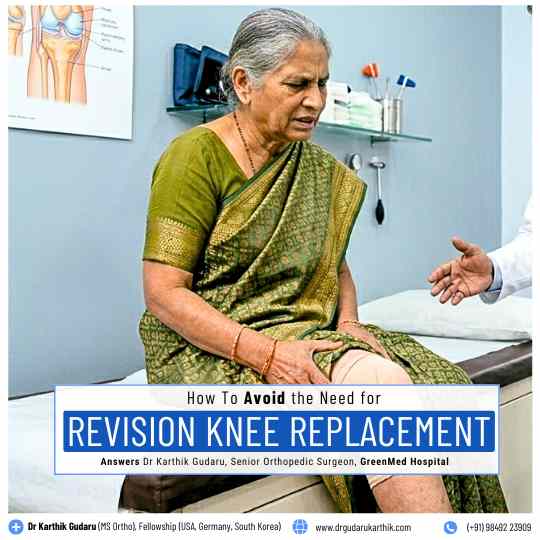
Knee replacement surgery is one of the most successful procedures for relieving chronic knee pain and restoring mobility. Modern knee implants are designed to last for many years, helping patients return to an active and independent lifestyle. However, in some cases, a second surgery, known as revision knee replacement, may become necessary due to implant wear, loosening, infection, or other complications. While not all revision surgeries can be prevented, several steps can significantly improve the longevity of a knee replacement and reduce the likelihood of requiring another operation. Dr Karthik Gudaru, Senior Orthopaedic Surgeon and a specialist in revision knee replacement surgery in Hyderabad, Tirupati and in India.
What Is Revision Knee Replacement and Why Does It Happen?
Revision knee replacement is a procedure performed to replace or repair a previously implanted artificial knee joint. It may become necessary if the implant wears out, becomes loose, gets infected, or fails to function properly. Although advances in surgical techniques and implant technology have improved long-term outcomes, maintaining the health of the replaced knee remains essential for lasting success.
“The best way to avoid revision knee replacement is to protect the first replacement through proper care, regular follow-ups, and healthy lifestyle choices that keep the joint functioning at its best.”
How Important Is Choosing the Right Surgeon and Implant?
The success of a knee replacement begins long before the surgery itself. An experienced orthopaedic surgeon carefully evaluates the patient’s condition, selects the most suitable implant, and ensures accurate positioning during the procedure. Proper implant alignment and surgical precision play a major role in reducing stress on the artificial joint and improving its lifespan. Choosing a qualified specialist and a high-quality implant can help minimise the risk of future complications.
Can Maintaining a Healthy Weight Protect Your Knee Replacement?
Excess body weight places additional pressure on the knee joint with every step. Over time, this increased load can contribute to implant wear and loosening. Maintaining a healthy weight helps reduce stress on the artificial knee and supports long-term joint function. Patients who follow a balanced diet and remain physically active often experience better outcomes after knee replacement surgery.
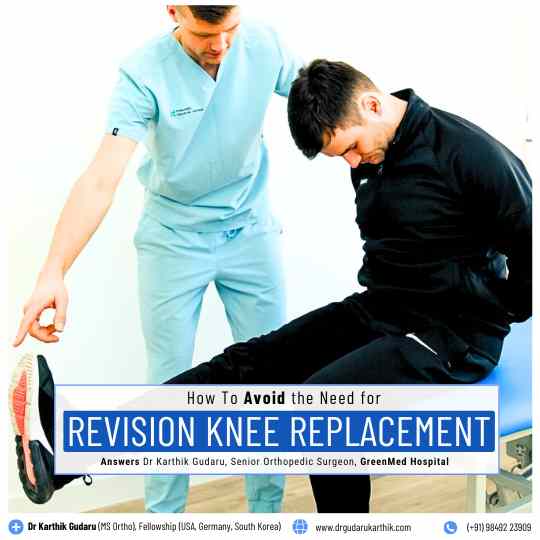
Why Is Rehabilitation So Important After Surgery?
Rehabilitation is a crucial part of recovery and long-term success. Physical therapy helps strengthen the muscles surrounding the knee, improve flexibility, and restore proper movement patterns. Strong muscles provide better support for the joint and reduce unnecessary strain on the implant. Following the recommended rehabilitation program can help maximise function while reducing the risk of future problems.
Should Certain Activities Be Avoided After Knee Replacement?
While most patients can return to normal daily activities, high-impact exercises may place excessive stress on the artificial joint. Activities involving repetitive jumping, running on hard surfaces, or sudden twisting movements can accelerate wear over time. Low-impact exercises such as walking, cycling, swimming, and controlled strength training are generally safer options for maintaining fitness while protecting the implant.
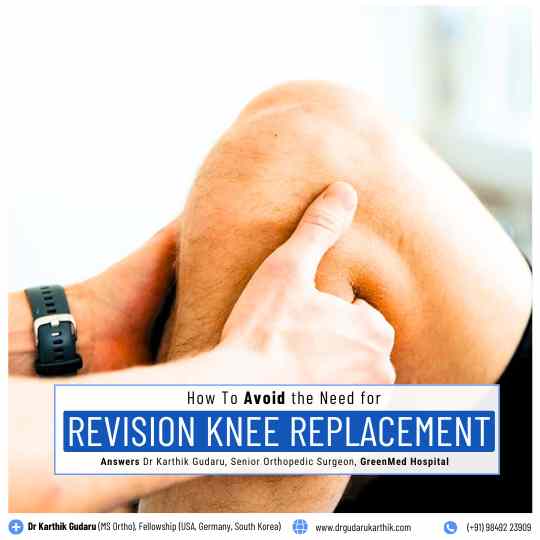
Can Regular Follow-Ups Prevent Future Complications?
Routine follow-up visits allow orthopaedic specialists to monitor the condition of the knee replacement and identify potential issues early. Even when patients feel well, periodic assessments can detect implant wear, loosening, or alignment concerns before symptoms become severe. Early intervention often helps prevent minor issues from developing into problems that require revision surgery.
How Can Infection Prevention Help Preserve the Implant?
Infection is one of the leading causes of revision knee replacement. Maintaining good overall health, managing chronic medical conditions, and following postoperative care instructions can help reduce infection risk. Patients should also inform healthcare providers about their knee replacement before undergoing certain medical or dental procedures, as recommended by their orthopaedic surgeon.
Although revision knee replacement cannot always be avoided, many patients can significantly reduce their risk through proper surgical care, healthy lifestyle choices, rehabilitation, and regular follow-up evaluations. Protecting the knee replacement from excessive stress and addressing potential problems early can help ensure that the implant remains functional for many years. With the right approach, patients can enjoy lasting pain relief, improved mobility, and a better quality of life.

Dr Karthik Gudaru, MS Orthopaedics, MBBS, Fellowship in Knee and Hip Arthroplasty (USA), Fellowship in Computer-Assisted Navigation Joint Replacement Surgery (Germany), is one of Hyderabad’s leading orthopaedic surgeons with an outstanding reputation for precision, innovation, and excellence in joint replacement and orthopaedic care. Widely recognised as the best knee replacement specialist in Hyderabad, he brings a deep commitment to patient-centred care and cutting-edge surgical techniques.
Dr Karthik Gudaru is currently the Senior Orthopaedic and Joint Replacement Specialist, Department of Orthopaedics at GreenMed Hospital, Srinagar Colony, Hyderabad; Assistant Professor and Consultant Orthopaedic at BIRRD Hospital (Balaji Institute of Surgery, Research and Rehabilitation for the Disabled), Tirupati; and Joint Replacement & Pediatric Orthopaedic Specialist at Sri Maruthi Hospitals, Tirupati.
Dr Karthik Gudaru’s treatment specialisations –
Total Knee Replacement Surgery.
Total Shoulder Replacement Surgery.
Hip Joint Treatments
Total Elbow Arthroscopy.
Computer-Assisted Knee Replacement Surgery.
Stem Cell Therapy for key orthopaedic treatments.
Pediatric Orthopaedics Treatments for Cerebral Palsy, Congenital Anomalies, Poliomyelitis & Metabolic Bone Diseases
Hospital Affiliations
OPD, GreenMed Hospital, 8-3-833/71, Srinagar Colony Main Rd, Kamalapuri Colony, Banjara Hills, Hyderabad, Telangana
Durgabai Deshmukh Hospital, Vidyanagar, Hyderabad
Sri Maruthi Hospitals, OPD, 19-3-30/C1, Near RTC Bus Stand, Kennedy Nagar, Tirupati, 517501
BIRRD Hospital, Tirupati (Consultant & Asst. Professor)
Education and Affiliation
MBBS: Kasturba Medical College, Manipal University, Karnataka (2012), Registration No: TSMC/FMR/16001
MS (Orthopaedics): Sri Ramachandra Medical College & Research Institute, Chennai (2016), Registration No: 119525
Knee & Hip Arthroplasty Fellowship: Dartmouth Hospital, USA (2018)
Robotic & Computer-Assisted Joint Replacement Fellowship: Asklepios Hospital, Germany (2018)
AO Trauma & Emergency Orthopaedic Care Fellowship: Guro National Hospital, South Korea (2019–2020)
Spinal Surgery Observer Training: Yonsei University, South Korea (2015)