

Direct Answer Summary
- Osteoarthritis affects the entire joint, not just the cartilage.
- It can develop in younger adults and may affect several joints.
- Early assessment and appropriate treatment can help manage pain and maintain mobility.
This Article is Medically Reviewed by Dr Karthik Gudaru, MS Orthopaedics, Fellowship in Computer-Assisted Navigation and Joint Replacement Surgery (Germany), HOD, Orthopaedic Department, GreenMed Hospitals, Hyderabad and Senior Paediatric Orthopaedic Surgeon, Sri Maruthi Hospitals, Tirupati
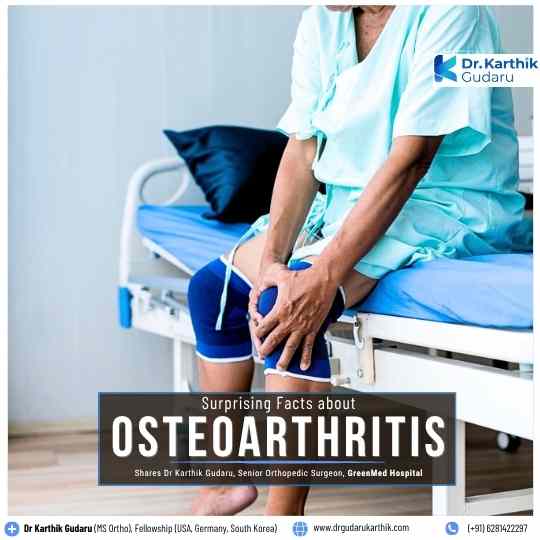
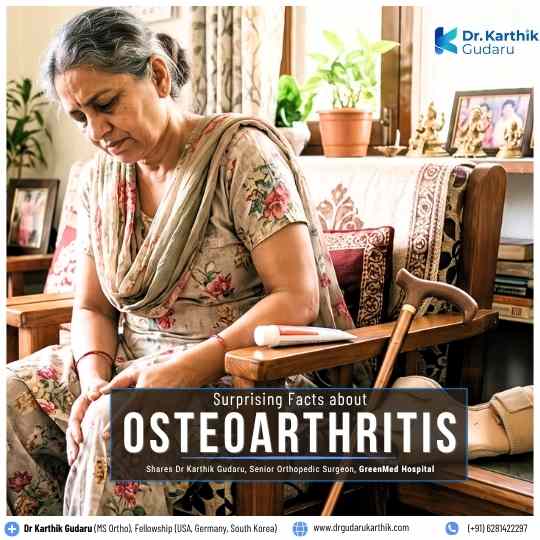
Osteoarthritis is often associated with ageing, knee pain, and difficulty walking. However, this joint condition has several surprising aspects that many people overlook. It can affect younger adults, cause symptoms that vary from person to person, and interfere with everyday activities such as climbing stairs, getting up from a chair, or opening a jar.
Understanding these facts can help people recognise symptoms, seek timely medical advice, and make informed decisions about joint health, shares Dr Karthik Gudaru, Senior Orthopaedic Surgeon for Knee Replacement Surgery in Hyderabad.
What Are the Surprising Facts About Osteoarthritis?
Some of the facts linked to osteoarthritis are given below:
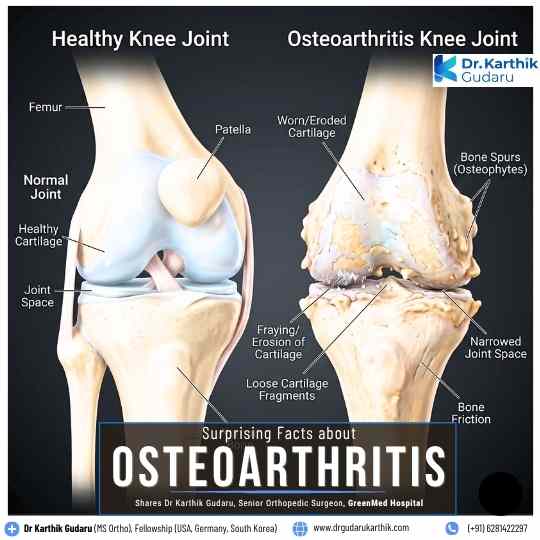
Fact 1: Osteoarthritis Affects More Than Cartilage
Osteoarthritis is commonly described as the gradual breakdown of cartilage, the protective tissue covering the ends of bones. However, it affects the entire joint, including the underlying bone, joint lining, ligaments, and surrounding tissues. Changes in these structures can contribute to pain, stiffness, swelling, and restricted movement.
Fact 2: It Is Not Just a Condition of Old Age
Although the risk increases with age, osteoarthritis can also affect younger adults. Previous joint injuries, fractures, ligament damage, repetitive stress, and certain inherited joint abnormalities may increase the likelihood of developing the condition earlier in life.
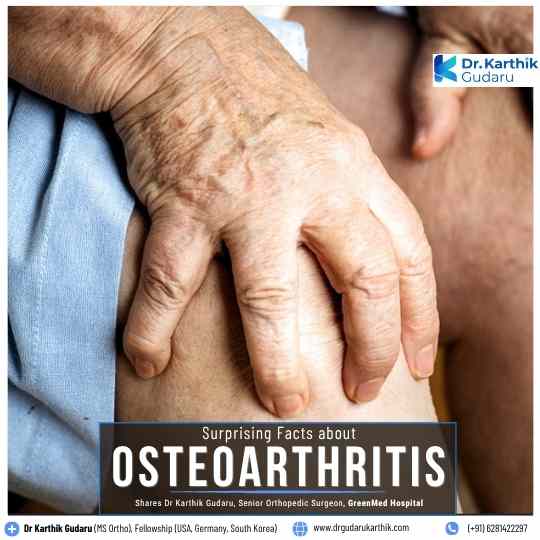
Fact 3: Joint Damage and Pain Do Not Always Match
Some people experience considerable pain despite relatively modest changes on imaging, while others have visible joint changes with few symptoms. Pain levels alone cannot reliably establish the severity of osteoarthritis. A medical assessment considers symptoms, physical findings, and investigations when appropriate.
Fact 4: It Can Affect More Than the Knees
The knees are commonly affected, but osteoarthritis can also develop in the hips, hands, spine, and other joints. Depending on the location, it may make walking, climbing stairs, gripping objects, bending, or performing routine household activities difficult.
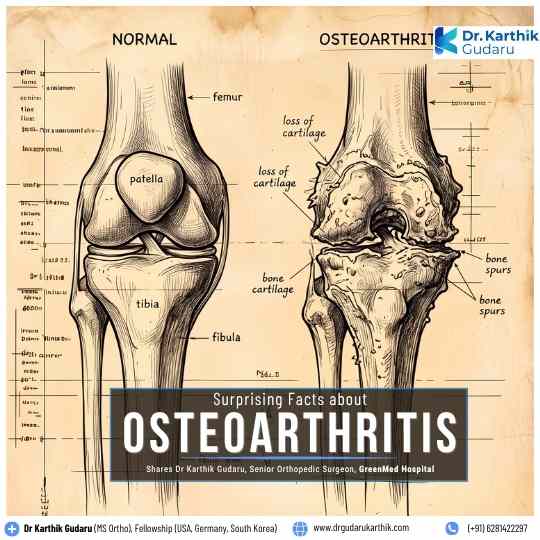
Fact 5: Clicking or Cracking Does Not Automatically Mean Severe Arthritis
Some people notice clicking, grinding, or cracking sounds when moving an affected joint. These noises alone do not confirm osteoarthritis or indicate advanced joint damage. However, if they occur alongside persistent pain, swelling, or restricted movement, a medical evaluation may be helpful.
Fact 6: Exercise Can Help Rather Than Harm
People with osteoarthritis sometimes avoid movement because they fear worsening the condition. However, appropriate exercise is an important part of managing symptoms. Muscle-strengthening exercises can support affected joints, while activities such as walking, cycling, and swimming may help maintain mobility.
The exercise programme should be adapted to the individual’s symptoms and abilities. Increasing activity gradually and seeking physiotherapy guidance can help avoid unnecessary strain.
Which Factors Increase the Risk of Osteoarthritis?
Several factors can contribute to the development of osteoarthritis. Some cannot be changed, while others may be managed to support joint health.
| Risk factor | How it may contribute |
| Increasing age | The risk rises as joint tissues change over time. |
| Previous joint injury | Damage to cartilage, ligaments, or bones may increase future risk. |
| Excess body weight | Additional stress can affect weight-bearing joints, particularly the knees and hips. |
| Family history | Inherited factors may influence susceptibility. |
| Repetitive joint stress | Repeated loading or certain work and sports activities may contribute to joint problems. |
Having one or more risk factors does not mean a person will inevitably develop osteoarthritis. The condition often results from a combination of factors.
Does Osteoarthritis Always Require Joint Replacement Surgery?
No. A diagnosis of osteoarthritis does not automatically mean surgery is necessary. Many people manage their symptoms through physiotherapy, suitable exercise, weight management when appropriate, activity modification, and medication recommended by a healthcare professional.
Joint replacement may be considered when pain and mobility limitations remain severe despite appropriate nonsurgical treatment. The decision depends on the affected joint, symptoms, overall health, and individual needs.
When Should You Seek Medical Attention?
Persistent joint pain, stiffness, swelling, or difficulty performing everyday activities warrants medical assessment. A doctor may review the symptoms, examine the affected joint, and recommend X-rays or other investigations if needed.
Sudden severe joint pain accompanied by significant swelling, redness, or fever requires urgent medical attention, as these symptoms may indicate a condition other than osteoarthritis.
“Protecting joint health is not just about reducing pain; it is about preserving movement and independence.” Says Dr Karthik Gudaru, Seniorr. Orthopedic Surgeon in Hyderabad.
Osteoarthritis is more complex than simple wear and tear. It can affect younger adults, involve several structures within a joint, and produce different symptoms in different people. Although there is currently no cure that reverses the condition, appropriate treatment can help reduce discomfort, preserve mobility, and improve quality of life.

Dr Karthik Gudaru, MS Orthopaedics, MBBS, Fellowship in Knee and Hip Arthroplasty (USA), Fellowship in Computer-Assisted Navigation Joint Replacement Surgery (Germany), is one of Hyderabad’s leading orthopaedic surgeons with an outstanding reputation for precision, innovation, and excellence in joint replacement and orthopaedic care. Widely recognised as the best knee replacement specialist in Hyderabad, he brings a deep commitment to patient-centred care and cutting-edge surgical techniques.
Dr Karthik Gudaru is currently the Senior Orthopaedic and Joint Replacement Specialist, Department of Orthopaedics at GreenMed Hospital, Srinagar Colony, Hyderabad; Assistant Professor and Consultant Orthopaedic at BIRRD Hospital (Balaji Institute of Surgery, Research and Rehabilitation for the Disabled), Tirupati; and Joint Replacement & Pediatric Orthopaedic Specialist at Sri Maruthi Hospitals, Tirupati.
Dr Karthik Gudaru’s treatment specialisations –
Total Knee Replacement Surgery.
Total Shoulder Replacement Surgery.
Hip Joint Treatments
Total Elbow Arthroscopy.
Computer-Assisted Knee Replacement Surgery.
Stem Cell Therapy for key orthopaedic treatments.
Pediatric Orthopaedics Treatments for Cerebral Palsy, Congenital Anomalies, Poliomyelitis & Metabolic Bone Diseases
Hospital Affiliations
OPD, GreenMed Hospital, 8-3-833/71, Srinagar Colony Main Rd, Kamalapuri Colony, Banjara Hills, Hyderabad, Telangana
Durgabai Deshmukh Hospital, Vidyanagar, Hyderabad
Sri Maruthi Hospitals, OPD, 19-3-30/C1, Near RTC Bus Stand, Kennedy Nagar, Tirupati, 517501
BIRRD Hospital, Tirupati (Consultant & Asst. Professor)
Education and Affiliation
MBBS: Kasturba Medical College, Manipal University, Karnataka (2012), Registration No: TSMC/FMR/16001
MS (Orthopaedics): Sri Ramachandra Medical College & Research Institute, Chennai (2016), Registration No: 119525
Knee & Hip Arthroplasty Fellowship: Dartmouth Hospital, USA (2018)
Robotic & Computer-Assisted Joint Replacement Fellowship: Asklepios Hospital, Germany (2018)
AO Trauma & Emergency Orthopaedic Care Fellowship: Guro National Hospital, South Korea (2019–2020)
Spinal Surgery Observer Training: Yonsei University, South Korea (2015)