

Summary
- Strength train: Add regular resistance exercises to build muscle.
- Eat well: prioritize protein and balanced, nutrient-rich meals.
- Recover properly: Get enough sleep and allow muscles time to recover.
This Article is Medically Reviewed by Dr Karthik Gudaru, MS Orthopaedics, Fellowship in Computer-Assisted Navigation and Joint Replacement Surgery (Germany), HOD, Orthopaedic Department, GreenMed Hospitals, Hyderabad.
Feeling weaker in your 30s can be frustrating, especially if you were more active and stronger in your 20s. You may notice that everyday activities feel slightly more tiring, your muscles do not recover as quickly after exercise, or you are gradually losing strength despite maintaining the same routine.
However, feeling weaker does not automatically mean that your body is simply “getting old.” Your lifestyle, physical activity, nutrition, sleep, stress and changing daily routine can all influence muscle strength. The good news is that your 30s can still be an excellent time to build muscle, improve physical performance and develop healthier habits.
A structured approach can make the process easier. Rather than following extreme diets or spending hours exercising, focus on three fundamentals: strength training, proper nutrition and adequate recovery shares Dr Karthik Gudaru, Sr Orthopedic Surgeon, Knee Replacement specialist in Hyderabad and Tirupati.
Why Do You Feel Weaker in Your 30s?
Your 30s often bring significant changes in lifestyle. Long working hours, commuting, family responsibilities and sedentary routines can reduce the amount of physical activity you get during the day.
When muscles are not regularly challenged, strength and muscle mass can gradually decline. Sitting for several hours every day can also contribute to poor mobility and reduced physical conditioning.
Nutrition can play another important role. Skipping meals, eating too little protein or relying heavily on processed foods may make it harder for your body to maintain and repair muscle tissue.
Sleep and stress should not be overlooked either. Poor sleep can affect energy levels and exercise performance, while prolonged stress can make it harder to maintain healthy routines.
So, instead of blaming age alone, look at the complete picture.
Step 1: Make Strength Training a Priority
If your goal is to regain muscle and strength, resistance training should be an important part of your routine.
Strength training creates a stimulus that encourages your muscles to adapt and become stronger. You do not necessarily need expensive gym equipment to begin. Exercises such as squats, lunges, push-ups, rows, planks and other bodyweight movements can provide a useful starting point.
As you become stronger, you can gradually increase the resistance, repetitions or difficulty of the exercises. This gradual progression is important because muscles need an increasing challenge to continue adapting.
You also do not need to train intensely every day. Giving different muscle groups sufficient recovery time can help you maintain consistency and reduce the risk of over-training.
If you have been inactive for a long time, start gradually rather than immediately attempting an advanced workout programme. The objective is to create a routine you can continue for months and years.
Focus on the Major Muscle Groups
A balanced strength programme should involve the major muscle groups rather than focusing only on visible muscles such as the arms or chest.
Exercises involving the legs, back, chest, shoulders and core can help improve overall strength and functional fitness. Stronger muscles can also make everyday movements such as climbing stairs, carrying groceries, lifting objects and getting up from a chair easier.
The quality of your movements matters as well. If you are unsure about exercise technique, working with a qualified fitness professional can help you learn the correct form.
Step 2: Give Your Muscles the Right Nutrition
Building or maintaining muscle requires more than exercise. Your body needs adequate energy and nutrients to repair tissues and support physical activity.
Protein is particularly important because it provides amino acids required for muscle maintenance and repair. Include appropriate protein sources in your meals, such as eggs, dairy products, pulses, beans, soy, fish, chicken or other suitable foods based on your dietary preferences.
Instead of relying on one large protein-heavy meal, try to include a good source of protein across your meals throughout the day.
But protein is not the only requirement. Your overall diet should provide carbohydrates for energy, healthy fats, vitamins, minerals and fibre. Fruits, vegetables, whole grains, nuts, seeds and other nutrient-rich foods can form part of a balanced eating pattern.
Extreme diets that severely restrict calories may not be the best approach when your goal is to improve strength and muscle. Eating too little can leave you feeling tired and may make it harder to perform well during workouts.
Stay Hydrated
Hydration is another simple but important part of physical performance. Dehydration can contribute to tiredness and reduced exercise performance, particularly during intense workouts or hot weather.
Drink fluids regularly throughout the day and increase your intake appropriately when exercising or sweating heavily.
Step 3: Treat Recovery as Part of Training
Many people focus entirely on their workouts and forget that recovery is when the body gets an opportunity to repair and adapt.
Sleep is particularly important. Consistently inadequate or poor-quality sleep can affect energy, concentration, exercise performance and recovery. Establishing a regular sleep schedule and creating a comfortable sleep environment can support better recovery.
Rest between demanding workouts is also important. Training harder is not always better. Your muscles need sufficient time to recover before being challenged again.
Stress management matters too. Work pressure and constant mental stress can make it difficult to maintain healthy eating, exercise and sleep habits. Simple activities such as walking, spending time outdoors, relaxation exercises or pursuing hobbies can help you create a healthier routine.
Consistency Beats Quick Fixes
One of the biggest mistakes people make when trying to regain muscle is expecting immediate results. They may suddenly begin intense workouts, drastically change their diet and then struggle to maintain the routine.
A better approach is to make gradual changes.
Start with manageable strength workouts. Improve the quality of your meals. Get more consistent sleep. Then gradually increase the challenge as your fitness improves.
Muscle and strength develop over time. What matters most is not whether you have one perfect week, but whether you can maintain healthy habits consistently.
“Strength in your 30s is not about turning back the clock; it is about giving your body the training, nutrition and recovery it needs today.” Says Orthopedic Surgeon in Hyderabad Dr Karthik Gudaru.
When Should You See a Doctor?
Not every episode of weakness is caused by inactivity or loss of muscle. If weakness is sudden, persistent, progressively worsening or interfering with everyday activities, it should not simply be dismissed as ageing.
Medical advice is particularly important if weakness occurs along with unexplained weight loss, persistent fatigue, numbness, difficulty walking, changes in coordination or other unusual symptoms.
A healthcare professional can assess your symptoms and determine whether an underlying nutritional, hormonal, neurological or other medical issue could be contributing to the problem.
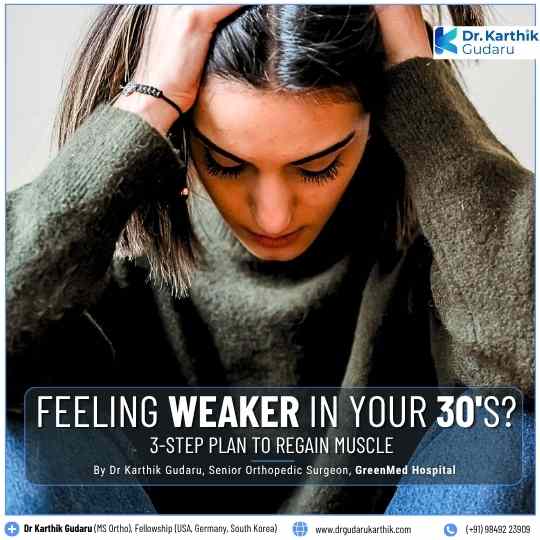
Building Strength Is Still Possible in Your 30s
Feeling weaker in your 30s can be a signal to reassess your lifestyle rather than a reason to assume that your strongest years are behind you. Regular resistance training, balanced nutrition and adequate recovery can provide a strong foundation for rebuilding muscle and improving physical fitness.
The key is to start where you are, progress gradually and remain consistent. Your 30s can be an ideal time to establish habits that support strength, mobility and better physical health for the decades ahead.
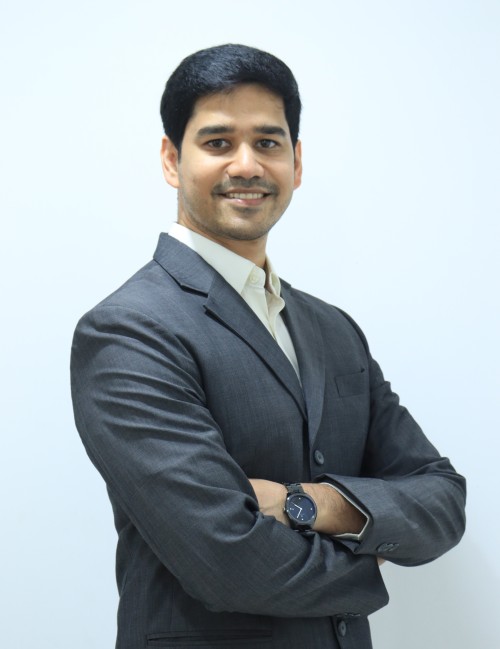
Dr Karthik Gudaru, MS Orthopaedics, MBBS, Fellowship in Knee and Hip Arthroplasty (USA), Fellowship in Computer-Assisted Navigation Joint Replacement Surgery (Germany), is one of Hyderabad’s leading orthopaedic surgeons with an outstanding reputation for precision, innovation, and excellence in joint replacement and orthopaedic care. Widely recognised as the best knee replacement specialist in Hyderabad, he brings a deep commitment to patient-centred care and cutting-edge surgical techniques.
Dr Karthik Gudaru is currently the Senior Orthopaedic and Joint Replacement Specialist, Department of Orthopaedics at GreenMed Hospital, Srinagar Colony, Hyderabad; Assistant Professor and Consultant Orthopaedic at BIRRD Hospital (Balaji Institute of Surgery, Research and Rehabilitation for the Disabled), Tirupati; and Joint Replacement & Pediatric Orthopaedic Specialist at Sri Maruthi Hospitals, Tirupati.
Dr Karthik Gudaru’s treatment specialisations –
Total Knee Replacement Surgery.
Total Shoulder Replacement Surgery.
Hip Joint Treatments
Total Elbow Arthroscopy.
Computer-Assisted Knee Replacement Surgery.
Stem Cell Therapy for key orthopaedic treatments.
Pediatric Orthopaedics Treatments for Cerebral Palsy, Congenital Anomalies, Poliomyelitis & Metabolic Bone Diseases
Hospital Affiliations
OPD, GreenMed Hospital, 8-3-833/71, Srinagar Colony Main Rd, Kamalapuri Colony, Banjara Hills, Hyderabad, Telangana
Durgabai Deshmukh Hospital, Vidyanagar, Hyderabad
Sri Maruthi Hospitals, OPD, 19-3-30/C1, Near RTC Bus Stand, Kennedy Nagar, Tirupati, 517501
BIRRD Hospital, Tirupati (Consultant & Asst. Professor)
Education and Affiliation
MBBS: Kasturba Medical College, Manipal University, Karnataka (2012), Registration No: TSMC/FMR/16001
MS (Orthopaedics): Sri Ramachandra Medical College & Research Institute, Chennai (2016), Registration No: 119525
Knee & Hip Arthroplasty Fellowship: Dartmouth Hospital, USA (2018)
Robotic & Computer-Assisted Joint Replacement Fellowship: Asklepios Hospital, Germany (2018)
AO Trauma & Emergency Orthopaedic Care Fellowship: Guro National Hospital, South Korea (2019–2020)
Spinal Surgery Observer Training: Yonsei University, South Korea (2015)