

Direct Answer Summary
- Mouse shoulder can develop from prolonged computer use, poor posture, and repetitive arm movements.
- Adjusting workstation ergonomics and taking regular movement breaks can reduce discomfort.
- Persistent pain, weakness, numbness, or restricted shoulder movement requires medical assessment.
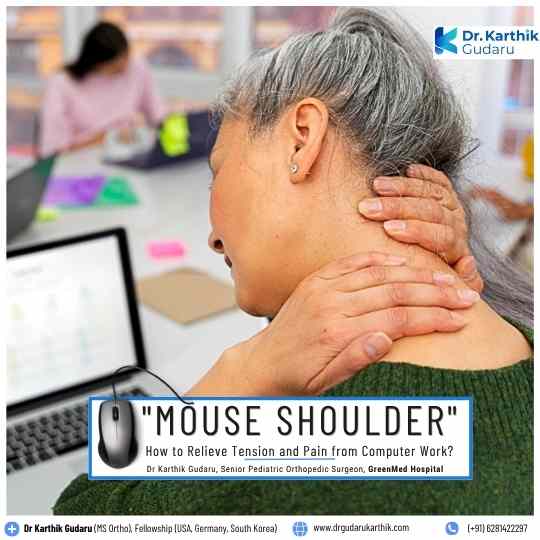
This Article is Medically Reviewed by Dr Karthik Gudaru, MS Orthopaedics, Fellowship in Computer-Assisted Navigation and Joint Replacement Surgery (Germany), HOD, Orthopaedic Department, GreenMed Hospitals, Hyderabad and Senior Paediatric Orthopaedic Surgeon, Sri Maruthi Hospitals, Tirupati
Hours spent working on a computer can leave the neck, shoulder, and upper back feeling stiff and uncomfortable. For people who use a mouse throughout the working day, the discomfort may become concentrated around the shoulder of the arm controlling the mouse. Commonly called “mouse shoulder,” this problem can interfere with concentration, productivity, and everyday activities.
Although mouse shoulder is not a formal medical diagnosis, the term describes discomfort that may arise from sustained muscle tension, repetitive movements, and poor workstation positioning. Understanding its causes and making simple changes to working habits can help reduce strain and support long-term shoulder comfort, shares Dr Karthik Gudaru, Senior Orthopaedic Surgeon for Shoulder Replacement Surgery in Hyderabad.
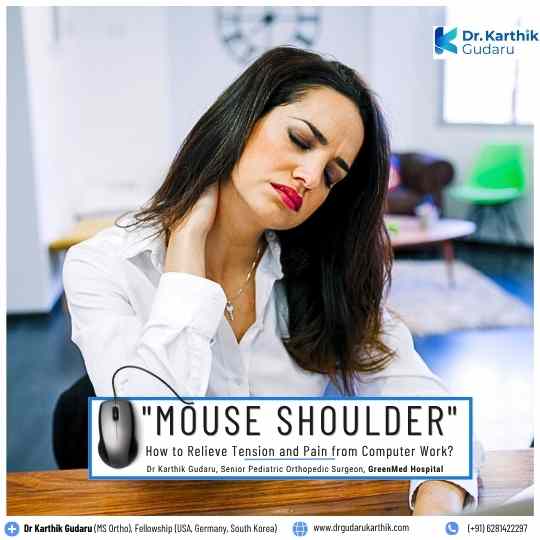
What Is Mouse Shoulder, and Why Does It Happen?
Mouse shoulder refers to shoulder tension or pain associated with prolonged computer and mouse use. When the mouse is positioned too far away, a person may repeatedly reach forward or hold the arm away from the body. Maintaining this position for long periods can place additional demands on the shoulder and neck muscles.
Several factors may contribute to the discomfort, including:
- Poor workstation setup: A desk, chair, or mouse positioned at an unsuitable height can strain the shoulder.
- Prolonged static posture: Holding the arm in one position for extended periods can cause muscular fatigue.
- Repetitive movements: Frequent clicking, scrolling, and moving the mouse may aggravate existing discomfort.
- Raised or unsupported shoulders: Tensing the shoulders while concentrating can increase muscle strain.
- Insufficient movement breaks: Working continuously without changing position may contribute to stiffness and fatigue.
The pain may develop gradually and can sometimes spread towards the neck or upper back. Other shoulder conditions can produce similar symptoms, so persistent discomfort should not automatically be attributed to computer use alone.
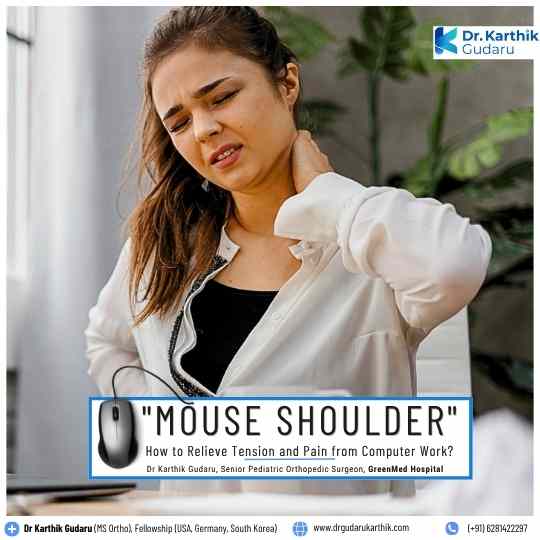
“A comfortable workstation is not just about productivity; it is also about protecting your body from the strain of repetitive daily habits.” Says Dr Karthik Gudaru, Sr Orthopaedic Surgeon, Shoulder Joint Specialist Dr Karthik Gudaru.
Adjust Your Workstation to Reduce Shoulder Strain
A well-arranged workstation can reduce unnecessary reaching and help the shoulders remain relaxed throughout the day. Keep the mouse close to the keyboard so that you can use it without stretching your arm forward or sideways. Position the keyboard and mouse at a height that allows your elbows to remain near your body, with your shoulders relaxed and wrists in a comfortable, neutral position.
Adjust your chair so that your feet are supported, and your forearms can rest comfortably while working. If the desk is too high, raising the chair and using a footrest may help maintain a more comfortable posture. Avoid holding the mouse tightly. Use gentle movements and keep frequently used items within easy reach. These small adjustments can reduce repetitive strain during long working sessions.
Take Regular Movement Breaks
Remaining in the same position for hours can increase muscular fatigue. Short, frequent breaks allow you to change posture and move the muscles involved in computer work. Stand up, walk briefly, roll your shoulders gently, or change your working position between tasks. You can also alternate between sitting and standing if your workstation supports it.
Try simple, comfortable movements such as gently drawing your shoulder blades back and relaxing them again. Stop any movement that causes sharp pain or worsens your symptoms. There is no single break schedule that works for everyone, but regular movement is generally more helpful than remaining still throughout the day.
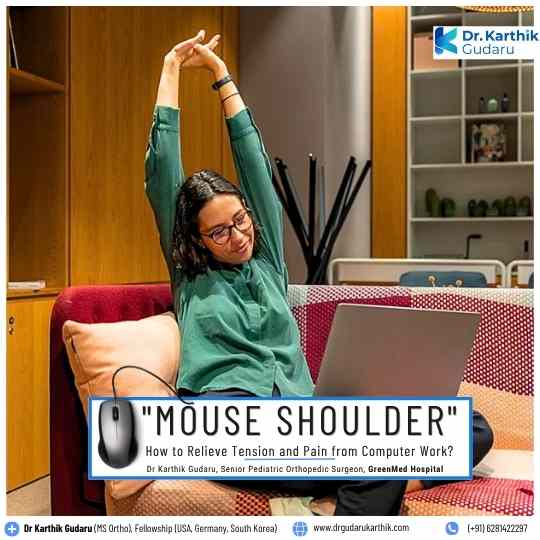
Try Gentle Stretches and Shoulder Exercises
Gentle stretching may help ease stiffness associated with prolonged computer work. However, exercises should remain comfortable and should not force the shoulder beyond its natural range.
- Shoulder rolls: Slowly roll your shoulders backwards several times, keeping the movement relaxed.
- Shoulder blade squeezes: Sit or stand upright and gently bring your shoulder blades towards each other. Hold briefly, then relax.
- Chest stretch: Stand near a doorway, place your forearms against the frame if comfortable, and gently lean forward until you feel a mild stretch across the chest.
- Neck movement: Slowly turn your head from side to side within a comfortable range without forcing the movement.
Start gently and avoid exercises that increase pain, tingling, or numbness. If symptoms continue, a physiotherapist can assess your movement and recommend exercises suited to your condition.
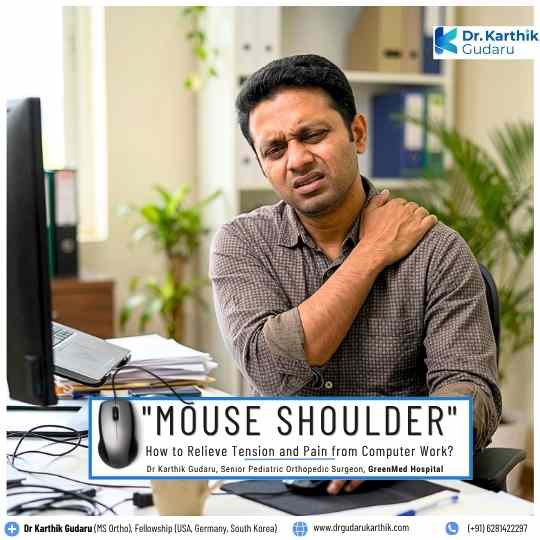
When Should You Seek Medical Advice?
Mild discomfort that improves with rest and workstation adjustments may settle without extensive treatment. However, consult a healthcare professional if the pain persists, repeatedly returns, interferes with sleep, or limits everyday activities.
Seek prompt assessment if you experience significant weakness, persistent numbness or tingling, or difficulty lifting your arm. Sudden severe shoulder pain following an injury requires urgent evaluation. Shoulder discomfort accompanied by chest pressure, breathlessness, sweating, or pain spreading to the jaw or arm may indicate a medical emergency.
A clinician can assess whether the symptoms relate to muscle strain, a tendon problem, nerve irritation, or another condition. Treatment may include activity modification, physiotherapy, and other interventions depending on the underlying cause.
Mouse shoulder is a useful term for the tension and discomfort that can develop around the shoulder during prolonged computer work. Poor workstation positioning, repetitive movements, and holding the arm in one position can contribute to the problem.
Keeping the mouse close, relaxing the shoulders, taking movement breaks, and practising gentle exercises may help reduce discomfort. Persistent or worsening symptoms deserve professional assessment rather than repeated attempts to manage the pain independently.

Dr Karthik Gudaru, MS Orthopaedics, MBBS, Fellowship in Knee and Hip Arthroplasty (USA), Fellowship in Computer-Assisted Navigation Joint Replacement Surgery (Germany), is one of Hyderabad’s leading orthopaedic surgeons with an outstanding reputation for precision, innovation, and excellence in joint replacement and orthopaedic care. Widely recognised as the best knee replacement specialist in Hyderabad, he brings a deep commitment to patient-centred care and cutting-edge surgical techniques.
Dr Karthik Gudaru is currently the Senior Orthopaedic and Joint Replacement Specialist, Department of Orthopaedics at GreenMed Hospital, Srinagar Colony, Hyderabad; Assistant Professor and Consultant Orthopaedic at BIRRD Hospital (Balaji Institute of Surgery, Research and Rehabilitation for the Disabled), Tirupati; and Joint Replacement & Pediatric Orthopaedic Specialist at Sri Maruthi Hospitals, Tirupati.
Dr Karthik Gudaru’s treatment specialisations –
Total Knee Replacement Surgery.
Total Shoulder Replacement Surgery.
Hip Joint Treatments
Total Elbow Arthroscopy.
Computer-Assisted Knee Replacement Surgery.
Stem Cell Therapy for key orthopaedic treatments.
Pediatric Orthopaedics Treatments for Cerebral Palsy, Congenital Anomalies, Poliomyelitis & Metabolic Bone Diseases
Hospital Affiliations
OPD, GreenMed Hospital, 8-3-833/71, Srinagar Colony Main Rd, Kamalapuri Colony, Banjara Hills, Hyderabad, Telangana
Durgabai Deshmukh Hospital, Vidyanagar, Hyderabad
Sri Maruthi Hospitals, OPD, 19-3-30/C1, Near RTC Bus Stand, Kennedy Nagar, Tirupati, 517501
BIRRD Hospital, Tirupati (Consultant & Asst. Professor)
Education and Affiliation
MBBS: Kasturba Medical College, Manipal University, Karnataka (2012), Registration No: TSMC/FMR/16001
MS (Orthopaedics): Sri Ramachandra Medical College & Research Institute, Chennai (2016), Registration No: 119525
Knee & Hip Arthroplasty Fellowship: Dartmouth Hospital, USA (2018)
Robotic & Computer-Assisted Joint Replacement Fellowship: Asklepios Hospital, Germany (2018)
AO Trauma & Emergency Orthopaedic Care Fellowship: Guro National Hospital, South Korea (2019–2020)
Spinal Surgery Observer Training: Yonsei University, South Korea (2015)