


Dr. Karthik Gudaru is one of Hyderabad’s leading orthopedic surgeons for shoulder joint replacement surgeries with an outstanding reputation for precision, innovation, and excellence in shoulder joint replacement and orthopedic care.
Widely counted as the best shoulder joint surgeon, specialist in Hyderabad, he brings a deep commitment to patient-centric care and cutting-edge surgical techniques.
Read More Read More
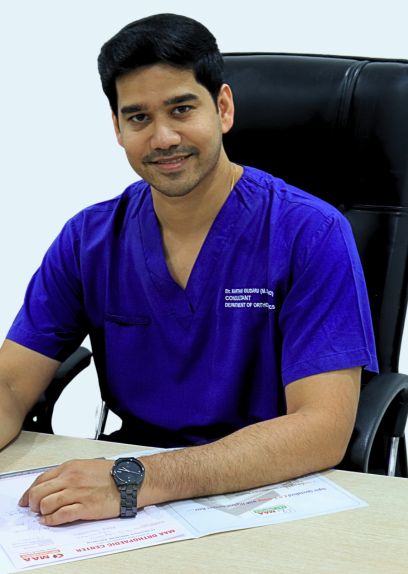
Dr Karthik Gudaru provides advanced shoulder care in Hyderabad, utilizing cutting-edge computer-guided technology for highly precise, customized joint reconstruction. His modern approach uses specialized multi-planar planning software to preserve healthy bone structures and delicate rotator cuff tissues, reducing procedural trauma and enabling a faster return to daily movement. For more information, visit the orthopedic care team to schedule a comprehensive consultation.
Today, as Senior Consultant and Specialist in the Department of Orthopedics at GreenMed Hospital (Banjara Hills / Srinagar Colony, Hyderabad), and visiting specialist across regional centers of clinical excellence including Aster Ramesh Hospital (Vijayawada) and Sri Maruthi Hospitals & BIRRD Hospital (Tirupati), Dr Gudaru delivers personalized, protocol-driven shoulder care. Utilizing subscapularis-sparing and deltoid-preserving pathways, 3D CT patient-specific glenoid planning, and high-definition arthroscopic triangulation, his practice restores native joint stability, provides lasting pain relief, and promotes rapid mobilization within 24 to 48 hours.
| Quick Summary for Patients | |
|---|---|
| Surgeon |
Dr Karthik Gudaru — MBBS, MS (Orthopaedics) Fellowships in Joint Arthroplasty, Navigation & Trauma (USA, Germany, South Korea) |
| Education & Credentials |
MBBS:
Kasturba Medical College, Manipal University, Karnataka (Reg No: TSMC/FMR/16001)
MS (Orthopaedics):
Sri Ramachandra Medical College & Research Institute, Chennai (Reg No: 119525)
USA Fellowship:
Knee & Hip Arthroplasty / Adult Reconstruction, Dartmouth Hospital, USA (2018)
Germany Fellowship:
Computer-Assisted Navigation & Joint Arthroplasty, Asklepios Hospital, Germany (2018)
South Korea Fellowships:
AO Trauma & Emergency Care, Guro National Hospital (2019–2020); Spinal Surgery Observer, Yonsei University (2015)
|
| Appointments |
Current (Hyderabad):
Senior Consultant Orthopedic & Joint Reconstruction Specialist, GreenMed Hospital, Srinagar Colony / Banjara Hills
Current (Tirupati):
Assistant Professor & Consultant Orthopedic Surgeon, BIRRD Hospital (Balaji Institute of Surgery, Research and Rehabilitation for the Disabled)
Visiting Specialist:
Aster Ramesh Hospital (Vijayawada) & Sri Maruthi Hospitals (Tirupati)
|
| Awards & Honors | Recipient of the prestigious "Vaidya Rathna" Award (2023) for excellence in orthopedic surgery and complex joint reconstruction. |
| Care Model | Patient-Specific 3D CT Pre-Operative Glenoid Templating, Deltopectoral & Deltoid-Preserving Surgical Intervals, Native Bone Preservation, Ultrasound-Guided Regional Interscalene Nerve Blocks, and Accelerated Early Mobilization. |
| Procedures Offered | Total Shoulder Replacement (Anatomic TSR) Reverse Shoulder Joint Replacement (RTSA) Proximal Humerus / Clavicle / Scapula Fractures Shoulder Arthroscopy Double-Row Rotator Cuff Repair Bankart Repair & Capsular Release Arthroscopic Fracture Fixation Complex Revision Shoulder Arthroplasty |
| Consultation Centers |
|
| Direct Helpline |
Direct Surgical Helpline & WhatsApp Desk:
+91 62814 22297
|
Shoulder surgery is indicated when structural tendon tearing, joint surface wear, mechanical instability, or displaced fractures severely restrict overhead motion and cease to respond to targeted non-surgical measures (physiotherapy, ultrasound-guided hydrodilatation, and subacromial injections). Orthopedic intervention follows a definitive clinical progression:
Keyhole repair of torn rotator cuff tendons, labral tears, and capsular contractures before degenerative joint disease develops.
Anatomical alignment and locking plate stabilization of broken proximal humerus, collarbone, or glenoid bones to enable early active mobilization without stiffness.
Replaces worn ball-and-socket cartilage surfaces while preserving the natural biomechanics, indicated strictly when the rotator cuff tendons are healthy and intact.
Inverts normal joint anatomy for severe arthritis accompanied by irreparable rotator cuff tears or comminuted fractures, empowering the deltoid muscle to lift the arm overhead.
Through an anatomical deltopectoral approach, the worn arthritic humeral head is resected at its natural 130° to 135° neck-shaft angle. The glenoid socket is prepared using cannulated reamers to correct retroversion and restore normal joint inclination.
A polished cobalt-chromium or ceramic humeral head seated on a stemless metaphyseal anchor or low-profile titanium stem articulates against a high-density, ultra-high-molecular-weight polyethylene (UHMWPE) pegged glenoid component fixed with surgical bone cement.
Eliminates chronic night pain, restores smooth glenohumeral rotation, and allows patients to return to non-impact sports, swimming, and daily overhead lifting.
By moving the center of rotation inward and downward, the lever arm of the deltoid muscle is elongated. The deltoid muscle takes over the lifting role of the torn rotator cuff, allowing patients who could not lift their arm past their waist to raise it overhead without discomfort.
Stabilized using anatomical low-profile locking plates (PHILOS systems) with multi-directional locking screws and endosteal fibular strut allografts when medial calcar bone is missing. In elderly patients with severely comminuted 4-part fractures and high risks of avascular necrosis, primary trauma Reverse Shoulder Replacement is performed to prevent non-union.
Reduced and secured using anatomically contoured superior or anteroinferior titanium plates, combined with coracoclavicular (CC) suture button augmentation for unstable distal-third fractures.
Displaced articular rim or intra-articular fossa fractures with step-offs greater than 2 mm are anatomically repaired using low-profile titanium screws to stop post-traumatic arthritis and recurrent instability.
For full-thickness and partial tears of the supraspinatus, infraspinatus, or subscapularis tendons. Dr Gudaru employs double-row, knotless suture-bridge constructs, pressing the tendon footprint firmly onto the bone to maximize blood supply and promote strong biological healing.
• When a shoulder dislocates, it often shears off a rim of bone from the front of the socket (Bony Bankart Fracture). Under direct 4K visualization, the bone fragment and attached labrum are reduced and stabilized using bio-composite suture anchors or cannulated micro-screws without opening the joint.
• Minimally displaced Greater Tuberosity Avulsion Fractures are aligned and fixed using percutaneous arthroscopic suture bridges, preserving the rotator cuff insertion.
Fixes torn labral cartilage rings back to the glenoid bone to prevent recurrent dislocations in athletes and young patients.
Arthroscopic circumferential release of inflamed, thickened joint capsules in severe cases, restoring range of motion when conservative care has stalled.
| Surgery Type | Primary Clinical Indication | Core Surgical Technique | Hardware / Implants Utilized | In-Hospital Stay | Expected Functional Recovery |
|---|---|---|---|---|---|
| Anatomic Total Shoulder Replacement | Primary osteoarthritis, AVN, post-traumatic arthritis with intact rotator cuff | Anatomic resurfacing of glenoid & humeral head via deltopectoral interval | Metal/ceramic head, stem/stemless base, cemented UHMWPE pegged glenoid | 1 to 2 Days | Sling for 3–4 weeks; active unassisted range of motion by 6–8 weeks |
| Reverse Shoulder Joint Replacement | Rotator cuff tear arthropathy, massive irreparable cuff tears, complex elderly fractures | Inversion of joint centers; deltoid-driven biomechanics | Titanium baseplate (Metaglene), Glenosphere ball, modular stem, UHMWPE cup | 1 to 2 Days | Gentle active motion at 2–3 weeks; overhead daily activities in 6–10 weeks |
| Fracture Around Shoulder (ORIF / MIPO) | Displaced 2-, 3-, 4-part proximal humerus, midshaft/lateral clavicle fractures | Open Reduction & Internal Fixation via muscle-sparing anatomic pathways | Anatomical titanium locking plates (PHILOS), calcar screws, fibular strut grafts | 2 to 3 Days | Passive pendular motion in 10–14 days; solid bony union in 8–12 weeks |
| Shoulder Arthroscopy (Cuff / Labrum / Fracture) | Rotator cuff tears, Bankart labral tears, Bony Bankart fractures, impingement | 4K keyhole camera-guided suture-bridge fixation & anchor compression | All-suture anchors, knotless PEEK / biocomposite suture anchors, micro-screws | Day Care / 24 Hours | Sling protection for 3–4 weeks; progressive strengthening at 6–12 weeks |
| Diagnostic Stage & Pathology | Patient Age & Functional Demands | Rotator Cuff Integrity | Bone Quality & Fracture Status | Recommended Procedure | Primary Clinical Benefit |
|---|---|---|---|---|---|
| Symptomatic Rotator Cuff Tear (Partial or Full) | Active lifestyle; age 30–65; manual workers or sports enthusiasts | Torn Supraspinatus / Infraspinatus; repairable footprint | Normal; non-arthritic joint surfaces | Arthroscopic Rotator Cuff Repair (Double-Row) | Preserves native anatomy; stops progression to cuff tear arthropathy |
| Acute Traumatic Dislocation with Rim Fracture | Athletes, young adults (age 16–40); contact sports | Intact; Bankart labral tear with <20% bone loss | Bony Bankart fracture fragment off anterior glenoid | Arthroscopic Bony Bankart Repair / Anchor Fixation | Re-establishes socket depth; stops recurrent joint dislocations |
| End-Stage Primary Osteoarthritis (Walch A/B1) | Age 50–75; severe night pain; loss of external rotation | 100% Intact & Healthy | Concentric or mildly asymmetric glenoid wear | Anatomic Total Shoulder Replacement (aTSR) | Restores natural smooth joint glide; preserves native joint kinematics |
| Cuff-Tear Arthropathy / Pseudoparalysis | Age 65+; unable to lift arm above 60°; severe stiffness | Completely Ruptured / Irreparable | Superior humeral head migration; acetabularized acromion | Reverse Shoulder Replacement (RTSA) | Uses deltoid muscle to lift arm overhead; eliminates pain |
| Severe 4-Part Displaced Proximal Humerus Fracture | Age 65+; osteoporotic ground-level fall | Compromised / Comminuted tuberosities | Severely comminuted, osteoporotic bone; high AVN risk | Primary Reverse Shoulder Arthroplasty for Trauma | Prevents non-union and bone collapse; early reliable arm movement |
| Displaced 2- or 3-Part Proximal Humerus Fracture | Young / active patient (Age 25–60); high functional demand | Intact or repairable along fracture lines | Good bone stock capable of holding screws | Rigid Fixation via Anatomical Locking Plate (PHILOS) | Preserves biological humeral head; anatomic fracture healing |
| Surgical Parameter | Conventional Open Shoulder Surgery | Modern 4K Shoulder Arthroscopy | 3D-Planned / Navigated Shoulder Arthroplasty |
|---|---|---|---|
| Surgical Incision | Large 10–15 cm single incision | 3 to 4 tiny 5 mm keyhole portals | Optimized 8–10 cm deltopectoral incision |
| Tissue Disruption | Cutting or detachment of major subscapularis or deltoid | Zero detachment; instruments pass through physiological tissue intervals | Subscapularis-sparing or precise anatomical repair |
| Pre-Operative Planning | Standard 2D X-rays (misses deep glenoid bone defects) | Diagnostic High-Field MRI / MR Arthrogram | Patient-Specific 3D CT Virtual Glenoid Reaming Simulation |
| Glenoid Component Accuracy | High outlier rate for retroversion and superior tilt | Not applicable (used for joint preservation) | Sub-millimeter position & angle (<1 mm / <1° variance) |
| Post-Operative Pain | Higher due to extensive muscle detachment | Minimal; targeted local portals | Controlled with targeted regional interscalene blocks |
| Infection & Blood Loss | Higher operative blood loss; standard drain placement | Near-zero blood loss; continuous saline irrigation | Minimal blood loss; no blood transfusions routinely needed |
| Functional Mobilization | Delayed (4–6 weeks immobilization) | Early pendular motion guided by repair strength | Same-day or Next-day assisted pendulum movements |
Choosing an orthopedic surgeon with specialized joint reconstruction and trauma training is the most critical factor influencing your surgical outcome, your post-operative comfort, and how quickly you regain full arm elevation. Patients across Telangana, Andhra Pradesh, and broader India place their trust in Dr Karthik Gudaru for seven distinct clinical reasons:
Clinical research consistently links high surgical volume with lower complication rates, fewer surgical site infections, and increased implant longevity. With more than 12,000 successful orthopedic operations performed, Dr Gudaru brings seasoned surgical judgment to complex shoulder problems, severe bone deformities, and revision procedures.
Shoulder arthroplasty requires sub-millimeter precision. A glenoid component placed with unrecognized tilt or retroversion can loosen prematurely. Dr Gudaru's training at Dartmouth Hospital (USA) and Asklepios Hospital (Germany) provides him with advanced skills in joint mechanics and navigation, while his fellowship at Guro National Hospital (South Korea) gives him deep expertise in treating complex shoulder fractures.
No two shoulder sockets are shaped alike. In cases of severe arthritis where the socket has worn unevenly, standard implant positioning can fail. Dr Gudaru utilizes advanced 3D CT virtual planning software to evaluate the glenoid vault before surgery. This ensures exact implant sizing, optimizes screw trajectory, and preserves healthy native bone.
Reverse shoulder replacement is technically demanding and requires a clear understanding of dynamic muscle mechanics. Dr Gudaru is a recognized specialist in reverse reconstructions across South India, helping elderly patients with severe cuff tear arthropathy or complex fractures regain the ability to lift their arms and perform daily tasks independently.
Dr Gudaru prioritizes saving your natural joint whenever clinically possible. For active individuals, tears, impingement, and early arthritis are treated using advanced arthroscopic repairs—such as double-row knotless suture bridges and labral stabilizers—delaying or eliminating the need for joint replacement.
Traditional shoulder replacements can weaken the front of the joint due to aggressive tendon detachment. Dr Gudaru uses careful subscapularis-preserving or anatomically repaired tissue approaches. This preserves muscle strength, lowers dislocation risks, and supports a faster, safer recovery.
Working alongside expert regional anesthesiologists, Dr Gudaru uses ultrasound-guided interscalene or suprascapular nerve blocks alongside multi-modal pain protocols. This eliminates severe post-operative pain without heavy sedatives. Most patients can walk on the day of surgery, begin gentle motion exercises within 24 hours, and return home within 1 to 2 days.
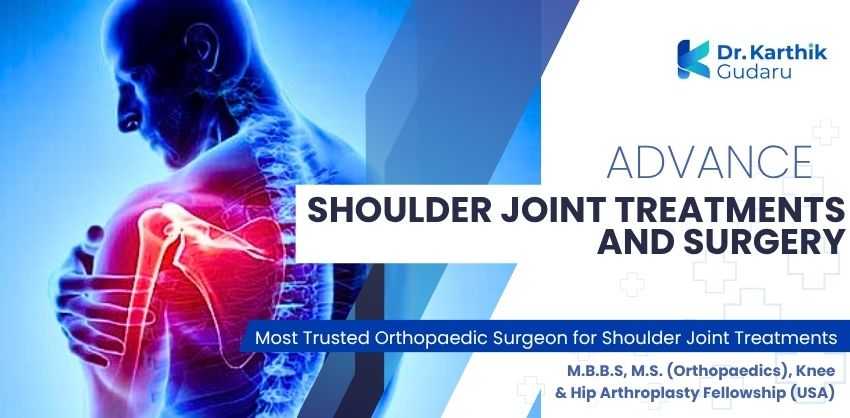
Dr Karthik Gudaru incorporates an evidence-based Enhanced Recovery After Surgery (ERAS) pathway to ensure safe, accelerated rehabilitation:
Pre-emptive ultrasound-guided interscalene blocks numb the surgical site while leaving the rest of the body unaffected. Patients are upright and walking within hours of surgery. The arm is rested in an ergonomic abduction sling, and active hand, wrist, and finger exercises begin immediately to promote healthy venous circulation.
Guided passive pendulum exercises begin under the direct supervision of dedicated physical therapists. Swelling is managed with cold-compression therapy, and medications are transitioned to oral pain-relief tablets. Over 90% of uncomplicated arthroplasty and arthroscopy patients are discharged home within 24 to 48 hours.
The protective sling is worn during sleep and transit to safeguard the repair. Supervised passive forward-elevation and gentle external-rotation exercises prevent joint capsule stiffness while protecting healing tendon and bone interfaces.
The sling is discontinued. Patients progress from active-assisted to fully independent active movement. Light resistance-band exercises are introduced to strengthen the deltoid, remaining rotator cuff, and periscapular muscles. Most patients return to driving and non-strenuous desk work.
Advanced muscle conditioning and functional movement drills are phased in. Patients comfortably resume swimming, golf, and daily overhead lifting, supported by clinical reviews to ensure full joint recovery.
 Shoulder Joint
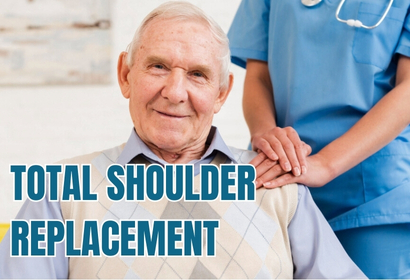
 Total Shoulder Replacement
If you are struggling with ongoing shoulder pain, stiffness, or limited range of motion that disrupts your ability to lift, reach, dress, or sleep comfortably—even after medication, physiotherapy, or injections—it might ......
Read More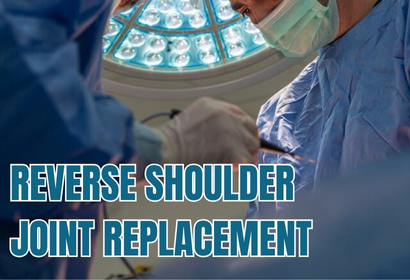 Reverse Shoulder Joint Replacement
Reverse Shoulder Replacement Surgery is a specialized procedure in which the natural ball-and-socket structure of the shoulder is reversed—placing the ball component on the shoulder blade and the socket on the upper arm bone.....
Read More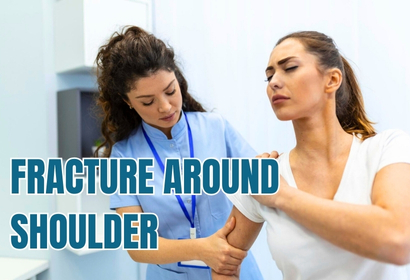 Fracture Around Shoulder
Shoulder fractures require precise and expert care to restore pain-free movement and strength. Dr. Karthik Gudaru, one of the top orthopedic surgeons in Telangana, specializes in treating complex fractures around the shoulder. .....
Read More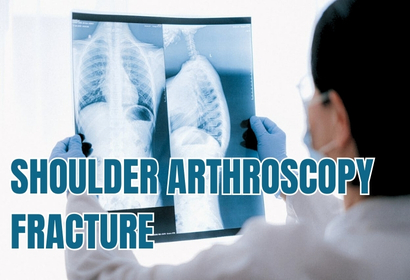 Shoulder Arthroscopy Fracture
Dr Karthik Gudaru, orthopedic surgeon, offers expert arthroscopic surgeries to diagnose and treat various shoulder conditions. His advanced techniques allow for quicker recovery and better joint function with less scarring......
Read More AboutDr. Karthik Gudaru is the top shoulder joint surgeon in Hyderabad, Telangana for various types of shoulder joint surgeries that includes Total Shoulder Replacement, Reverse Shoulder Joint Replacement, Fracture Around Shoulder and Shoulder Arthroscopy.


Plus Successful Surgeries

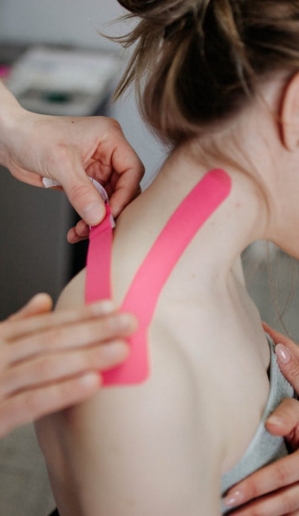

Post Operation - Get the best Rehabilitation program developed and monitored by Dr Karthik Gudaru
Dr Karthik Gudaru's orthopaedic surgerical team includes some of the best doctors
Stand on your feet within 4 to 12 hours post operation under special healing program
Frequently Asked Questions
With modern third-generation implants featuring titanium-plasma-sprayed surfaces, hydroxyapatite coatings, and highly cross-linked polyethylene inserts, Reverse Shoulder Replacements typically last 20 to 25 years or more. Avoiding heavy impact and maintaining strong deltoid and periscapular muscles help protect against premature mechanical wear.
Yes. The primary goal of a reverse shoulder replacement is to restore active arm elevation in patients who have lost it due to rotator cuff damage or severe fractures. By shifting the biomechanical workload to the deltoid muscle, most patients regain functional elevation between 130° and 160°, allowing them to reach high shelves, brush their hair, and perform daily tasks comfortably.
The decision depends on age, bone quality, and fracture pattern:
• In younger, active patients with good bone quality: Displaced 2- and 3-part fractures are fixed with an anatomical locking plate (such as a PHILOS plate) to preserve the natural joint.
• In patients over 65 with low bone density (osteoporosis): Who sustain severe, comminuted 4-part fractures or head-splitting injuries, internal plates carry a high risk of screw cut-out, non-union, or avascular necrosis. In these cases, a primary Reverse Shoulder Replacement offers reliable pain relief and predictable function.
Anatomic Replacement: Replaces the ball with a metal ball and the socket with a plastic socket, preserving your natural anatomy. It requires an intact, fully functioning rotator cuff to stabilize the joint.
Reverse Replacement: Reverses the anatomy—attaching the ball to your shoulder blade and the socket to your arm bone. It is designed specifically for joints with irreparable rotator cuff tears or severe arthritis, relying on the deltoid muscle to lift the arm.
Yes. Anatomic shoulder replacements, reverse shoulder replacements, open reduction internal fixation (ORIF) for fractures, and shoulder arthroscopic repairs are standard, medically necessary orthopedic surgeries. They are covered by major corporate health insurance providers, private TPAs, and cashless processing desks at GreenMed Hospital (Hyderabad), Aster Ramesh Hospital (Vijayawada), and Sri Maruthi Hospitals (Tirupati).
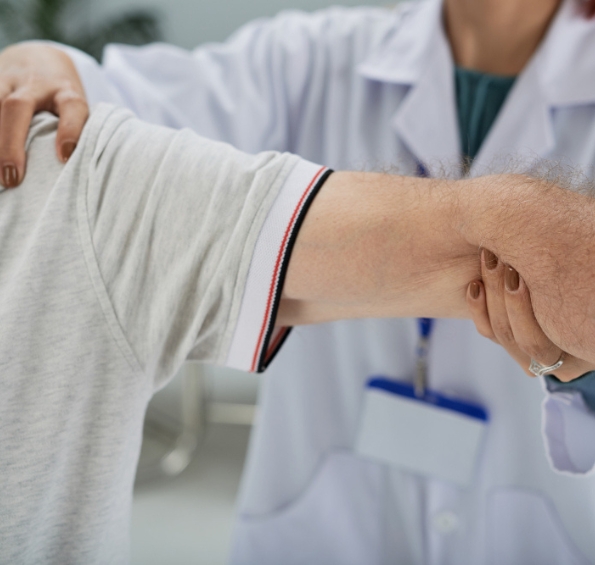 Book Your Appointment with
Dr. Karthik Gudaru – Orthopedic Surgeon & Joint, Knee, Hip, Shoulder and Elbow Replacement Doctor, Specialist in Hyderabad, Telangana and in India
Requesting A Call:
Sunday - Saturday:
8-3-833/71, Srinagar Colony Main Rd, Kamalapuri Colony, Banjara Hills,
`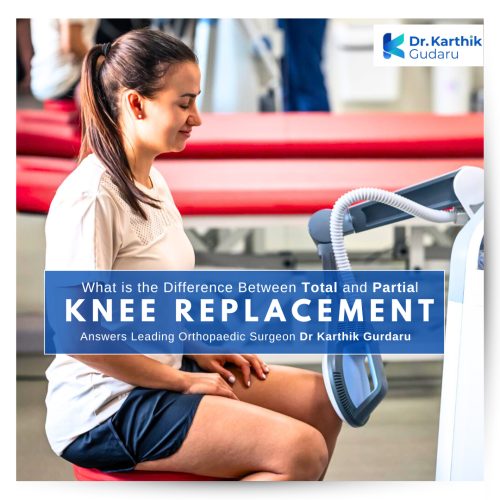
What is the difference between Total and Partial Knee Replacement? Answers Dr Karthik Gudaru, who is one of the best knee replacement surgeons in Hyderabad
View More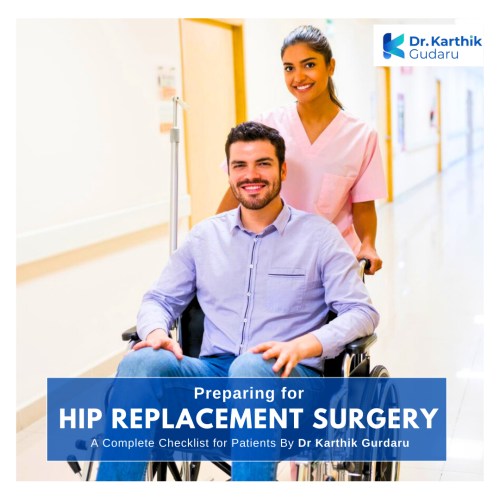
we’ll explain what hip replacement surgery is and share a complete preparation checklist that guides you through the medical, physical, emotional, and practical steps before surgery
View More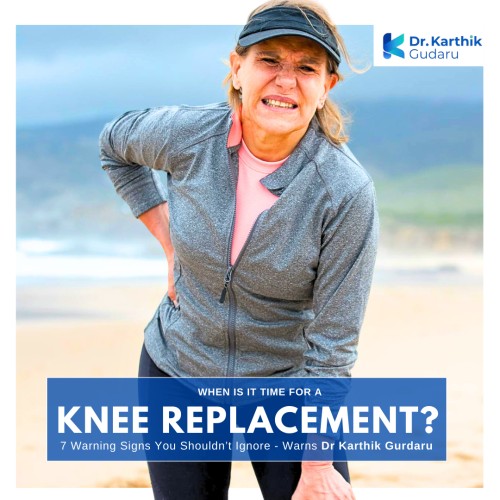
Recognizing the right time for surgery can make all the difference in restoring mobility, reducing pain, and improving quality of life says Dr Karthik Gudaru, orthopaedic surgeon
View More