
Summary
- Many common fears about slip disc surgery are based on myths rather than medical facts.
- Modern surgical techniques are safer, less invasive, and often allow faster recovery.
- Persistent pain, numbness, weakness, or nerve-related symptoms should prompt consultation with an orthopaedic surgeon.
This Article is Medically Reviewed by Dr Karthik Gudaru, MS Orthopaedics, Fellowship in Computer-Assisted Navigation and Joint Replacement Surgery (Germany), HOD Orthopaedic Department, GreenMed Hospitals, Hyderabad.
A slip disc, also known as a herniated or prolapsed disc, is a common spinal condition that can cause severe back pain, numbness, tingling sensations, and even weakness in the arms or legs. While many cases can be managed with medication, physiotherapy, and lifestyle modifications, some patients may require surgery to relieve nerve compression and restore mobility.
Unfortunately, misinformation surrounding slip disc surgery often creates fear and confusion, causing people to delay necessary treatment. Understanding the facts can help patients make informed decisions about their spinal health, says Dr Karthik Gudaru, an experienced Senior Orthopaedic Consultant, Surgeon for spine in Hyderabad, Telangana.
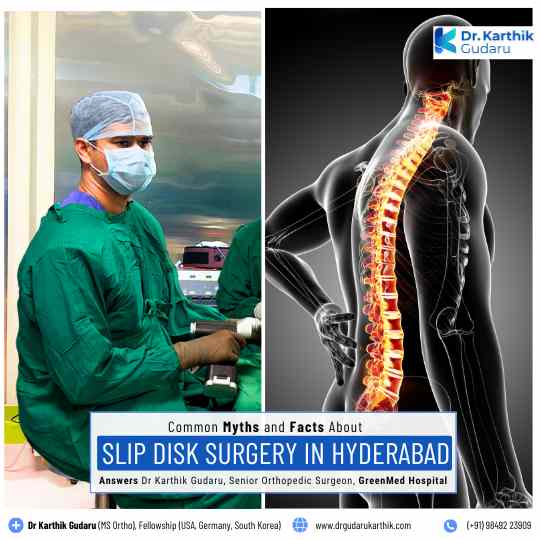
Is Slip Disc Surgery Really as Risky as Many People Believe?
The thought of spine surgery can be intimidating, and many patients worry about complications, prolonged recovery, or permanent disability. However, advances in medical technology and minimally invasive surgical techniques have significantly improved the safety and effectiveness of slip disc procedures. Separating myths from facts is essential for understanding when surgery may be beneficial and what patients can realistically expect.
“Fear often comes from myths, not facts. Understanding the realities of slip disc surgery empowers patients to seek timely treatment and make confident decisions about their spinal health.” – Dr Karthik Gudaru, Senior Orthopaedic Surgeon, Pediatric Orthopaedic Doctor and Joint Replacement Specialist Surgeon
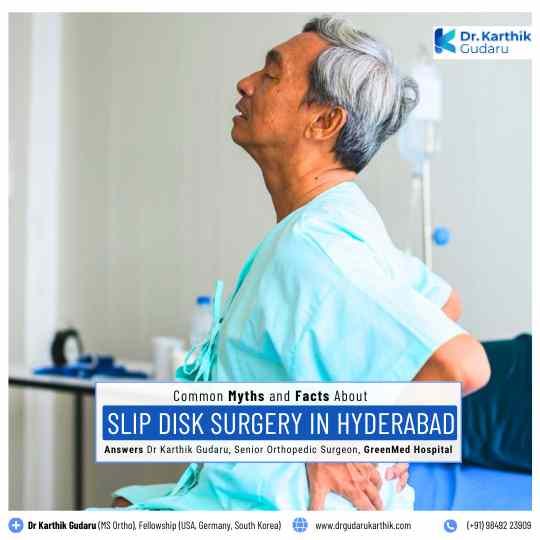
Myth: Every Slip Disc Requires Surgery (One of the most common misconceptions is that a slip disc automatically leads to surgery.)
Fact: Most Slip Disc Cases Improve Without Surgery – Many patients experience significant relief through conservative treatments such as rest, medications, physiotherapy, posture correction, and guided exercises. Surgery is generally considered only when symptoms persist despite treatment or when there is significant nerve compression affecting daily activities.
Myth: Slip Disc Surgery Is Extremely Dangerous (Many people associate spinal surgery with a high risk of paralysis or severe complications.)
Fact: Modern Spine Surgery Is Safer Than Ever – Today’s orthopaedic and spine surgeons use advanced imaging systems, microsurgical techniques, and minimally invasive procedures that improve precision and reduce risks. While every surgery carries some degree of risk, complications are relatively uncommon when performed by experienced specialists and on appropriately selected patients.
Myth: Surgery Means Months of Bed Rest (Patients often fear they will be confined to bed for a long period after surgery.)
Fact: Early Movement Is Encouraged – Modern rehabilitation protocols focus on early mobilisation. Depending on the procedure and individual condition, many patients are encouraged to walk within a short period after surgery. Early movement helps improve circulation, reduce stiffness, and support recovery.
Myth: Slip Disc Surgery Always Leaves a Large Scar (Many patients worry about visible scars and extensive tissue damage.)
Fact: Minimally Invasive Techniques Require Smaller Incisions – Advances in spine surgery have made it possible to perform many procedures through smaller incisions. These techniques often result in less muscle damage, reduced postoperative discomfort, and quicker recovery compared to traditional open surgery.
Myth: Surgery Guarantees That Back Pain Will Never Return (Some people believe surgery permanently eliminates all future spinal problems.)
Fact: Long-Term Results Depend on Lifestyle and Spine Care – Surgery addresses the current problem, but maintaining spinal health requires ongoing attention. Good posture, regular exercise, maintaining a healthy weight, and following medical advice play important roles in preventing future back issues and supporting long-term recovery.
Myth: Older Adults Cannot Undergo Slip Disc Surgery (Age is often viewed as a barrier to surgical treatment.)
Fact: Overall Health Matters More Than Age Alone – Many older adults successfully undergo slip disc surgery when they are otherwise medically fit. Surgeons evaluate overall health, medical history, symptom severity, and imaging findings before recommending any procedure.
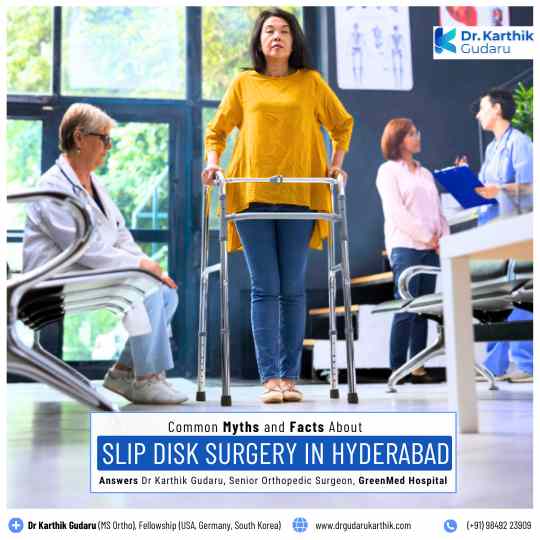
When Is Consulting an Orthopaedic Surgeon a Must?
While occasional back pain may improve with rest, certain symptoms should never be ignored. Persistent back pain lasting several weeks, pain radiating into the arms or legs, numbness, tingling sensations, muscle weakness, difficulty walking, or symptoms that interfere with daily activities warrant evaluation by an orthopaedic surgeon.
Immediate medical attention is especially important if a patient experiences loss of bladder or bowel control, severe weakness in the limbs, or sudden worsening of neurological symptoms, as these may indicate serious nerve compression requiring urgent treatment.
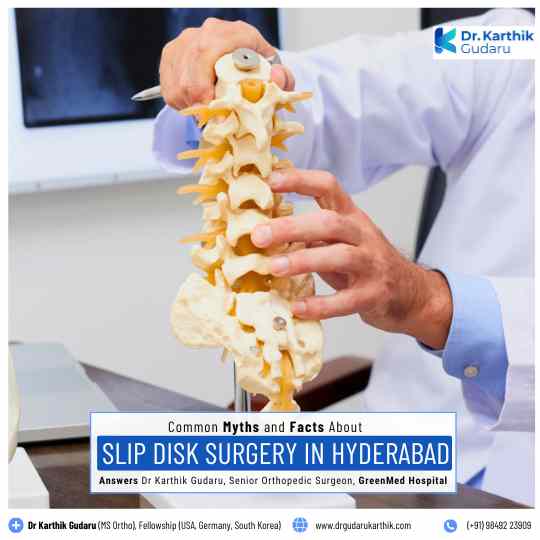
How Is the Decision for Surgery Made?
The recommendation for surgery is never based on imaging reports alone. Orthopedic surgeons consider the patient’s symptoms, physical examination findings, MRI results, response to conservative treatments, and overall quality of life. Surgery is typically recommended when non-surgical methods fail to provide relief or when nerve compression threatens long-term function.
Misconceptions about slip disc surgery often prevent patients from seeking timely medical care. The reality is that modern spine surgery has become safer, more precise, and more effective than ever before. While many slip disc cases improve with non-surgical treatment, surgery can provide significant relief for patients with persistent symptoms or severe nerve compression. Consulting an experienced orthopedic surgeon helps ensure an accurate diagnosis and a treatment plan tailored to the individual’s condition, helping patients return to a more active and comfortable life.

Dr Karthik Gudaru, MS Orthopaedics, MBBS, Fellowship in Knee and Hip Arthroplasty (USA), Fellowship in Computer-Assisted Navigation Joint Replacement Surgery (Germany), is one of Hyderabad’s leading orthopaedic surgeons with an outstanding reputation for precision, innovation, and excellence in joint replacement and orthopaedic care. Widely recognised as the best knee replacement specialist in Hyderabad, he brings a deep commitment to patient-centred care and cutting-edge surgical techniques.
Dr Karthik Gudaru is currently the Senior Orthopaedic and Joint Replacement Specialist, Department of Orthopaedics at GreenMed Hospital, Srinagar Colony, Hyderabad, Assistant Professor and Consultant Orthopaedic at BIRRD Hospital (Balaji Institute of Surgery, Research and Rehabilitation for the Disabled), Tirupati and Joint Replacement & Pediatric Orthopedic Specialist at Sri Maruthi Hospitals, Tirupati.
Dr Karthik Gudaru’s Treatment Specialisation are –
Knee Joint Treatments (Including Total Knee Replacement Surgery).
Shoulder Joint Treatments (Including Total Shoulder Replacement Surgery).
Hip Joint Treatments (Including Total Hip Replacement Surgery).
Elbow Joint Treatments (Including Total Elbow Arthroscopy).
Computer-Assisted Knee Replacement Surgery.
Stem Cell Therapy for key orthopaedic treatments.
Pediatric Orthopedics Surgeon for Cerebral Palsy, Congenital Anomalies, Poliomyelitis & Metabolic Bone Diseases