

Summary
- Poor posture, heavy school or laptop bags, prolonged screen time, and inactivity are common causes of youth back pain.
- Sports injuries, growth spurts, and certain spinal conditions may also contribute.
- Persistent, severe, or injury-related back pain should be evaluated by an orthopaedic spine specialist for timely diagnosis and treatment.
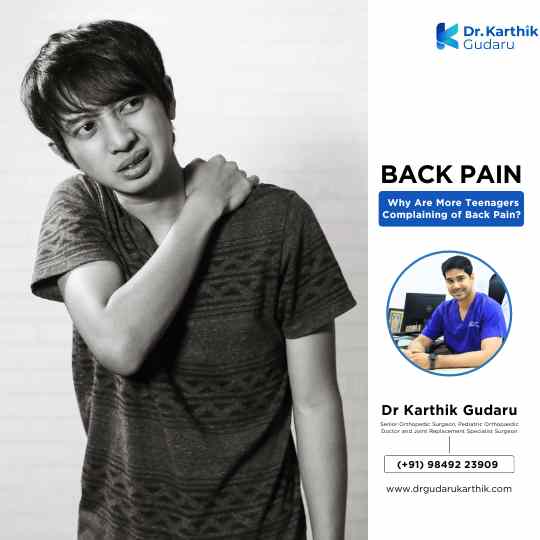
Back pain was once considered a problem mainly affecting adults and older individuals. Today, however, an increasing number of Indians youth are experiencing persistent back pain that interferes with school, sports, and daily activities.
While occasional muscle soreness is usually not a cause for concern, recurring or severe back pain should never be dismissed as a normal part of growing up. Modern lifestyles, prolonged screen time, poor posture, heavy school bags, and reduced physical activity are some of the key factors contributing to this growing problem.
Understanding the causes and knowing when to seek medical advice can help prevent long-term complications. As shared by Dr Karthik Gudaru, Senior Orthopaedic Surgeon and Specialist Orthopaedic Doctor for Back Pain Treatment in Hyderabad and Tirupati.
Why Is Back Pain Becoming More Common in Indian Youth?
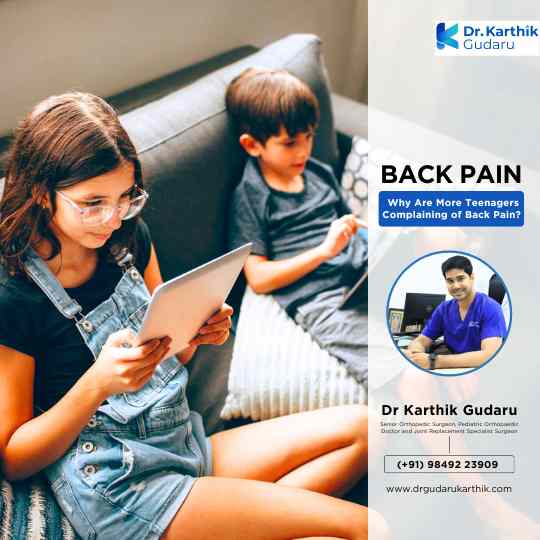
Today’s youth spend long hours sitting in classrooms, studying, using computers, and scrolling on smartphones. This prolonged sedentary lifestyle places continuous stress on the muscles and spine. Combined with poor posture and limited physical activity, it can lead to muscle strain, stiffness, and chronic discomfort. In some cases, back pain may also indicate an underlying spinal condition that requires medical evaluation.
“Back pain in youth isn’t always just growing pains—it can be a sign that the spine needs attention.” – Dr Karthik Gudaru, MS Orthopaedics, MBBS, Fellowship in Knee and Hip Arthroplasty (USA), Fellowship in Computer Assisted Navigation Joint Replacement Surgery (Germany)

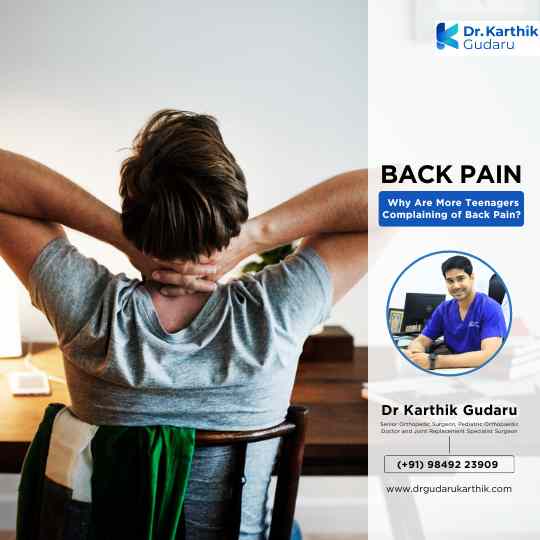
- Poor Posture During Screen Time – One of the biggest contributors to youth’s back pain is poor posture while using mobile phones, tablets, and laptops. Slouching, bending the neck forward, or sitting without proper back support places extra pressure on the spine and surrounding muscles. Over time, these habits can cause persistent pain in the neck, shoulders, and lower back.
- Heavy School and Laptop Bags – Carrying overloaded backpacks every day puts excessive strain on the back and shoulders. When a school or college bag is too heavy or carried on one shoulder, it alters normal body posture and increases pressure on the spine. Choosing a lightweight backpack, using both shoulder straps, and keeping the bag weight within recommended limits can significantly reduce this risk.
- Lack of Physical Activity – Regular exercise helps strengthen the muscles that support the spine. Unfortunately, many youth spend more time indoors than ever before, leading to weaker core muscles and reduced flexibility. Without adequate muscle support, the spine is more vulnerable to strain during everyday activities.
- Sports Injuries and Overtraining – Youth who participate in sports can also develop back pain, particularly if they:
- Train Too Intensely – Excessive practice without adequate rest can lead to muscle fatigue and overuse injuries.
- Use Improper Technique – Incorrect lifting, jumping, or twisting movements place unnecessary stress on the spine.
- Skip Warm-Up Exercises – Failing to prepare muscles before physical activity increases the risk of strains and sprains.
- Growth Spurts – During adolescence, bones often grow faster than muscles and ligaments can adapt. This temporary imbalance may contribute to muscle tightness, reduced flexibility, and occasional back discomfort. While mild pain may improve with stretching and proper posture, persistent pain should still be evaluated.
Medical Conditions That Can Cause Back Pain
Although lifestyle factors account for many cases, some youth develop back pain because of underlying medical conditions such as:
- Scoliosis – An abnormal sideways curvature of the spine may cause uneven shoulders, back pain, or changes in posture.
- Spondylolysis – A stress fracture in one of the spinal bones, commonly seen in young athletes who participate in gymnastics, cricket, football, or athletics.
- Disc Problems – Though less common in youth, slipped or bulging discs can occur, especially after injury.
- Infections or Inflammatory Conditions – Rarely, back pain may result from infections or inflammatory disorders that require prompt medical treatment.
When Should Parents Be Concerned?
A person should be evaluated by a doctor if back pain:
- Lasts More Than a Few Weeks – Persistent pain deserves medical assessment.
- Interferes With Daily Activities – Pain that limits walking, studying, sports, or sleep should not be ignored.
- Occurs After an Injury – Falls, sports injuries, or accidents require proper evaluation.
Is Associated With Other Symptoms
Seek medical attention if back pain is accompanied by fever, unexplained weight loss, numbness, weakness in the legs, or difficulty controlling bladder or bowel function.
How Can Teenage Back Pain Be Prevented?
- Encourage Good Posture – Teach teenagers to sit upright, use supportive chairs, and avoid prolonged slouching.
- Promote Regular Exercise – Activities like swimming, walking, yoga, and core-strengthening exercises improve spinal support and flexibility.
- Limit Continuous Screen Time – Encourage breaks every 30–45 minutes to stretch and move around.
- Use an Appropriate Backpack – Choose a well-fitted backpack with padded straps and avoid carrying unnecessary weight.
- Ensure Proper Nutrition – Adequate calcium, vitamin D, and protein support healthy bones and muscle development.
Back pain in teenagers is becoming increasingly common, largely due to changes in lifestyle, increased screen time, poor posture, and reduced physical activity. While many cases improve with better habits and exercise, persistent or severe pain should never be overlooked. Early evaluation can identify underlying conditions, prevent long-term spinal problems, and help teenagers stay active, healthy, and pain-free.
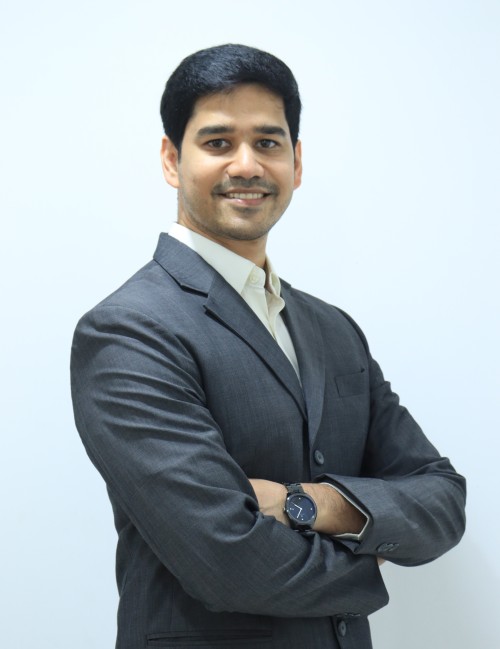
Dr Karthik Gudaru, MS Orthopaedics, MBBS, Fellowship in Knee and Hip Arthroplasty (USA), Fellowship in Computer-Assisted Navigation Joint Replacement Surgery (Germany), is one of Hyderabad’s leading orthopaedic surgeons with an outstanding reputation for precision, innovation, and excellence in joint replacement and orthopaedic care. Widely recognised as the best knee replacement specialist in Hyderabad, he brings a deep commitment to patient-centred care and cutting-edge surgical techniques.
Dr Karthik Gudaru is currently the Senior Orthopaedic and Joint Replacement Specialist, Department of Orthopaedics at GreenMed Hospital, Srinagar Colony, Hyderabad; Assistant Professor and Consultant Orthopaedic at BIRRD Hospital (Balaji Institute of Surgery, Research and Rehabilitation for the Disabled), Tirupati; and Joint Replacement & Pediatric Orthopaedic Specialist at Sri Maruthi Hospitals, Tirupati.
Dr Karthik Gudaru’s treatment specialisations –
Total Knee Replacement Surgery.
Total Shoulder Replacement Surgery.
Hip Joint Treatments
Total Elbow Arthroscopy.
Computer-Assisted Knee Replacement Surgery.
Stem Cell Therapy for key orthopaedic treatments.
Pediatric Orthopaedics Treatments for Cerebral Palsy, Congenital Anomalies, Poliomyelitis & Metabolic Bone Diseases
Hospital Affiliations
OPD, GreenMed Hospital, 8-3-833/71, Srinagar Colony Main Rd, Kamalapuri Colony, Banjara Hills, Hyderabad, Telangana
Durgabai Deshmukh Hospital, Vidyanagar, Hyderabad
Sri Maruthi Hospitals, OPD, 19-3-30/C1, Near RTC Bus Stand, Kennedy Nagar, Tirupati, 517501
BIRRD Hospital, Tirupati (Consultant & Asst. Professor)
Education and Affiliation
MBBS: Kasturba Medical College, Manipal University, Karnataka (2012), Registration No: TSMC/FMR/16001
MS (Orthopaedics): Sri Ramachandra Medical College & Research Institute, Chennai (2016), Registration No: 119525
Knee & Hip Arthroplasty Fellowship: Dartmouth Hospital, USA (2018)
Robotic & Computer-Assisted Joint Replacement Fellowship: Asklepios Hospital, Germany (2018)
AO Trauma & Emergency Orthopaedic Care Fellowship: Guro National Hospital, South Korea (2019–2020)
Spinal Surgery Observer Training: Yonsei University, South Korea (2015)