
Summary
- Returning too soon can delay healing and increase the risk of re-injury.
- Proper rehabilitation restores strength, flexibility, and joint stability.
- A gradual return to exercise helps ensure safe recovery and long-term fitness.
This Article is Medically Reviewed by Dr Karthik Gudaru, MS Orthopaedics, Fellowship in Computer-Assisted Navigation and Joint Replacement Surgery (Germany), HOD, Orthopaedic Department, GreenMed Hospitals, Hyderabad.
Whether you’re a professional athlete, a fitness enthusiast, or someone who enjoys regular walks, an injury can interrupt your routine and test your patience. It’s natural to want to get back to exercising as soon as the pain begins to fade.
However, returning to physical activity before your body has fully recovered can do more harm than good. Rushing the healing process may lead to re-injury, prolonged pain, and even long-term damage. Knowing when and how to resume exercise safely is essential for a complete recovery, shares Dr Karthik Gudaru, Senior Orthopaedic Surgeon in Hyderabad and one of India’s eminent surgeons for joints.
Can Returning to Exercise Too Quickly After an Injury Do More Harm Than Good?
Yes, returning to exercise too soon can significantly increase the risk of complications. Although the pain may have reduced, the injured muscles, ligaments, tendons, or bones may not have fully healed. Exercising before tissues regain their strength and stability places excessive stress on the affected area, making it more vulnerable to further injury.
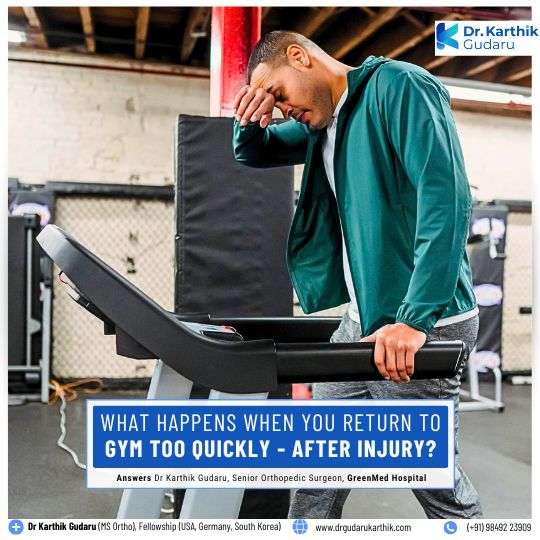
Many people mistake the absence of pain for complete recovery, but healing continues even after symptoms improve. Without proper rehabilitation and medical guidance, resuming intense workouts can delay recovery and increase the chances of chronic problems.
“Recovery is not a setback—it’s the foundation of a stronger comeback. Giving your body the time it needs today can prevent bigger injuries tomorrow.” Says Dr Karthik Gudaru an eminent orthopedic surgeon for joints in Hyderabad, Telangana.
Why Does Healing Take Time?
Every injury follows a natural healing process that cannot be rushed. During recovery, damaged tissues repair themselves by reducing inflammation, forming new cells, and gradually regaining strength. Interrupting this process with excessive physical activity may reopen the injury or create new damage.
The recovery period varies depending on the severity of the injury, the person’s age, overall health, and the type of tissue involved. Patience during this stage often leads to better long-term outcomes.
Common Risks of Exercising Too Soon
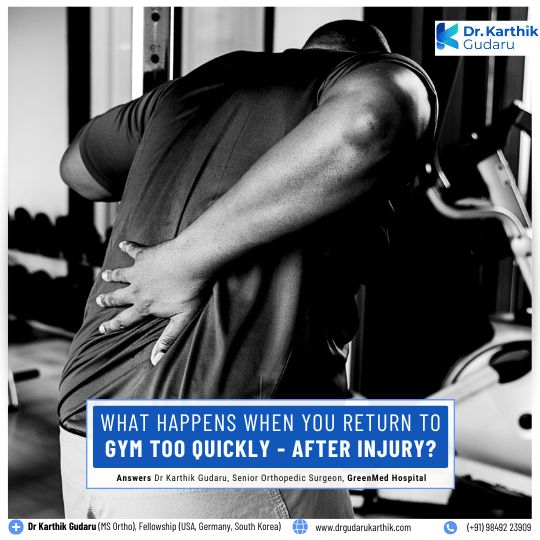
Returning to exercise prematurely can lead to repeated sprains, muscle tears, tendon injuries, stress fractures, and persistent joint pain. In some cases, the body compensates for the weakened area by placing extra strain on nearby muscles and joints, increasing the likelihood of secondary injuries.
Repeated injuries can also prolong rehabilitation and reduce overall athletic performance.
Signs Your Body May Not Be Ready
Even if you feel motivated to resume workouts, your body may still be sending warning signs. Persistent swelling, stiffness, weakness, reduced range of motion, discomfort during movement, or pain after activity often indicate that healing is incomplete.
Ignoring these symptoms can turn a minor injury into a more serious condition requiring longer treatment.
The Importance of Rehabilitation
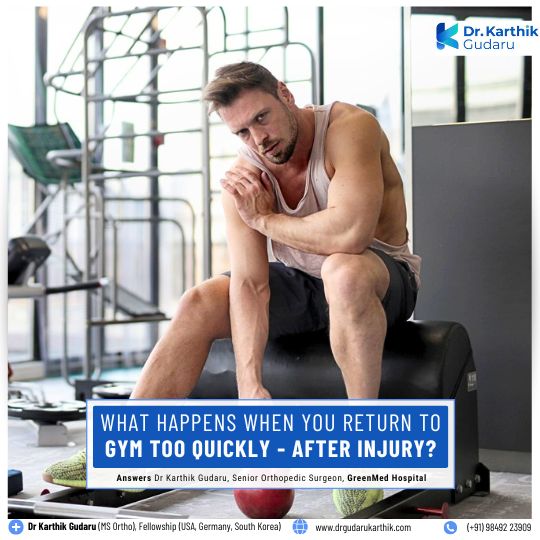
Rehabilitation is more than simply resting until the pain disappears. Guided exercises help restore strength, flexibility, balance, and coordination while preparing the injured area for everyday activities and sports. Gradually increasing activity under professional supervision reduces the risk of setbacks and promotes a safer return to exercise.
Following a structured rehabilitation program also helps rebuild confidence after an injury.
Returning to Exercise Safely
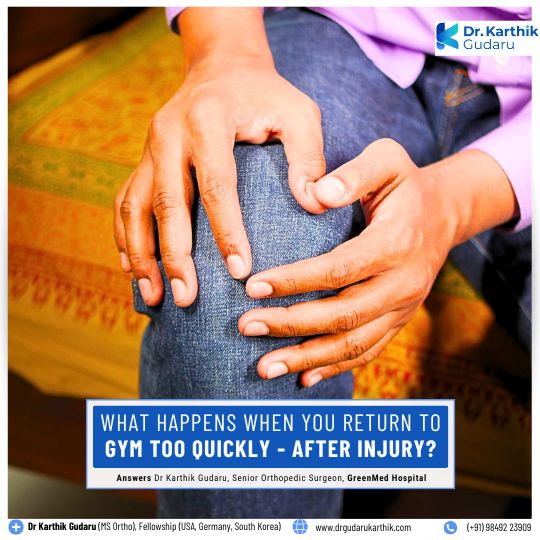
A safe return to physical activity should be gradual rather than immediate. Starting with low-impact exercises, warming up properly, listening to your body’s signals, and increasing intensity slowly allow the injured tissues to adapt without excessive strain.
Medical clearance may be necessary after moderate or severe injuries, especially if surgery or prolonged rehabilitation was required.
Returning to exercise too quickly after an injury can delay healing, increase the risk of re-injury, and lead to long-term complications. While staying active is important, allowing your body enough time to recover is equally essential. A gradual return guided by proper rehabilitation and medical advice helps restore strength safely and reduces the likelihood of future injuries, allowing you to return to the activities you enjoy with greater confidence.

Dr Karthik Gudaru, MS Orthopaedics, MBBS, Fellowship in Knee and Hip Arthroplasty (USA), Fellowship in Computer-Assisted Navigation Joint Replacement Surgery (Germany), is one of Hyderabad’s leading orthopaedic surgeons with an outstanding reputation for precision, innovation, and excellence in joint replacement and orthopaedic care. Widely recognised as the best knee replacement specialist in Hyderabad, he brings a deep commitment to patient-centred care and cutting-edge surgical techniques.
Dr Karthik Gudaru is currently the Senior Orthopaedic and Joint Replacement Specialist, Department of Orthopaedics at GreenMed Hospital, Srinagar Colony, Hyderabad, Assistant Professor and Consultant Orthopaedic at BIRRD Hospital (Balaji Institute of Surgery, Research and Rehabilitation for the Disabled), Tirupati and Joint Replacement & Pediatric Orthopedic Specialist at Sri Maruthi Hospitals, Tirupati.
Dr Karthik Gudaru’s Treatment Specialisation are –
Knee Joint Treatments (Including Total Knee Replacement Surgery).
Shoulder Joint Treatments (Including Total Shoulder Replacement Surgery).
Hip Joint Treatments (Including Total Hip Replacement Surgery).
Elbow Joint Treatments (Including Total Elbow Arthroscopy).
Computer-Assisted Knee Replacement Surgery.
Stem Cell Therapy for key orthopaedic treatments.
Pediatric Orthopedics Surgeon for Cerebral Palsy, Congenital Anomalies, Poliomyelitis & Metabolic Bone Diseases