
A tear in the anterior cruciate ligament (ACL) is one of the most common knee injuries, especially among athletes, fitness enthusiasts, and even people involved in everyday physical activities. The ACL is a crucial ligament that connects the thigh bone (femur) to the shinbone (tibia) and helps stabilize the knee. When this ligament is torn, the knee can feel unstable, painful, swollen, and weak, making even simple movements like walking, climbing stairs, or standing up difficult.
In the past, treating an ACL tear meant open surgery, which involved large incisions, significant pain, and long periods of rest and rehabilitation. Recovery could take six months to a year, making it frustrating for active individuals and athletes. Today, arthroscopic surgery has completely changed the game, offering a safer, faster, and less painful way to repair ACL injuries. Shares Dr Karthik Gudaru, who is Hyderabad’s leading surgeon for ligament injury and an experienced ACL Tear specialist.
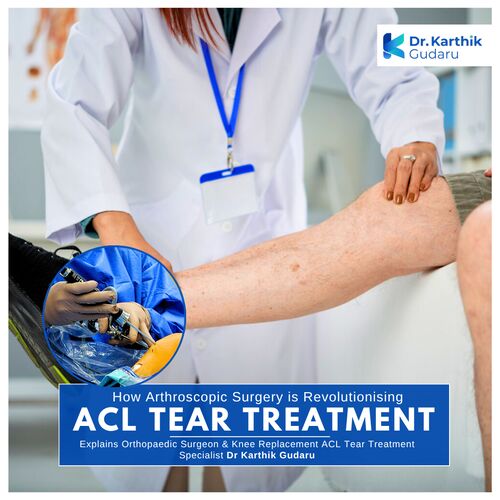
What is Arthroscopic Surgery for an ACL Tear?
Arthroscopic surgery is a minimally invasive technique that allows the surgeon to see inside the knee joint using a small camera called an arthroscope. This camera is inserted through tiny incisions of 1mm in size and the images are projected on a screen, helping the surgeon perform precise repairs.
For ACL tears, the damaged ligament is usually reconstructed using a graft—either from the patient’s own tendon (commonly from the hamstring or patellar tendon) or a donor graft. Because the cuts are small, there is less bleeding, pain, and tissue damage, which allows faster healing and minimal scarring compared to traditional open surgery.
What is a PCL Tear?
The Posterior Cruciate Ligament (PCL) is located at the back of the knee and connects the femur to the tibia. A PCL tear typically occurs due to a strong force—such as falling directly on a bent knee or during an accident. It is less common than an ACL tear but can be equally serious.
Symptoms include pain at the back of the knee, swelling, and difficulty walking or bending the leg.
Why Arthroscopic ACL Surgery is a Game-Changer?
Arthroscopic ACL surgery has revolutionized the way ACL injuries are treated for several reasons:
- Minimal Pain and Scarring: Unlike traditional open surgery, arthroscopy requires only small cuts, leaving tiny scars and causing less postoperative discomfort.
- Precision Repair: The camera allows the surgeon to see the knee joint in great detail, helping them repair the ACL accurately and fix any additional damage, like torn cartilage.
- Faster Recovery: Patients can begin gentle knee movements soon after surgery. With proper physiotherapy, most people return to normal daily activities within a few weeks and regain full strength and mobility within a few months. Athletes can often return to sports faster than with traditional surgery.
- Lower Risk of Complications: Smaller incisions and less tissue damage reduce the risk of infections and complications after surgery.
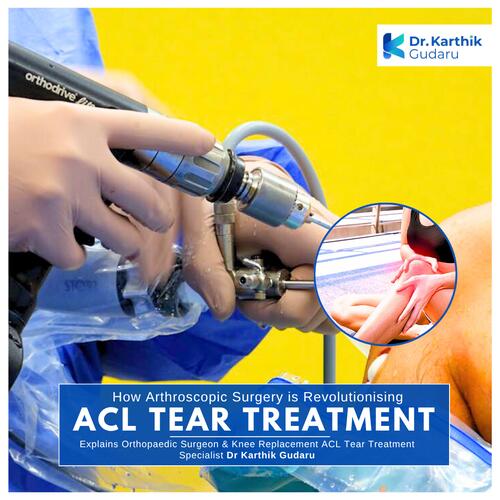
Why Arthroscopic PCL Surgery is Transformative?
The PCL, located deep within the knee joint, was once difficult to repair accurately through open surgery. Arthroscopy has completely changed this. Using the tiny camera and specialized instruments, surgeons can now reach and reconstruct the PCL with great precision.
This method not only improves surgical accuracy but also ensures:
- Faster Recovery and Mobility: Patients can begin movement exercises sooner.
- Improved Joint Stability: The reconstruction restores the natural function of the ligament effectively.
- Reduced Pain and Hospital Stay: As with ACL surgery, the minimally invasive technique ensures quicker healing and less discomfort.
Arthroscopic PCL reconstruction has proven to be highly effective for patients who want to regain full function and stability of their knee after an injury.
Recovery After Arthroscopic ACL or PCL Surgery
Recovery is a gradual process that focuses on reducing swelling, regaining motion, and rebuilding strength. Physiotherapy plays a key role—it helps improve flexibility, balance, and muscle power around the knee. With consistent exercises and proper care, most patients return to walking, jogging, and even sports within a few months.
**Patients can start rehabilitation with in 24 hours after surgery and full recovery in 6 weeks from time of surgery.
In Summary
Arthroscopic surgery has revolutionised how ACL and PCL tears are treated. It combines precision, safety, and faster recovery to help patients regain confidence and mobility. Whether it’s an ACL or PCL tear, early diagnosis and timely treatment are essential for preventing long-term knee problems.
For expert diagnosis and advanced arthroscopic ACL and PCL surgery, you may consult Dr. Karthik Gudaru, a leading orthopedic surgeon in Hyderabad and India, specializing in minimally invasive knee procedures and personalized recovery plans.

Dr Karthik Gudaru, MS Orthopaedics, MBBS, Fellowship in Knee and Hip Arthroplasty (USA), Fellowship in Computer-Assisted Navigation Joint Replacement Surgery (Germany), is one of Hyderabad’s leading orthopaedic surgeons with an outstanding reputation for precision, innovation, and excellence in joint replacement and orthopaedic care. Widely recognised as the best knee replacement specialist in Hyderabad, he brings a deep commitment to patient-centred care and cutting-edge surgical techniques.
Dr Karthik Gudaru is currently the Senior Orthopaedic and Joint Replacement Specialist, Department of Orthopaedics at GreenMed Hospital, Srinagar Colony, Hyderabad, Assistant Professor and Consultant Orthopaedic at BIRRD Hospital (Balaji Institute of Surgery, Research and Rehabilitation for the Disabled), Tirupati and Joint Replacement & Pediatric Orthopedic Specialist at Sri Maruthi Hospitals, Tirupati.
Dr Karthik Gudaru’s Treatment Specialisation are –
Knee Joint Treatments (Including Total Knee Replacement Surgery).
Shoulder Joint Treatments (Including Total Shoulder Replacement Surgery).
Hip Joint Treatments (Including Total Hip Replacement Surgery).
Elbow Joint Treatments (Including Total Elbow Arthroscopy).
Computer-Assisted Knee Replacement Surgery.
Stem Cell Therapy for key orthopaedic treatments.
Pediatric Orthopedics Surgeon for Cerebral Palsy, Congenital Anomalies, Poliomyelitis & Metabolic Bone Diseases