
How to Select the Best Pillow for Neck Pain in India? Answers Hyderabad Orthopaedic Surgeon
Key Summary
- The Goal of Neutral Alignment: Understanding how a pillow should fill the gap between your head and shoulders without tilting the neck.
- Loft and Firmness: How to choose between high, medium, and low loft based on your body frame and shoulder width.
- Material Science: Comparing Memory Foam (contouring), Latex (breathability), and Microfiber (plushness) for the Indian climate.
- Sleeping Positions:
- Side Sleepers: Why a firm, higher loft pillow is necessary to keep the spine straight.
- Back Sleepers: The benefits of a medium-loft pillow with a neck contour.
- Stomach Sleepers: Why a very thin pillow (or no pillow) is often best to avoid rotation strain.
- The “Pillow Life” Rule: When to replace your pillow to ensure it hasn’t lost its supportive structural integrity.
Is your pillow causing your neck pain? While many focus on mattresses, the right pillow is critical for maintaining the natural curve of your cervical spine. In this guide, Dr. Gudaru Karthik breaks down the science of “loft,” material choices like memory foam vs. latex, and how your sleeping position—whether side, back, or stomach—dictates the support you truly need to wake up pain-free.
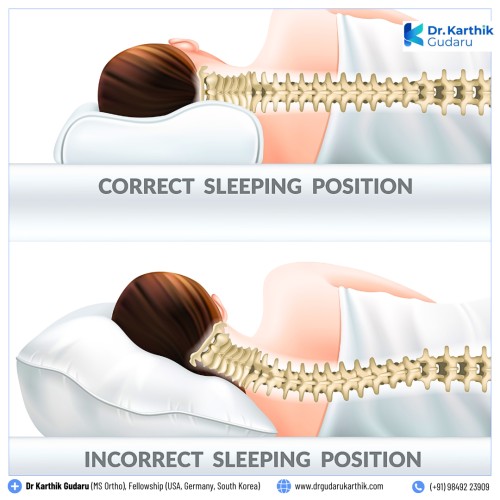
Neck pain is becoming increasingly common across India due to long hours of desk work, excessive mobile phone usage, poor sitting posture, and lack of proper sleep support. Many people invest in good mattresses but overlook the importance of a pillow. In reality, the pillow plays a crucial role in maintaining the natural alignment of the neck and spine during sleep.
A poor-quality or unsuitable pillow can silently contribute to stiffness, headaches, shoulder discomfort, and even nerve-related pain over time. Selecting the right pillow is not about choosing the softest or most expensive option; it is about choosing one that supports your neck structure and sleeping position effectively. Understanding how a pillow affects neck health helps you make a smarter and more practical choice, explains Dr Karthik Gudaru, a Senior Orthopaedic surgeon and one of the leading doctors for back pain and slipped disc or prolapsed or herniated disc treatment in Hyderabad.

What Role Does a Pillow Play in Neck Pain?
A pillow’s primary function is to support the cervical spine, which is the natural curve of the neck. When you sleep, your neck should remain in a neutral position aligned with the rest of your spine. If a pillow is too high, it pushes the neck forward. If it is too flat, it allows the neck to bend backward or sideways. Both situations create stress on muscles, joints, and discs.
During sleep, muscles should relax completely to allow recovery and tissue repair. An improper pillow forces neck muscles to stay slightly contracted throughout the night. Over weeks and months, this leads to chronic stiffness, reduced flexibility, and sometimes nerve irritation. Poor pillow support can also reduce blood circulation in neck tissues, which can worsen morning pain and cause headaches starting from the base of the skull.
A good pillow distributes weight evenly, supports the neck curve, and keeps the head stable. This allows muscles to relax fully and helps reduce inflammation and pain.
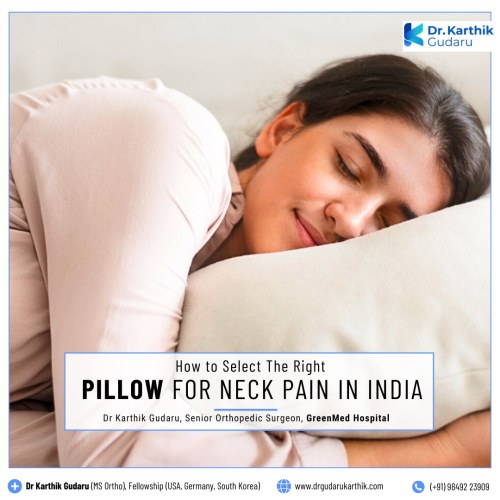
How to Select the Best Pillow for Neck Pain?
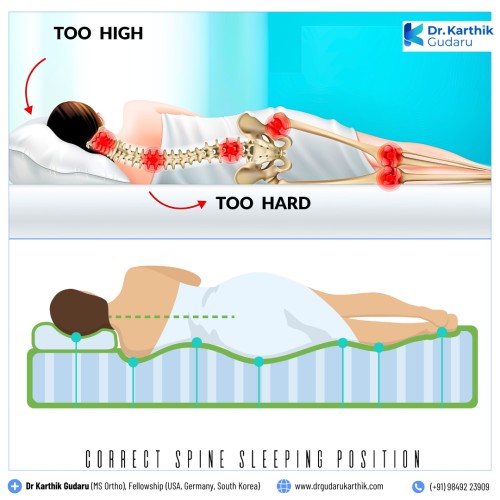
The first factor to consider is your sleeping position. Side sleepers usually need thicker and firmer pillows because there is more distance between the shoulder and head. A pillow that fills this gap keeps the spine straight and prevents neck bending. Back sleepers generally require medium-height pillows that support the neck curve without pushing the head forward. People who sleep on their stomach should ideally switch positions because stomach sleeping twists the neck for long periods. If changing position is difficult, a very thin pillow is usually better.
The second important factor is pillow material. Memory foam pillows are widely recommended for neck pain because they adjust to the shape of your head and neck and distribute pressure evenly. Latex pillows are another good option because they are naturally firm, breathable, and suitable for Indian weather conditions. Feather pillows feel soft and comfortable but often lack structured support, which may not be ideal for people with existing neck pain. Fiber pillows are budget-friendly but tend to lose shape quickly and may need frequent replacement.

Pillow height, also called loft, is another major factor. Low loft pillows are usually suitable for back sleepers and sometimes stomach sleepers. Medium loft works well for people who change sleeping positions during the night. High-loft pillows are usually better for side sleepers. Many people in India use very high traditional cotton pillows, which can worsen cervical strain over time.
Climate also matters when selecting pillows in India. Since most regions experience warm temperatures, choosing breathable materials is helpful. Pillows with cooling gel memory foam, ventilated foam design, or cotton covers help reduce heat buildup and improve sleep quality.

Orthopaedic or cervical contour pillows are specifically designed to support the natural neck curve. These pillows usually have a dip in the center for the head and raised edges for neck support. They can be useful for people who already have cervical spondylosis, disc bulge, chronic stiffness, or work-related neck strain.
It is also important to replace pillows regularly. Even high-quality pillows lose shape and support over time. Memory foam pillows typically last two to three years, while fiber pillows may need replacement sooner. If you start waking up with neck pain that improves during the day, your pillow may be worn out.

When to Meet an Orthopaedic Surgeon?
While changing pillows can help with mild or posture-related neck pain, some symptoms require medical evaluation. If neck pain continues for more than two to three weeks despite rest and support correction, it is wise to consult a specialist. Pain that travels from the neck to the shoulder, arm, or fingers may indicate nerve compression and should not be ignored.
Numbness, tingling, or weakness in the hands can signal nerve involvement and needs medical attention. Severe morning stiffness that does not improve even after changing sleeping support may suggest underlying cervical spine problems. If neck pain starts after an accident or injury, evaluation is important even if the pain seems mild initially.
Frequent headaches that begin in the neck region can also indicate cervical issues. In rare but serious cases, symptoms such as balance problems or coordination issues require urgent medical consultation.
Early medical care helps prevent long-term complications. Many neck conditions can be treated with physiotherapy, posture correction, and medication if diagnosed early, reducing the chances of surgery.
Choosing the right pillow is one of the simplest yet most effective ways to manage and prevent neck pain. The best pillow is one that keeps your neck aligned with your spine, supports your sleeping position, and maintains its shape over time. In India, where many people still use traditional high pillows or multiple pillows, switching to a structured support pillow can significantly reduce chronic neck strain.
However, pillows are only one part of neck health. Maintaining good posture, setting up an ergonomic workspace, taking breaks from screens, and doing regular neck strengthening exercises are equally important. If pain is persistent or severe, professional medical evaluation is always the safest approach.

Dr Karthik Gudaru, MS Orthopaedics, MBBS, Fellowship in Knee and Hip Arthroplasty (USA), Fellowship in Computer-Assisted Navigation Joint Replacement Surgery (Germany), is one of Hyderabad’s leading orthopaedic surgeons with an outstanding reputation for precision, innovation, and excellence in joint replacement and orthopaedic care. Widely recognised as the best knee replacement specialist in Hyderabad, he brings a deep commitment to patient-centred care and cutting-edge surgical techniques.
Dr Karthik Gudaru is currently the Senior Orthopaedic and Joint Replacement Specialist, Department of Orthopaedics at GreenMed Hospital, Srinagar Colony, Hyderabad, Assistant Professor and Consultant Orthopaedic at BIRRD Hospital (Balaji Institute of Surgery, Research and Rehabilitation for the Disabled), Tirupati and Joint Replacement & Pediatric Orthopedic Specialist at Sri Maruthi Hospitals, Tirupati.
Dr Karthik Gudaru’s Treatment Specialisation are –
Knee Joint Treatments (Including Total Knee Replacement Surgery).
Shoulder Joint Treatments (Including Total Shoulder Replacement Surgery).
Hip Joint Treatments (Including Total Hip Replacement Surgery).
Elbow Joint Treatments (Including Total Elbow Arthroscopy).
Computer-Assisted Knee Replacement Surgery.
Stem Cell Therapy for key orthopaedic treatments.
Pediatric Orthopedics Surgeon for Cerebral Palsy, Congenital Anomalies, Poliomyelitis & Metabolic Bone Diseases