
This Article is Medically Reviewed by Dr Karthik Gudaru, MS Orthopaedics, Fellowship in Computer-Assisted Navigation and Joint Replacement Surgery (Germany), HOD Orthopaedic Department, GreenMed Hospitals, Hyderabad
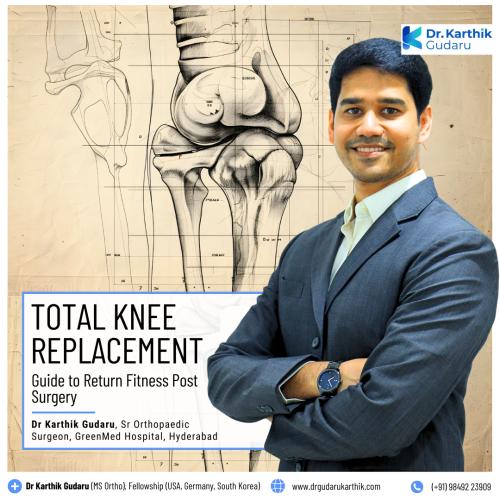
Knee pain can quietly limit your independence. Simple activities like walking, climbing stairs, or standing for long periods may become exhausting when the knee joint is severely damaged. When medications, physiotherapy, and lifestyle changes fail to provide relief, surgery becomes a reliable option.
Total knee replacement is one of the most successful orthopedic procedures today, offering long-term pain relief and improved mobility. However, surgery is only the beginning. The real transformation happens during recovery and rehabilitation, especially when the goal is to regain strength, flexibility, and overall fitness safely, as shared by Dr Karthik Gudaru, a senior orthopedic surgeon and a specialist total knee replacement surgeon in Hyderabad and Telangana.
What Is a Total Knee Replacement?
Total knee replacement, also known as knee arthroplasty, is a surgical procedure in which a damaged knee joint is replaced with artificial components made of metal and medical-grade plastic. The procedure is commonly recommended for patients suffering from advanced osteoarthritis, rheumatoid arthritis, post-traumatic arthritis, or severe knee deformity.
In this surgery, the worn-out cartilage and damaged bone surfaces at the ends of the femur and tibia are carefully removed. These surfaces are then reshaped and fitted with prosthetic implants that replicate the natural movement of the knee joint. A plastic spacer is inserted between the metal components to allow smooth gliding and reduce friction. The goal of the procedure is to relieve pain, correct deformity, and restore functional movement.
While the surgery significantly reduces pain, returning to full fitness requires structured rehabilitation and commitment from the patient.
The First Phase: Immediate Post-Surgery Recovery
Recovery begins within hours after surgery. Patients are usually encouraged to start gentle movements and assisted walking within a day. Early mobilisation helps prevent complications such as blood clots and stiffness.
During the first few weeks, the focus is on controlling swelling, managing pain, and regaining the basic range of motion. Ice application, elevation of the leg, and prescribed medications help manage inflammation. Physiotherapy starts early, with guided exercises aimed at improving knee bending and straightening.
It is normal to experience discomfort and stiffness during this stage. However, consistency with exercise is crucial for long-term success.
Regaining Strength and Mobility
Once the initial healing phase passes, strengthening exercises become more important. The quadriceps, hamstrings, and calf muscles often weaken due to long-standing knee pain before surgery. Rebuilding these muscles improves joint stability and overall mobility.
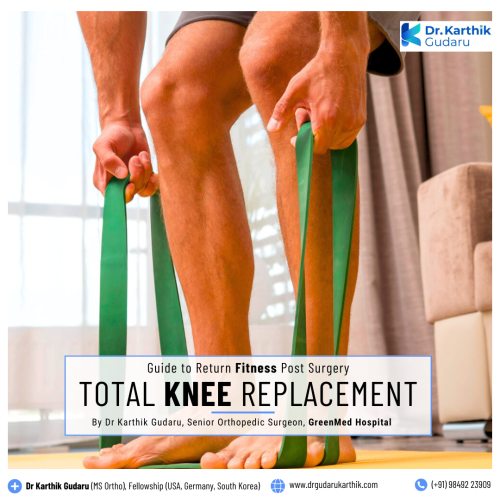
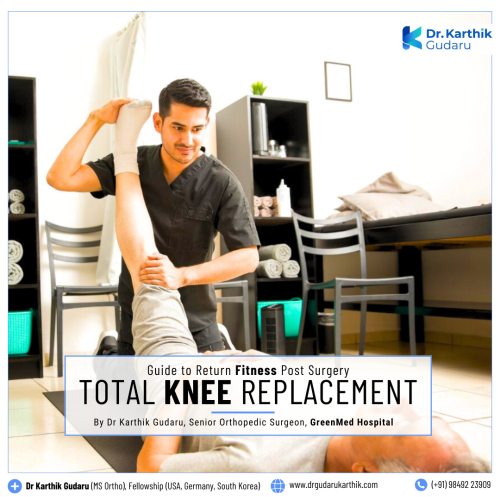
Low-impact exercises such as straight leg raises, heel slides, and seated knee bends are commonly introduced first. Gradually, patients progress to standing exercises, light resistance training, and controlled squats under professional guidance.
Walking is one of the safest and most effective ways to regain fitness after knee replacement. Initially supported by a walker or crutches, patients gradually transition to independent walking. Increasing walking distance slowly improves endurance without overloading the joint.
Returning to Fitness Safely
After six to twelve weeks, many patients feel significantly better. However, returning to full fitness should be gradual. High-impact activities such as running or jumping are generally discouraged, as they can increase stress on the artificial joint.
Instead, low-impact cardiovascular exercises are recommended. Stationary cycling improves joint flexibility and strengthens surrounding muscles without excessive strain. Swimming and water therapy are excellent options because water reduces body weight pressure on the knee while allowing full movement.
Strength training can be resumed with modifications. Light weights, controlled repetitions, and proper form are essential. The focus should remain on improving muscle endurance rather than lifting heavy loads.
Balance and flexibility exercises are equally important. Gentle yoga, under supervision, can improve joint flexibility and body awareness. However, deep squatting or extreme knee bending should be avoided unless specifically approved by the surgeon.
Nutrition and Lifestyle Considerations
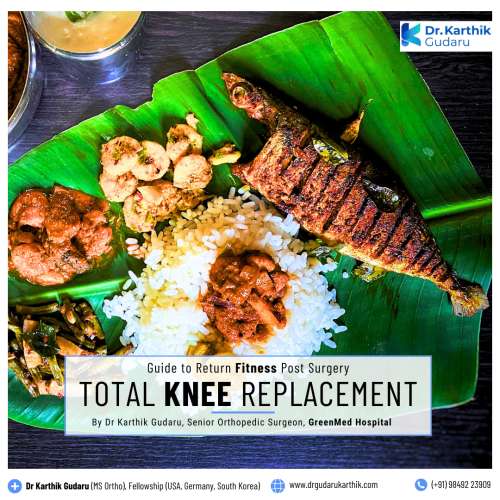
Fitness recovery is not only about exercise. Nutrition plays a major role in healing and muscle rebuilding. A balanced diet rich in protein supports tissue repair. Adequate calcium and vitamin D intake strengthen bones. Staying hydrated also helps maintain muscle function.
Maintaining a healthy body weight is crucial after knee replacement. Excess weight increases pressure on the artificial joint and may shorten its lifespan. Regular physical activity combined with mindful eating supports long-term joint health.
Sleep and rest are equally important. The body heals during rest, and overexertion can delay recovery. Listening to your body and avoiding sudden increases in activity level reduces the risk of setbacks.
Long-Term Fitness and Joint Protection
Most modern knee implants last 15 to 20 years or longer, depending on usage and care. Protecting the joint is essential for longevity. Avoiding high-impact sports, maintaining strong leg muscles, and following medical advice during follow-up visits help preserve the implant.
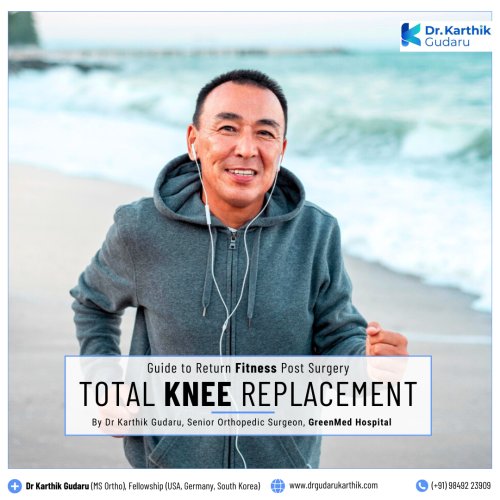
Many patients return to activities such as brisk walking, golfing, cycling, and even light trekking after full recovery. The key is moderation and consistency rather than intensity.
Periodic medical check-ups ensure that the implant remains stable and functions properly. Any persistent swelling, unusual pain, or reduced movement should be evaluated promptly.
Emotional and Mental Recovery
Physical healing is only one aspect of recovery. Some patients experience anxiety about moving the new joint or fear damaging the implant. Building confidence gradually through guided rehabilitation helps overcome these concerns.
Setting realistic goals, tracking progress, and celebrating small milestones improve motivation. Support from family, physiotherapists, and healthcare professionals plays an important role in a successful return to fitness.
Total knee replacement offers a second chance at an active, pain-free life. However, the surgery itself is only the first step. Structured rehabilitation, gradual strengthening, proper nutrition, and long-term joint care determine the quality of recovery. By focusing on safe, low-impact fitness strategies and maintaining consistency, patients can regain mobility, rebuild strength, and return to a healthier and more independent lifestyle.
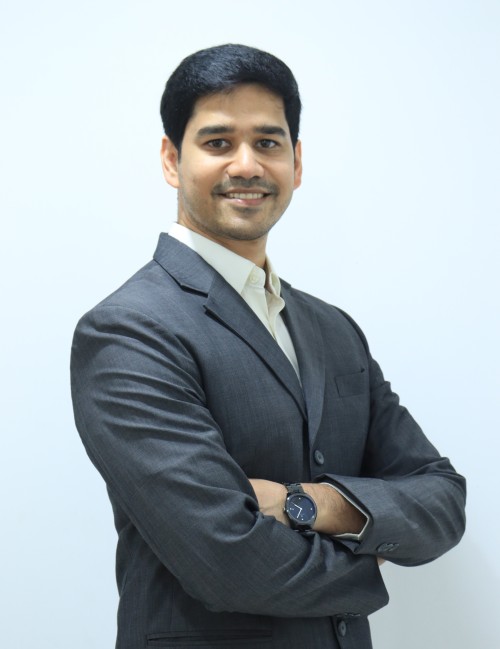
Dr Karthik Gudaru, MS Orthopaedics, MBBS, Fellowship in Knee and Hip Arthroplasty (USA), Fellowship in Computer-Assisted Navigation Joint Replacement Surgery (Germany), is one of Hyderabad’s leading orthopaedic surgeons with an outstanding reputation for precision, innovation, and excellence in joint replacement and orthopaedic care. Widely recognised as the best knee replacement specialist in Hyderabad, he brings a deep commitment to patient-centred care and cutting-edge surgical techniques.
Dr Karthik Gudaru is currently the Senior Orthopaedic and Joint Replacement Specialist, Department of Orthopaedics at GreenMed Hospital, Srinagar Colony, Hyderabad, Assistant Professor and Consultant Orthopaedic at BIRRD Hospital (Balaji Institute of Surgery, Research and Rehabilitation for the Disabled), Tirupati and Joint Replacement & Pediatric Orthopedic Specialist at Sri Maruthi Hospitals, Tirupati.
Dr Karthik Gudaru’s Treatment Specialisation are –
Knee Joint Treatments (Including Total Knee Replacement Surgery).
Shoulder Joint Treatments (Including Total Shoulder Replacement Surgery).
Hip Joint Treatments (Including Total Hip Replacement Surgery).
Elbow Joint Treatments (Including Total Elbow Arthroscopy).
Computer-Assisted Knee Replacement Surgery.
Stem Cell Therapy for key orthopaedic treatments.
Pediatric Orthopedics Surgeon for Cerebral Palsy, Congenital Anomalies, Poliomyelitis & Metabolic Bone Diseases