
Summary
- Repetitive daily activities like typing, chopping, and kneading can strain forearm tendons and lead to tennis elbow over time.
- Poor ergonomics, continuous movement, and lack of rest prevent healing, causing pain, weakness, and inflammation around the elbow.
- Early symptoms should not be ignored, and if pain persists or worsens, consulting an orthopedic surgeon is essential to prevent long-term damage.
This Article is Medically Reviewed by Dr Karthik Gudaru, MS Orthopaedics, Fellowship in Computer-Assisted Navigation and Joint Replacement Surgery (Germany), HOD Orthopaedic Department, GreenMed Hospitals, Hyderabad.
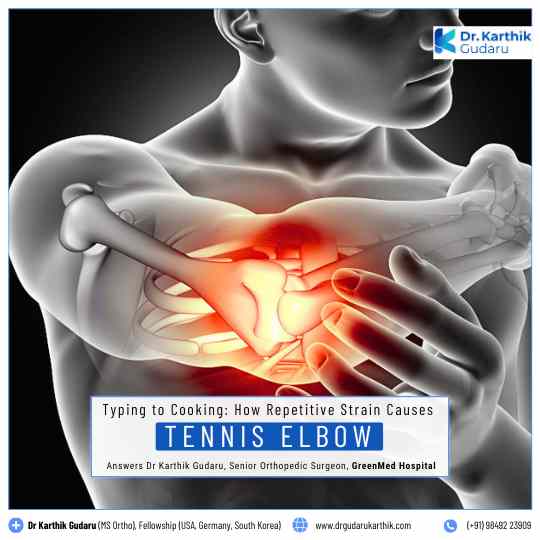
Tennis elbow, medically known as lateral epicondylitis, is no longer just a sports-related condition. In modern lifestyles, it is increasingly seen in people who have never picked up a tennis racket. Everyday activities such as typing for long hours, using a computer mouse, or performing repetitive kitchen tasks can gradually strain the tendons around the elbow.
This condition develops when repeated stress causes tiny tears in the tendons that attach the forearm muscles to the elbow, leading to pain, inflammation, and reduced strength. What often begins as mild discomfort can slowly turn into a persistent issue if ignored, explains Dr Karthik Gudaru, Senior Orthopaedic, Pediatric and Joint Replacement Specialist in Hyderabad and India.

Can Daily Activities Like Typing and Cooking Really Cause Tennis Elbow?
Yes, and this is more common than most people assume. Tennis elbow is essentially an overuse injury, which means any repeated motion involving the wrist and forearm can trigger it. Activities like typing, scrolling, lifting utensils, chopping vegetables, kneading dough, or even squeezing cloth while cleaning involve continuous muscle engagement. These small, repeated actions may not feel harmful at first, but over time, they place significant strain on the tendons, especially if done without breaks or proper technique.
“From keyboard strokes to kitchen routines, it’s the unnoticed repetition that strains your elbow—making awareness, timely rest, and early care the real cure for tennis elbow.” – Dr Karthik Gudaru, Specialist, Orthopaedic Surgeon for Tennis Elbow Treatment in Hyderabad
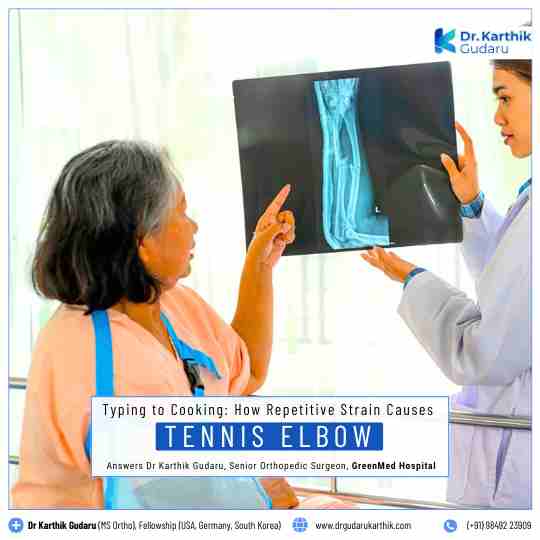
Why Repetitive Strain Leads to Tendon Damage?
The tendons around the elbow are strong but not designed for constant, repetitive stress without recovery. When the same motion is performed repeatedly, especially with force or poor posture, the tendons develop microscopic tears. Normally, the body repairs these small injuries, but if the activity continues without rest, the damage accumulates faster than the body can heal. This leads to inflammation, pain, and eventually a weakening of the tendon structure. Movements involving gripping, twisting, or lifting—common in both office work and cooking—are particularly stressful for the elbow joint.
The Role of Typing and Desk Work
Typing for extended hours is one of the most overlooked causes of tennis elbow. Continuous wrist movement, especially when combined with improper ergonomics, can put constant strain on the forearm muscles. A poorly positioned keyboard, lack of wrist support, or excessive use of a mouse can increase this stress. Over time, the tendons connecting these muscles to the elbow become irritated. Many people ignore early warning signs like slight discomfort or stiffness, only seeking help when the pain becomes more severe.

How Cooking Activities Add to the Problem?
Cooking, especially in Indian households, involves a wide range of repetitive hand movements. Chopping vegetables, rolling rotis, grinding spices, stirring thick gravies, and kneading dough all require repeated use of the wrist and forearm. These tasks often involve both repetition and force, making them a significant contributor to tendon strain. Since cooking is a daily activity, the lack of rest between sessions can worsen the condition. The problem becomes more pronounced when these tasks are done continuously without switching hands or taking breaks.
Early Signs You Should Not Ignore
Tennis elbow does not usually appear suddenly; it develops gradually. Early symptoms may include mild pain or a burning sensation on the outer part of the elbow. You might notice discomfort while lifting objects, shaking hands, or even holding a cup of tea. Grip strength may weaken, making it harder to perform simple tasks. These signs are often dismissed as temporary strain, but ignoring them can allow the condition to progress into more persistent and limiting pain.

Managing and Preventing Repetitive Strain
Preventing tennis elbow is largely about reducing excessive strain and allowing proper recovery. For those who work on computers, maintaining proper posture, using ergonomic keyboards, and taking frequent breaks can significantly reduce stress on the tendons. Simple adjustments like keeping the wrist in a neutral position and avoiding unnecessary force while typing can help.
In the kitchen, small changes can make a big difference. Alternating hands during repetitive tasks, reducing the force used while chopping or kneading, and taking short breaks between activities can protect the elbow. Using well-designed, comfortable utensils can also reduce strain. The goal is not to avoid these tasks but to perform them in a way that minimises repetitive stress.
When to See an Orthopaedic Surgeon?
While mild cases of tennis elbow can improve with rest and lifestyle changes, certain symptoms require medical attention. If the pain persists for more than a few weeks despite reducing activity, it is important to consult an orthopaedic surgeon. Increasing pain, especially at night or during simple movements, is another warning sign.
If you experience significant weakness in your grip, difficulty lifting even light objects, or pain that radiates down the forearm, it should not be ignored. Swelling, stiffness, or a noticeable decrease in arm function are also indicators that professional evaluation is needed. An orthopaedic specialist can assess the severity of the condition and recommend appropriate treatment, which may include physiotherapy, medications, or other interventions to prevent long-term damage.
Tennis elbow is no longer limited to athletes—it has become a common lifestyle condition caused by repetitive strain from everyday activities like typing and cooking. The key to managing it lies in awareness, early recognition, and making simple adjustments to daily routines. These activities do not need to be avoided entirely, but they must be performed with care and moderation. Most importantly, if the pain persists or worsens, seeking timely medical advice from an orthopaedic surgeon can prevent the condition from becoming chronic and help restore normal function.

Dr Karthik Gudaru, MS Orthopaedics, MBBS, Fellowship in Knee and Hip Arthroplasty (USA), Fellowship in Computer-Assisted Navigation Joint Replacement Surgery (Germany), is one of Hyderabad’s leading orthopaedic surgeons with an outstanding reputation for precision, innovation, and excellence in joint replacement and orthopaedic care. Widely recognised as the best knee replacement specialist in Hyderabad, he brings a deep commitment to patient-centred care and cutting-edge surgical techniques.
Dr Karthik Gudaru is currently the Senior Orthopaedic and Joint Replacement Specialist, Department of Orthopaedics at GreenMed Hospital, Srinagar Colony, Hyderabad, Assistant Professor and Consultant Orthopaedic at BIRRD Hospital (Balaji Institute of Surgery, Research and Rehabilitation for the Disabled), Tirupati and Joint Replacement & Pediatric Orthopedic Specialist at Sri Maruthi Hospitals, Tirupati.
Dr Karthik Gudaru’s Treatment Specialisation are –
Knee Joint Treatments (Including Total Knee Replacement Surgery).
Shoulder Joint Treatments (Including Total Shoulder Replacement Surgery).
Hip Joint Treatments (Including Total Hip Replacement Surgery).
Elbow Joint Treatments (Including Total Elbow Arthroscopy).
Computer-Assisted Knee Replacement Surgery.
Stem Cell Therapy for key orthopaedic treatments.
Pediatric Orthopedics Surgeon for Cerebral Palsy, Congenital Anomalies, Poliomyelitis & Metabolic Bone Diseases