
Key Summary
- Indian home remedies like turmeric, ginger, and mustard oil can help reduce inflammation and ease joint stiffness associated with Rheumatoid Arthritis.
- These remedies work best as supportive care alongside medical treatment, not as a replacement for prescribed therapies.
- Persistent pain, worsening mobility, or joint damage signals the need for timely consultation with an orthopaedic specialist.
This Article is Medically Reviewed by Dr Karthik Gudaru, MS Orthopaedics, Fellowship in Computer-Assisted Navigation and Joint Replacement Surgery (Germany), HOD Orthopaedic Department, GreenMed Hospitals, Hyderabad.
Rheumatoid arthritis is more than just joint pain—it’s a chronic autoimmune condition that affects mobility, energy levels, and overall quality of life. While medical treatment is essential to control inflammation and prevent joint damage, many people in India turn to time-tested home remedies to complement their care. Rooted in Ayurveda and traditional practices, these remedies focus on reducing inflammation, improving circulation, and strengthening the body naturally, according to Dr Karthik Gudaru, one of Hyderabad’s leading orthopaedic surgeons and a specialist in treating arthritis, having an outstanding reputation for precision, innovation, and excellence in treating arthritis.
Can Indian home remedies really help manage rheumatoid arthritis symptoms?
They can help—but with a clear understanding of their role. Home remedies are not a cure for rheumatoid arthritis, nor can they replace prescribed medication. However, they can support symptom relief by easing stiffness, reducing inflammation, and improving joint flexibility when used consistently alongside medical treatment.
“True relief from rheumatoid arthritis comes not from choosing between tradition and medicine, but from blending both with consistency and care.” – Dr Karthik Gudaru, MS Orthopaedics, MBBS, Fellowship in Knee and Hip Arthroplasty (USA), Fellowship in Computer Assisted Navigation Joint Replacement Surgery (Germany)
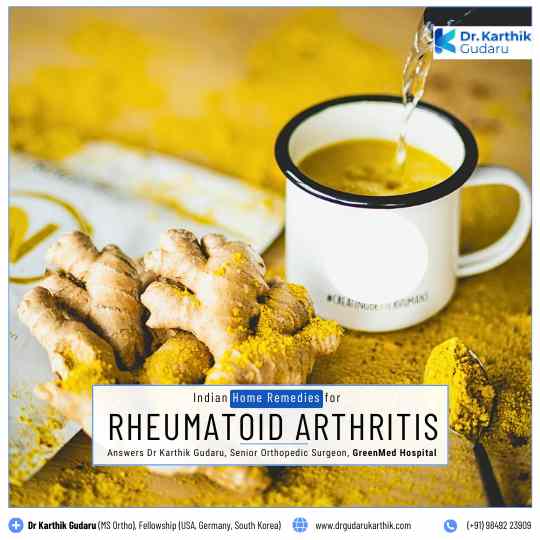
Turmeric Milk: Nature’s Anti-Inflammatory Drink
Turmeric has long been valued in Indian households for its powerful anti-inflammatory properties. The active compound, curcumin, helps reduce joint swelling and pain. Drinking warm turmeric milk at night can support inflammation control over time. Consistency is key here, as the effects are gradual rather than immediate.
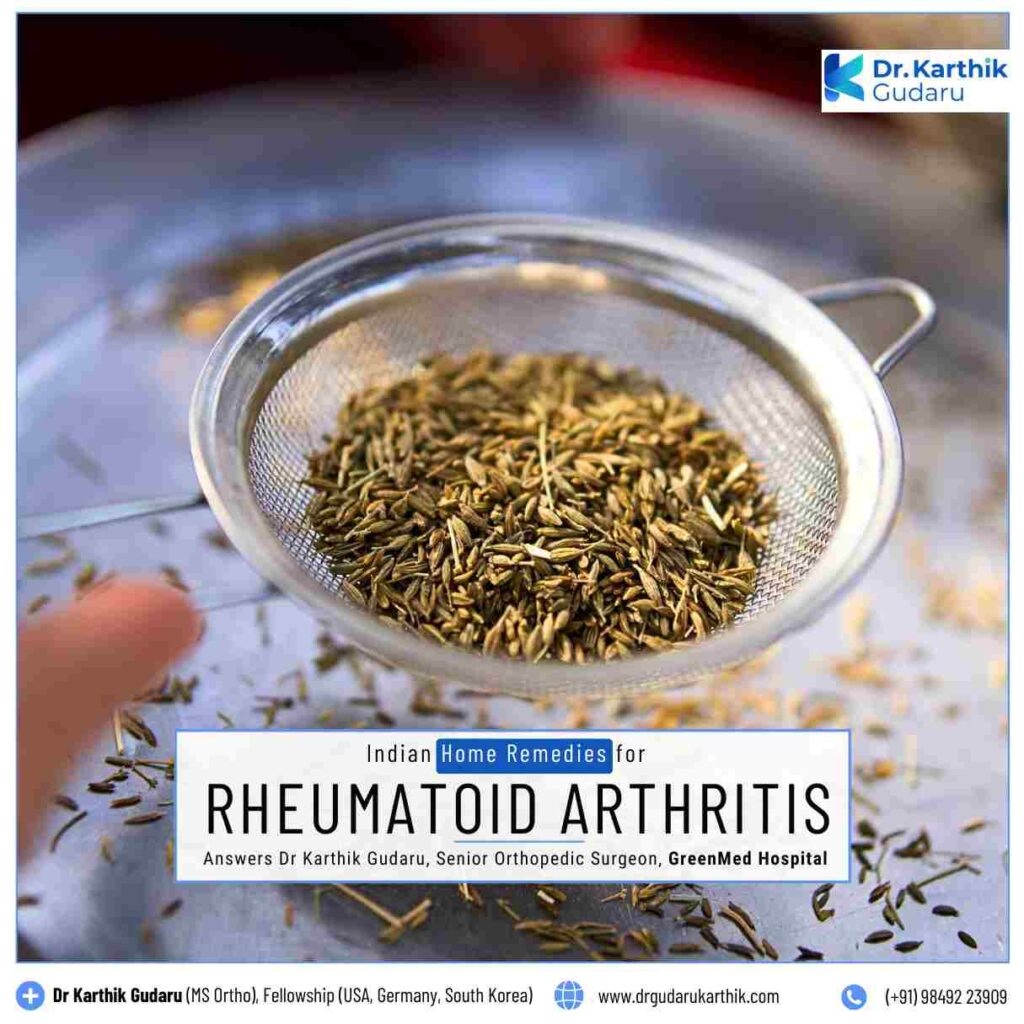
Ajwain (Carom Seeds) for Joint Warmth
Ajwain is often used for digestion, but it also has warming properties that can help reduce joint stiffness. Dry roasting ajwain and tying it in a cloth to use as a warm compress on affected joints can improve blood circulation and provide relief from discomfort.
Ginger and Garlic: Natural Pain Relievers
Both ginger and garlic are known for their anti-inflammatory and antioxidant properties. Including fresh ginger in tea or meals and consuming raw garlic (in small quantities) may help reduce pain intensity and stiffness. Over time, they contribute to better joint function.
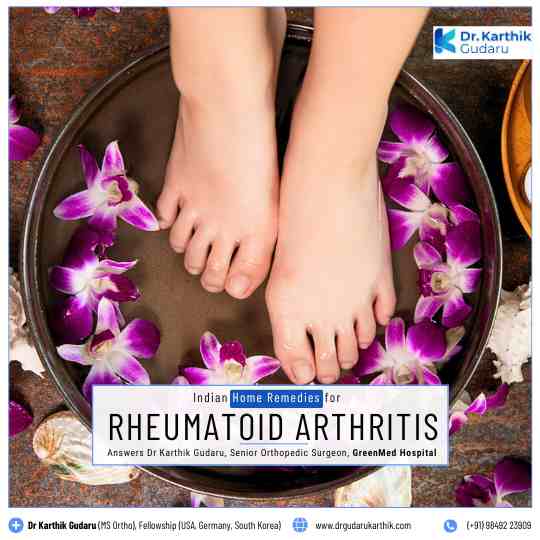
Epsom Salt Bath for Muscle Relaxation
Soaking in warm water mixed with Epsom salt can help relax muscles and ease joint stiffness. This remedy works by allowing magnesium to be absorbed through the skin, which may help reduce inflammation and improve overall comfort, especially after a long day.

Mustard Oil Massage for Improved Circulation
Warm mustard oil massages are a traditional way to relieve joint pain. The heat from the oil, combined with a gentle massage, helps stimulate blood flow, reduce stiffness, and improve joint mobility. Adding a pinch of garlic to the oil while heating can enhance its effectiveness.
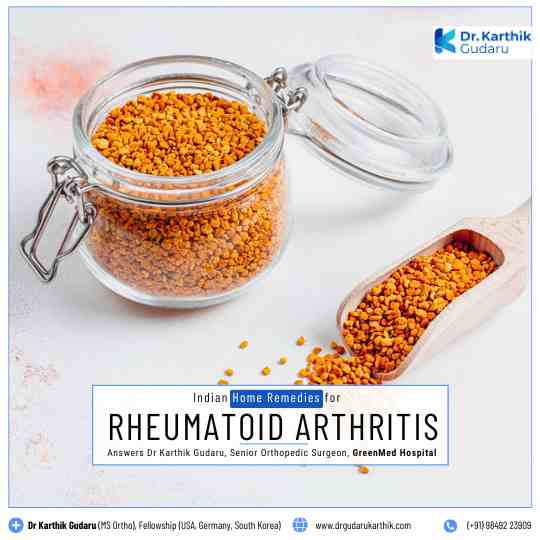
Fenugreek Seeds for Daily Support
Fenugreek seeds are commonly used in Indian kitchens and are believed to have anti-inflammatory effects. Soaking the seeds overnight and consuming them in the morning may help reduce swelling and support joint health gradually.

Yoga and Gentle Movement for Flexibility
While not a “remedy” in the traditional sense, gentle yoga and stretching are essential. Practices like slow joint rotations, breathing exercises, and mild stretches can prevent stiffness from worsening and improve long-term mobility without straining the joints.
When Should You Consult an Orthopaedic Surgeon?
Home remedies can ease symptoms, but there are clear situations where professional medical evaluation becomes necessary.
If joint pain persists despite remedies and medication, or if swelling and stiffness worsen over time, it may indicate progressive joint damage. Difficulty in performing daily activities—such as walking, gripping objects, or climbing stairs—is another warning sign that should not be ignored.
An orthopaedic surgeon can assess joint health through imaging and clinical evaluation. In advanced cases, where joints are severely damaged, surgical options such as joint repair or replacement may be considered. Early consultation helps prevent irreversible damage and ensures better long-term outcomes.
Indian home remedies offer a supportive, holistic way to manage rheumatoid arthritis symptoms, but they work best as part of a broader treatment plan. The goal is not just temporary relief, but sustained joint health—something that requires both traditional wisdom and modern medical guidance working together.

Dr Karthik Gudaru, MS Orthopaedics, MBBS, Fellowship in Knee and Hip Arthroplasty (USA), Fellowship in Computer-Assisted Navigation Joint Replacement Surgery (Germany), is one of Hyderabad’s leading orthopaedic surgeons with an outstanding reputation for precision, innovation, and excellence in joint replacement and orthopaedic care. Widely recognised as the best knee replacement specialist in Hyderabad, he brings a deep commitment to patient-centred care and cutting-edge surgical techniques.
Dr Karthik Gudaru is currently the Senior Orthopaedic and Joint Replacement Specialist, Department of Orthopaedics at GreenMed Hospital, Srinagar Colony, Hyderabad, Assistant Professor and Consultant Orthopaedic at BIRRD Hospital (Balaji Institute of Surgery, Research and Rehabilitation for the Disabled), Tirupati and Joint Replacement & Pediatric Orthopedic Specialist at Sri Maruthi Hospitals, Tirupati.
Dr Karthik Gudaru’s Treatment Specialisation are –
Knee Joint Treatments (Including Total Knee Replacement Surgery).
Shoulder Joint Treatments (Including Total Shoulder Replacement Surgery).
Hip Joint Treatments (Including Total Hip Replacement Surgery).
Elbow Joint Treatments (Including Total Elbow Arthroscopy).
Computer-Assisted Knee Replacement Surgery.
Stem Cell Therapy for key orthopaedic treatments.
Pediatric Orthopedics Surgeon for Cerebral Palsy, Congenital Anomalies, Poliomyelitis & Metabolic Bone Diseases