

Summary
- Rickets is re-emerging in India due to vitamin D and calcium deficiencies in growing children.
- Early signs such as bowed legs, delayed walking, and bone pain should never be ignored.
- Timely evaluation by a pediatric orthopaedic specialist can prevent permanent bone deformities.
This Article is Medically Reviewed by Dr Karthik Gudaru, MS Orthopaedics, Fellowship in Computer-Assisted Navigation and Joint Replacement Surgery (Germany), HOD Orthopaedic Department, GreenMed Hospitals, Hyderabad.
Rickets, once considered a disease of the past, is now being seen again in growing children across India. Despite better access to healthcare and nutrition awareness, many children are still developing weak, soft bones due to deficiencies in vitamin D, calcium, or phosphate. Pediatric orthopaedic specialists are increasingly seeing young patients with bowed legs, delayed growth, walking difficulties, and bone deformities—signs that may point toward nutritional rickets.
Early diagnosis is critical because untreated rickets can affect a child’s physical development and long-term bone health. Rickets is most commonly linked to vitamin D deficiency, which affects the body’s ability to absorb calcium and build strong bones, shares Dr Karthik Gudaru, Senior Pediatric Orthopaedic Surgeon in Hyderabad and in India.
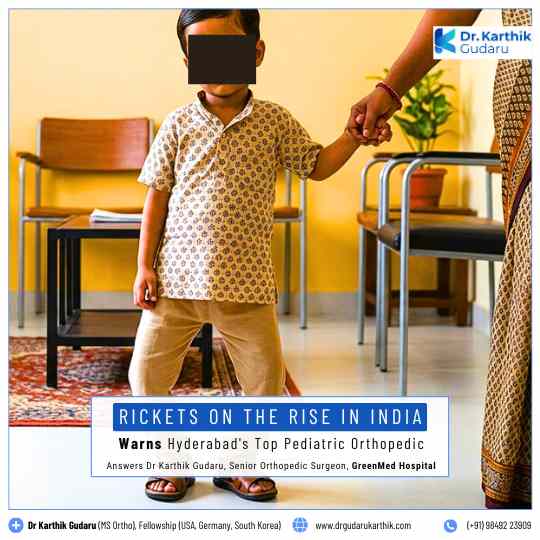
Could Your Child’s Bowed Legs Be More Than Just Normal Growth?
Many parents assume that bowing of the legs or delayed walking is simply part of normal childhood development. While mild variations can be normal in some age groups, persistent leg deformity, frequent falls, weakness, or difficulty standing may signal an underlying bone disorder such as rickets.
Rickets affect the growing bones of children, making them softer and more prone to bending under body weight. This is why many children with rickets develop bowed legs, knock knees, widened wrists, or abnormal chest development. Some may also show slower growth, muscle weakness, bone pain, or delayed tooth eruption. When identified early, these changes can often be treated before permanent deformities occur.
Why is Rickets Increasing in India?
India receives abundant sunlight, yet vitamin D deficiency remains surprisingly common among children. Modern lifestyle changes play a major role. Many children spend less time outdoors, increased screen time keeps them indoors, and urban pollution can reduce effective sunlight exposure.
Dietary habits also contribute. Children who consume low amounts of dairy, fortified foods, or calcium-rich meals may fail to get the nutrients necessary for bone development. Exclusive breastfeeding without vitamin D supplementation in some infants may also increase risk if nutritional support is inadequate. In some cases, intestinal, kidney, or genetic disorders may also interfere with nutrient absorption.
These factors together are contributing to the reappearance of nutritional rickets in pediatric practice.
“Rickets may begin with subtle signs, but if ignored, it can affect a child’s growth for years. Early diagnosis and timely orthopedic care can make the difference between correction and lifelong deformity.” – Dr Karthik Gudaru, MS Orthopaedics, MBBS, Fellowship in Knee and Hip Arthroplasty (USA), Fellowship in Computer Assisted Navigation Joint Replacement Surgery (Germany)
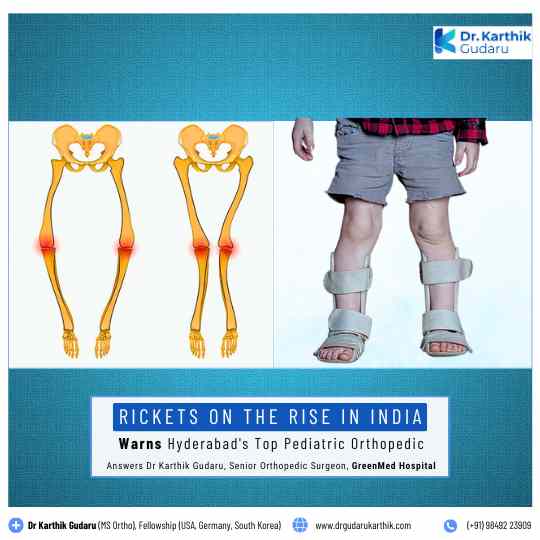
How Rickets Affects a Child’s Growth and Development?
Bone growth during childhood depends on proper mineralisation. When vitamin D, calcium, or phosphate levels are low, bones cannot harden properly. This can lead to visible skeletal changes as the child grows.
Children with rickets may appear shorter than expected for their age. Some may complain of leg pain or fatigue during play. Others may have difficulty running, climbing stairs, or maintaining balance. In more severe cases, untreated rickets can result in fractures, spinal changes, or long-term limb deformities.
Because children’s bones are still developing, early intervention can significantly improve outcomes and may prevent the need for surgery later in life.
How Is Rickets Diagnosed?
Diagnosis usually begins with a detailed clinical examination by a pediatric specialist. The doctor evaluates the child’s walking pattern, leg alignment, joint shape, and growth milestones.
Blood tests are often recommended to assess vitamin D, calcium, phosphorus, and alkaline phosphatase levels. X-rays can reveal characteristic changes in growing bones and help confirm the diagnosis. Identifying the underlying cause is equally important, as treatment differs between nutritional and inherited forms of rickets.
Treatment and Recovery
Treatment depends on the cause and severity of the condition. In nutritional rickets, correcting vitamin D and calcium deficiency is usually the first step. Nutritional guidance, supplements, and monitored sunlight exposure may help restore bone strength.
In children with significant bone deformity, orthopaedic monitoring becomes essential. Some cases improve naturally with treatment, while severe deformities may require braces or surgical correction. With timely diagnosis and proper care, most children recover well and regain healthy bone growth.
When Should You See a Pediatric Orthopaedic Surgeon?
Parents should consider consulting a pediatric orthopaedic surgeon if their child shows persistent bow legs, knock knees, delayed walking, repeated falls, unexplained bone pain, abnormal posture, limping, or visible deformities in the arms, legs, chest, or spine.
You should also seek specialist evaluation if your child’s growth appears delayed or if previous vitamin D treatment has not improved symptoms. Early orthopaedic assessment can help prevent permanent skeletal changes and support normal physical development.
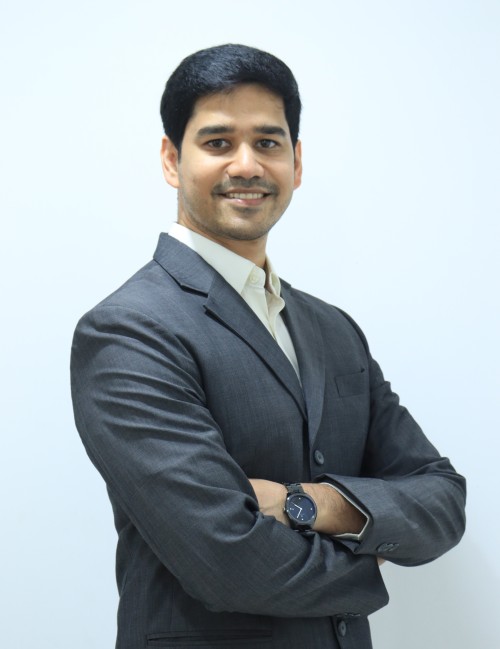
Dr Karthik Gudaru, MS Orthopaedics, MBBS, Fellowship in Knee and Hip Arthroplasty (USA), Fellowship in Computer-Assisted Navigation Joint Replacement Surgery (Germany), is one of Hyderabad’s leading orthopaedic surgeons with an outstanding reputation for precision, innovation, and excellence in joint replacement and orthopaedic care. Widely recognised as the best knee replacement specialist in Hyderabad, he brings a deep commitment to patient-centred care and cutting-edge surgical techniques.
Dr Karthik Gudaru is currently the Senior Orthopaedic and Joint Replacement Specialist, Department of Orthopaedics at GreenMed Hospital, Srinagar Colony, Hyderabad, Assistant Professor and Consultant Orthopaedic at BIRRD Hospital (Balaji Institute of Surgery, Research and Rehabilitation for the Disabled), Tirupati and Joint Replacement & Pediatric Orthopedic Specialist at Sri Maruthi Hospitals, Tirupati.
Dr Karthik Gudaru’s Treatment Specialisation are –
Knee Joint Treatments (Including Total Knee Replacement Surgery).
Shoulder Joint Treatments (Including Total Shoulder Replacement Surgery).
Hip Joint Treatments (Including Total Hip Replacement Surgery).
Elbow Joint Treatments (Including Total Elbow Arthroscopy).
Computer-Assisted Knee Replacement Surgery.
Stem Cell Therapy for key orthopaedic treatments.
Pediatric Orthopedics Surgeon for Cerebral Palsy, Congenital Anomalies, Poliomyelitis & Metabolic Bone Diseases