

Summary
- Knee pain is no longer just an old-age issue—sedentary lifestyles, weight gain, and irregular exercise are making joint problems more common in people in their 40s.
- Early warning signs like stiffness, swelling, clicking sounds, or pain while climbing stairs should never be ignored, as they may signal cartilage or ligament stress.
- Regular movement, strength training, healthy body weight, and early orthopaedic evaluation can help protect long-term knee health.
This Article is Medically Reviewed by Dr Karthik Gudaru, MS Orthopaedics, Fellowship in Computer-Assisted Navigation and Joint Replacement Surgery (Germany), HOD Orthopaedic Department, GreenMed Hospitals, Hyderabad.
Once considered an old-age issue, knee pain is now spiking among Indian men and women in their 40s. Modern lifestyle habits and sedentary work are putting unprecedented stress on our joints. Hyderabad’s number one orthopedic surgeon and knee replacement specialist, Dr. Karthik Gudaru, explains the early warning signs you shouldn’t ignore and how to safeguard your mobility for the future.
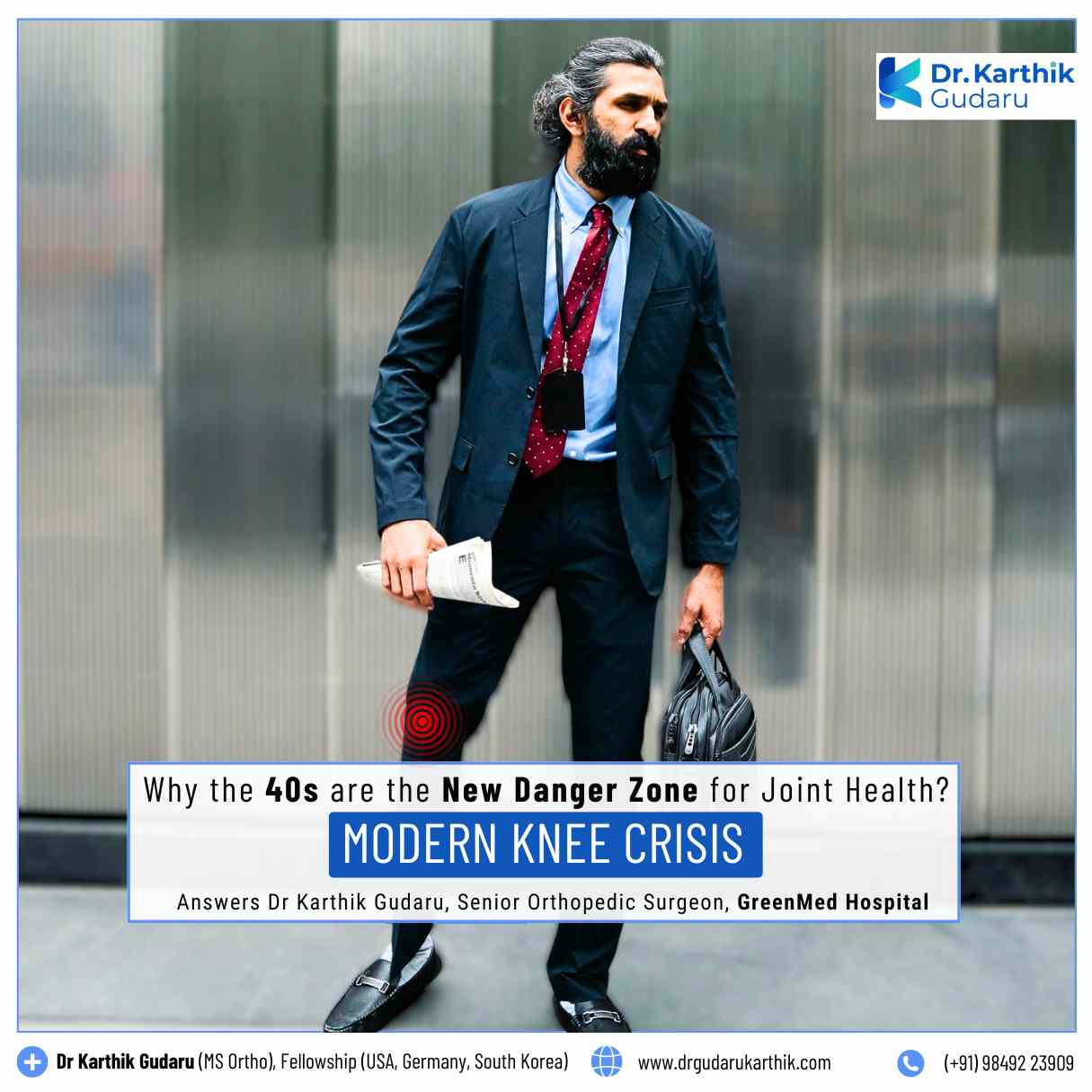
There was a time when knee pain was seen as a problem of old age. People expected joint stiffness, reduced flexibility, and occasional pain to appear in their 60s or later. But that picture is changing fast. Today, orthopaedic clinics across cities are seeing a growing number of people in their 40s walking in with complaints of knee pain, clicking joints, swelling, and difficulty climbing stairs.
What makes this more concerning is that many of these individuals are still in the busiest and most productive years of their lives. They are managing careers, families, fitness goals, and social responsibilities—yet their knees often begin showing signs of stress earlier than expected. Modern lifestyle habits, long working hours, weight gain, reduced physical movement, and exercise mistakes are quietly creating what many specialists now call a modern knee crisis, says Dr Karthik Gudaru, Senior Orthopaedic Surgeon and specialist for knee joint treatment and replacement in Hyderabad and in India.

Why Are People in Their 40s Facing Knee Problems Earlier Than Before?
The answer lies in how modern life has changed. People in their 40s today live very differently compared to previous generations. Many spend eight to ten hours sitting at desks, driving in traffic, or using digital devices. Physical movement has decreased, but body stress has increased.
At the same time, weekend fitness culture has become common. Many people remain inactive throughout the week and then suddenly push their bodies with intense workouts, trekking, running, or sports. This irregular activity puts sudden pressure on knee joints, muscles, and ligaments.
As metabolism slows with age, weight gain also becomes more common in the 40s. Even a few extra kilograms increase the load on the knees with every step. Over time, this repeated stress starts affecting cartilage, muscles, and joint alignment.
Knee joint specialist, Dr Karthik Gudaru says, “Your knees do not suddenly age in your 60s—many of the changes begin silently in your 40s. The choices you make today, from movement and muscle strength to weight and recovery, often decide how freely you move tomorrow,” says Dr Karthik Gudaru.
The Silent Wear and Tear Inside the Knee
The knee is one of the hardest-working joints in the body. It supports walking, standing, bending, squatting, climbing, and almost every lower-body movement. Inside the knee are cartilage cushions, ligaments, tendons, and synovial fluid that work together for smooth motion.
In your 40s, these structures may begin showing early signs of degeneration. Cartilage may become thinner, reducing shock absorption. Ligaments may lose flexibility. Muscles around the knee may weaken due to inactivity.
This doesn’t usually happen overnight. It develops slowly through repeated stress, poor movement patterns, and lack of recovery. By the time pain appears, damage may already be progressing.
How Modern Lifestyle Is Damaging Joint Health?
Sedentary work is one of the biggest contributors to early joint issues. Sitting for long periods weakens the glute muscles, tightens the hip flexors, and reduces blood circulation. This changes how the lower body moves and places extra stress on the knees. Poor posture also plays a role. Incorrect sitting positions, weak core muscles, and bad walking mechanics can create uneven force distribution through the legs.
Sleep deprivation and chronic stress may seem unrelated to knee health, but both can increase inflammation in the body. Higher inflammation often worsens joint pain and slows tissue repair. Even footwear matters. Unsupportive shoes, worn-out sneakers, or high heels used frequently can affect knee alignment and increase joint pressure over time.
Common Knee Problems Seen in the 40s
One of the most common issues is early osteoarthritis. This occurs when the protective cartilage begins wearing down, causing pain, stiffness, and reduced movement. Meniscus injuries are also increasingly common. The meniscus acts like a shock absorber inside the knee. A simple twist, awkward squat, or sudden movement can cause tearing, especially when muscles around the joint are weak.
Patellofemoral pain syndrome, often felt around the kneecap, is another frequent complaint. It may cause discomfort while climbing stairs, sitting for long periods, or getting up from a chair. Ligament strain, tendon inflammation, and early joint inflammation are also being diagnosed more frequently in this age group.
Warning Signs You Should Never Ignore
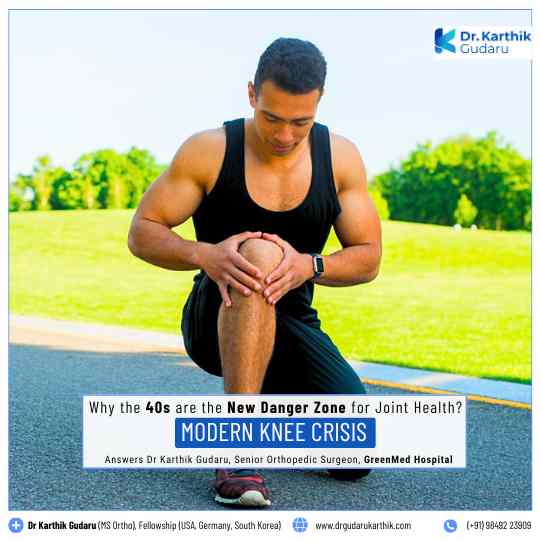
Knee problems often begin with subtle symptoms. Some people notice stiffness in the morning. Others feel discomfort after sitting too long. Clicking sounds, mild swelling, or pain during stairs may seem harmless at first.
But these early signals matter.
If pain keeps returning after workouts, if your knee feels unstable, or if swelling appears repeatedly, the body may be signalling internal stress.
Ignoring these symptoms often leads to worsening damage, compensatory movement patterns, and chronic pain that becomes harder to treat later.
Can Knee Damage Be Prevented in Your 40s?
The good news is that many knee problems can be prevented—or at least slowed down—with the right habits. Regular movement is essential. Walking, swimming, cycling, and mobility exercises help maintain joint lubrication and muscle support.
Strength training also becomes increasingly important. Strong quadriceps, hamstrings, glutes, and core muscles reduce pressure on the knee joint and improve movement efficiency.
Flexibility training helps correct tight muscles that may pull the knee out of alignment.
Body weight management is equally important. Losing even a small amount of excess weight can significantly reduce stress on the knees.
Nutrition also matters. Protein supports muscle recovery, while calcium, vitamin D, and anti-inflammatory foods may support bone and joint health.
The Role of Exercise—Help or Harm?
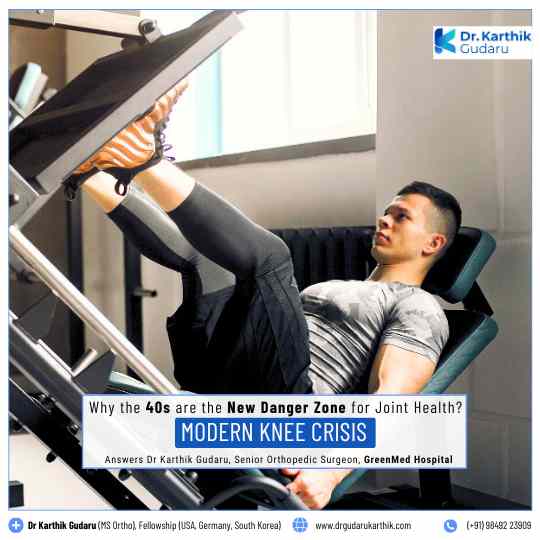
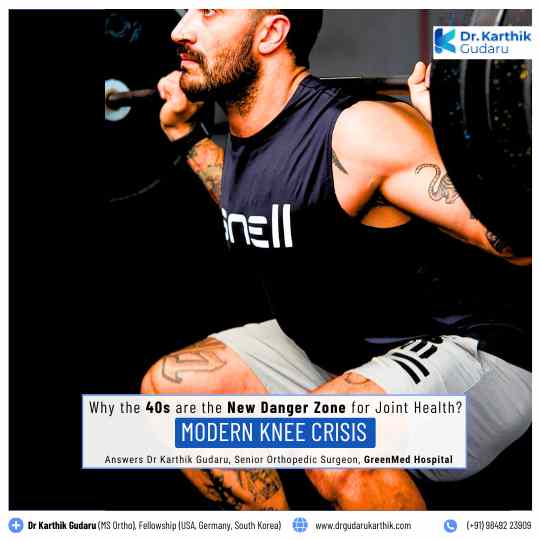
Exercise can either protect your knees or damage them, depending on how you do it. Poor squat form, jumping without strength preparation, running on hard surfaces, or increasing workout intensity too quickly can lead to overuse injuries.
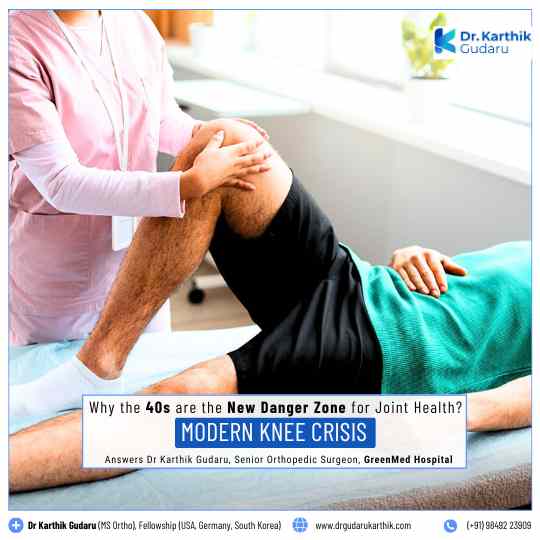
On the other hand, guided exercise under proper supervision can improve joint stability, muscle control, and pain management. Listening to your body becomes crucial in your 40s. Pain should not be ignored in the name of fitness.
When to See an Orthopaedic Surgeon or Doctor?
Knee pain should never be ignored if it starts affecting daily life. If pain lasts for more than a few days, if swelling keeps returning, or if walking, climbing stairs, or standing becomes difficult, it is time to seek medical advice.
You should also consult an orthopaedic surgeon or doctor if your knee locks, gives way, makes painful clicking sounds, or if you notice reduced range of motion. Early diagnosis can make a major difference. Conditions caught early often respond better to physiotherapy, exercise correction, medications, or minimally invasive treatments.
Your 40s should be a decade of strength, movement, and confidence—not joint limitations. Taking knee pain seriously today may protect your mobility for decades to come.

Dr Karthik Gudaru, MS Orthopaedics, MBBS, Fellowship in Knee and Hip Arthroplasty (USA), Fellowship in Computer-Assisted Navigation Joint Replacement Surgery (Germany), is one of Hyderabad’s leading orthopaedic surgeons with an outstanding reputation for precision, innovation, and excellence in joint replacement and orthopaedic care. Widely recognised as the best knee replacement specialist in Hyderabad, he brings a deep commitment to patient-centred care and cutting-edge surgical techniques.
Dr Karthik Gudaru is currently the Senior Orthopaedic and Joint Replacement Specialist, Department of Orthopaedics at GreenMed Hospital, Srinagar Colony, Hyderabad, Assistant Professor and Consultant Orthopaedic at BIRRD Hospital (Balaji Institute of Surgery, Research and Rehabilitation for the Disabled), Tirupati and Joint Replacement & Pediatric Orthopedic Specialist at Sri Maruthi Hospitals, Tirupati.
Dr Karthik Gudaru’s Treatment Specialisation are –
Knee Joint Treatments (Including Total Knee Replacement Surgery).
Shoulder Joint Treatments (Including Total Shoulder Replacement Surgery).
Hip Joint Treatments (Including Total Hip Replacement Surgery).
Elbow Joint Treatments (Including Total Elbow Arthroscopy).
Computer-Assisted Knee Replacement Surgery.
Stem Cell Therapy for key orthopaedic treatments.
Pediatric Orthopedics Surgeon for Cerebral Palsy, Congenital Anomalies, Poliomyelitis & Metabolic Bone Diseases