
Summary
- Prolonged screen time, poor posture, and inactivity can lead to neck, back, joint, and muscle problems over time.
- Healthy digital habits, regular movement, and good ergonomics play a key role in preventing musculoskeletal disorders.
- Early evaluation by an orthopaedic specialist can help manage persistent pain and prevent long-term complications.

Digital technology has transformed the way we work, communicate, learn, and entertain ourselves. From smartphones and laptops to tablets and gaming devices, screens have become an essential part of everyday life. While these innovations have made life more convenient, spending prolonged hours in front of digital devices can take a significant toll on the musculoskeletal system.
Poor posture, repetitive movements, and long periods of inactivity often accompany excessive screen use. Together, these habits can lead to neck pain, back pain, shoulder stiffness, wrist discomfort, and joint problems that gradually affect mobility and quality of life. Understanding how your digital lifestyle influences musculoskeletal health is the first step towards preventing long-term orthopaedic issues. Dr. Karthik Gudaru, Senior Orthopaedic Surgeon and specialist joint surgeon in Hyderabad and Tirupati, explains.
How Does a Digital Lifestyle Affect the Musculoskeletal System?
Most digital activities require people to remain in one position for extended periods. Whether working on a laptop, attending online meetings, scrolling through social media, or watching videos, the body often remains static while the same muscles and joints are continuously engaged.
Over time, this lack of movement places excessive stress on the spine, neck, shoulders, wrists, and lower limbs. At the same time, reduced physical activity weakens the muscles that support the joints, making them more vulnerable to pain, stiffness, and injury. The effects may not be noticeable immediately, but months or years of unhealthy digital habits can significantly impact musculoskeletal health.
“Technology should improve your life, not compromise your health. Regular movement and good posture are just as important as staying connected.” Says Dr. Karthik Gudaru, Senior Orthopaedic Surgeon, for Joint Replacement Surgeries.

Why Posture Matters More Than You Think?
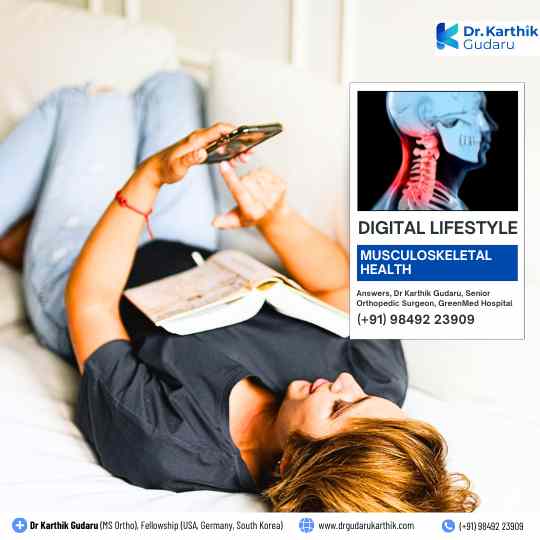
One of the most common problems associated with prolonged screen use is poor posture. Looking down at a smartphone, leaning towards a laptop, or sitting without proper back support changes the natural alignment of the spine.
As these positions become habitual, muscles work harder to support the body’s weight, placing extra strain on the neck, upper back, lower back, and shoulders. This can eventually result in persistent discomfort, muscle fatigue, reduced flexibility, and recurring episodes of pain that interfere with daily activities.
The Effects of Prolonged Sitting on Joints
Sitting for long hours is now common in many professions and lifestyles. Unfortunately, remaining seated for prolonged periods reduces blood circulation, limits joint movement, and decreases the natural lubrication that keeps joints functioning smoothly.
The hips, knees, and lower back are particularly affected because they remain in a fixed position for extended periods. As muscles become tighter and weaker, even routine movements such as standing up, walking, or climbing stairs may become uncomfortable.
Repetitive Movements Can Lead to Overuse Injuries
Using a keyboard, mouse, or smartphone involves repeating the same hand and wrist movements thousands of times each day. Without adequate breaks, these repetitive actions may irritate tendons, muscles, and nerves.
Many people develop wrist pain, thumb discomfort, tennis elbow, or shoulder strain due to repetitive overuse. Although these problems often begin with mild symptoms, they can gradually worsen if the underlying habits are not corrected.
Common Warning Signs of Digital-Related Musculoskeletal Problems
Musculoskeletal problems associated with digital device use often develop gradually. Early symptoms may seem insignificant, causing many people to ignore them until the discomfort becomes persistent.
Watch for signs such as frequent neck or back pain, shoulder stiffness, wrist discomfort, tingling or numbness in the hands, muscle fatigue, reduced flexibility, headaches related to poor posture, or joint pain that worsens after prolonged screen use. Recognizing these symptoms early allows timely intervention before more serious problems develop.

Simple Habits That Protect Your Musculoskeletal Health
Fortunately, maintaining a digital lifestyle does not mean sacrificing your musculoskeletal health. Small daily adjustments can make a significant difference.
Maintain proper sitting posture with adequate back support, position screens at eye level, keep your feet flat on the floor, and avoid bending your neck for prolonged periods. Take short movement breaks every 30 to 60 minutes, stretch regularly, and include strengthening exercises for the neck, back, core, and lower limbs in your routine. Daily walking and regular physical activity also help improve muscle strength, flexibility, and joint function.
When Should You Consult an Orthopaedic Specialist?
Occasional muscle fatigue usually improves with rest and stretching. However, persistent pain, joint stiffness, numbness, weakness, swelling, or difficulty performing everyday activities should not be ignored.
An orthopaedic evaluation can identify the underlying cause of your symptoms and help prevent minor problems from progressing into chronic musculoskeletal conditions. Early treatment often leads to better outcomes and faster recovery.
Maintaining Musculoskeletal Health in the Digital Era
Digital devices have become an integral part of modern living, but they should not come at the cost of your physical health. Developing healthier screen habits, improving posture, staying physically active, and listening to your body’s warning signs can go a long way in protecting your muscles, joints, and spine. By making movement a regular part of your daily routine, you can continue enjoying the benefits of technology while maintaining strong musculoskeletal health for years to come.

Dr Karthik Gudaru, MS Orthopaedics, MBBS, Fellowship in Knee and Hip Arthroplasty (USA), Fellowship in Computer-Assisted Navigation Joint Replacement Surgery (Germany), is one of Hyderabad’s leading orthopaedic surgeons with an outstanding reputation for precision, innovation, and excellence in joint replacement and orthopaedic care. Widely recognised as the best knee replacement specialist in Hyderabad, he brings a deep commitment to patient-centred care and cutting-edge surgical techniques.
Dr Karthik Gudaru is currently the Senior Orthopaedic and Joint Replacement Specialist, Department of Orthopaedics at GreenMed Hospital, Srinagar Colony, Hyderabad, Assistant Professor and Consultant Orthopaedic at BIRRD Hospital (Balaji Institute of Surgery, Research and Rehabilitation for the Disabled), Tirupati and Joint Replacement & Pediatric Orthopedic Specialist at Sri Maruthi Hospitals, Tirupati.
Dr Karthik Gudaru’s Treatment Specialisation are –
Knee Joint Treatments (Including Total Knee Replacement Surgery).
Shoulder Joint Treatments (Including Total Shoulder Replacement Surgery).
Hip Joint Treatments (Including Total Hip Replacement Surgery).
Elbow Joint Treatments (Including Total Elbow Arthroscopy).
Computer-Assisted Knee Replacement Surgery.
Stem Cell Therapy for key orthopaedic treatments.
Pediatric Orthopedics Surgeon for Cerebral Palsy, Congenital Anomalies, Poliomyelitis & Metabolic Bone Diseases