
Summary
- High heels can strain knees: They alter posture and increase pressure on the knee joint.
- Heel height matters: Higher and less stable heels can place greater stress on the lower limbs.
- Choose comfort too: Lower heels, breaks, and supportive footwear can help reduce strain.
This Article is Medically Reviewed by Dr Karthik Gudaru, MS Orthopaedics, Fellowship in Computer-Assisted Navigation and Joint Replacement Surgery (Germany), HOD, Orthopaedic Department, GreenMed Hospitals, Hyderabad and Senior Paediatric Orthopaedic Surgeon, Sri Maruthi Hospitals, Tirupati
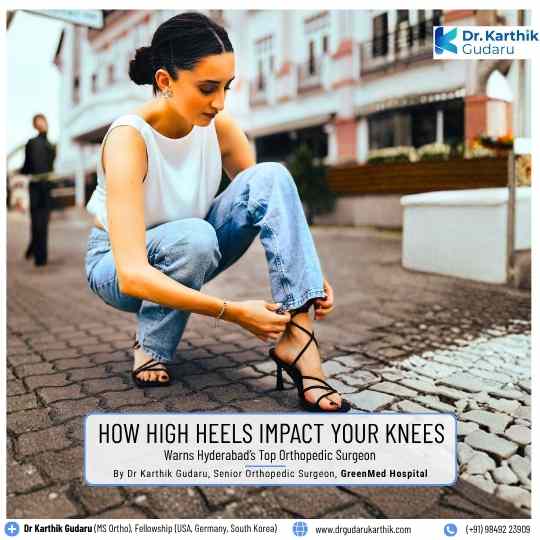
High heels are a popular choice for adding height, style and confidence to an outfit. However, wearing them regularly can also change the way the body moves and distributes weight. While the feet often receive the most attention when discussing high-heel discomfort, the effects can extend upward to the ankles, legs, hips and knees.
For people who wear heels frequently, understanding how they may affect the knees can help encourage healthier footwear habits and reduce unnecessary strain. Dr Karthik Gudaru, Senior Orthopaedic Surgeon and a Specialist Total Knee Replacement Specialist in Hyderabad, Tirupati (Telangana), Vijayawada, and Guntur (Andhra Pradesh).
How Do High Heels Affect the Knees?
High heels change the natural position of the foot by raising the heel and shifting more body weight towards the front of the foot. This can alter the alignment of the ankle, knee and hip while walking.
Because the knee may remain slightly bent and work differently to maintain balance, the joint can experience increased stress. The higher the heel and the longer it is worn, the more significant these changes in movement and loading may become.
“Style matters, but protecting your knees today can help you stay comfortable and active tomorrow.” Says Dr Karthik Gudaru, MS Orthopaedics, MBBS, Fellowship in Knee and Hip Arthroplasty (USA), Fellowship in Computer Assisted Navigation Joint Replacement Surgery (Germany)
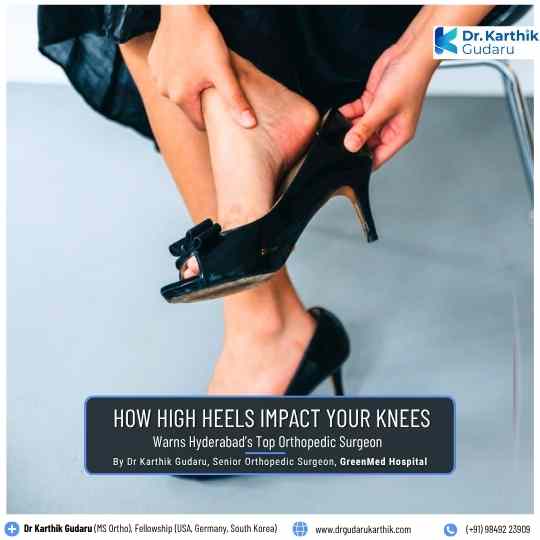
Increased Pressure on the Knee Joint
Wearing high heels can increase the forces acting around the knee, particularly during walking and standing. The altered posture may place additional demand on structures within and around the joint.
Regular exposure to this increased stress does not necessarily mean that someone will develop a knee problem, but it can contribute to discomfort, particularly in people who already have joint issues or other risk factors.
Changes in Walking and Balance
High heels can make the natural walking pattern less stable. The smaller contact area of many heels requires greater control to maintain balance, while the raised heel changes how the foot meets the ground.
These adjustments can affect the muscles and joints throughout the lower limb. Over time, frequent heel use may contribute to muscle fatigue, stiffness and discomfort around the knees and legs.
The Role of Heel Height
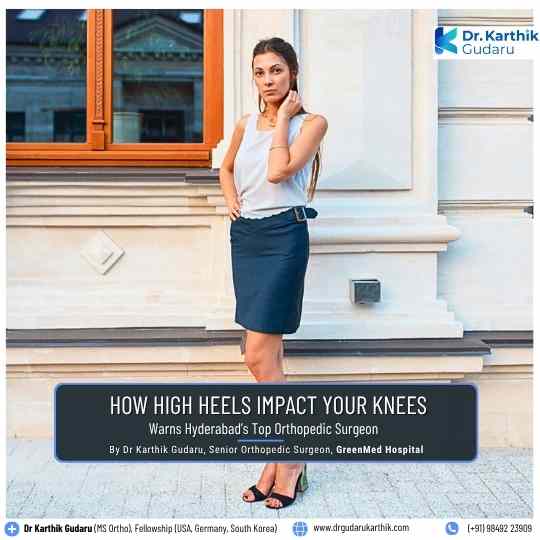
Not all high heels place the same demands on the body. Very high, narrow heels generally create greater changes in posture and balance compared with lower, broader heels.
A shoe with a stable heel and better support may be easier on the lower limbs than a very high, thin heel. Heel height, wearing duration and individual biomechanics all play a role in determining how much stress is placed on the knees.
Existing Knee Problems Need Extra Care
People who already experience knee pain, stiffness, arthritis or previous joint injuries may find that prolonged use of high heels aggravates their symptoms.
This does not mean heels must automatically be avoided altogether. However, paying attention to discomfort and choosing supportive footwear more often can help reduce unnecessary strain.
Simple Ways to Reduce the Impact
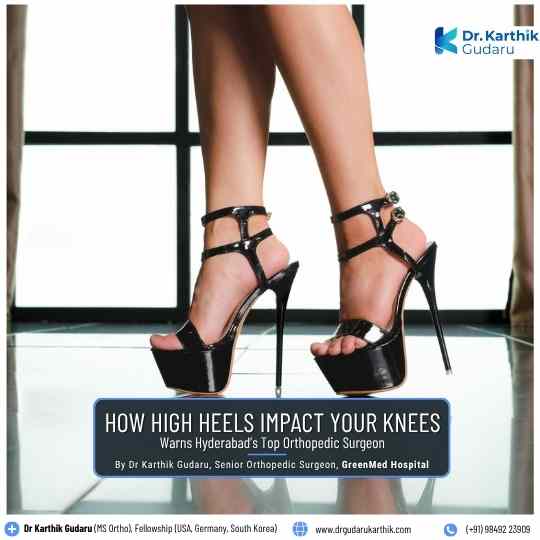
Small changes in footwear habits can make a difference. Consider wearing lower or more stable heels for everyday activities and reserving higher heels for shorter occasions.
Taking breaks from heels, changing into comfortable footwear when possible and avoiding prolonged standing in high heels can also reduce the amount of time the knees are exposed to altered loading.
Listen to Your Knees
Occasional heel use may not cause problems for everyone, but persistent knee pain should not simply be dismissed as a normal consequence of wearing fashionable footwear. Repeated discomfort, swelling, stiffness or difficulty walking deserves proper evaluation.
A healthcare professional can assess the underlying cause of the symptoms and recommend appropriate measures based on an individual’s joint health and lifestyle.
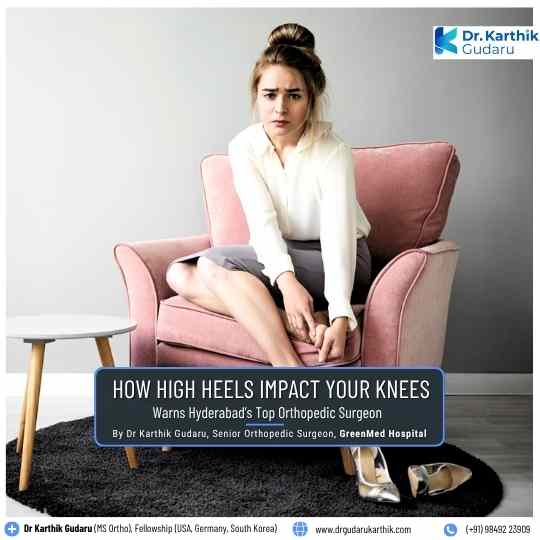
Balance Style With Joint Health
High heels can be part of personal style, but wearing them regularly requires consideration of comfort, support and duration. Choosing footwear thoughtfully and giving the knees adequate opportunities to recover can help maintain better lower-limb comfort.
The goal is not necessarily to give up high heels completely, but to find a healthier balance between fashion and joint well-being.

Dr Karthik Gudaru, MS Orthopaedics, MBBS, Fellowship in Knee and Hip Arthroplasty (USA), Fellowship in Computer-Assisted Navigation Joint Replacement Surgery (Germany), is one of Hyderabad’s leading orthopaedic surgeons with an outstanding reputation for precision, innovation, and excellence in joint replacement and orthopaedic care. Widely recognised as the best knee replacement specialist in Hyderabad, he brings a deep commitment to patient-centred care and cutting-edge surgical techniques.
Dr Karthik Gudaru is currently the Senior Orthopaedic and Joint Replacement Specialist, Department of Orthopaedics at GreenMed Hospital, Srinagar Colony, Hyderabad, Assistant Professor and Consultant Orthopaedic at BIRRD Hospital (Balaji Institute of Surgery, Research and Rehabilitation for the Disabled), Tirupati and Joint Replacement & Pediatric Orthopedic Specialist at Sri Maruthi Hospitals, Tirupati.
Dr Karthik Gudaru’s Treatment Specialisation are –
Knee Joint Treatments (Including Total Knee Replacement Surgery).
Shoulder Joint Treatments (Including Total Shoulder Replacement Surgery).
Hip Joint Treatments (Including Total Hip Replacement Surgery).
Elbow Joint Treatments (Including Total Elbow Arthroscopy).
Computer-Assisted Knee Replacement Surgery.
Stem Cell Therapy for key orthopaedic treatments.
Pediatric Orthopedics Surgeon for Cerebral Palsy, Congenital Anomalies, Poliomyelitis & Metabolic Bone Diseases