
Discover the best sleeping positions for children, explained by pediatric orthopedic expert Dr Gudaru Karthik, helping parents ensure healthy growth and comfort.
Sleep is one of the most powerful tools for a child’s growth and development. During sleep, the body repairs tissues, strengthens bones, regulates hormones, and supports brain development. While most parents focus on sleep duration and bedtime routines, sleeping position is often overlooked. However, posture during sleep plays an important role in spinal alignment, breathing quality, and musculoskeletal development.
Understanding the best sleeping positions for children can help prevent discomfort, promote healthy posture, and reduce the risk of future orthopaedic concerns, according to Dr Karthik Gudaru, an experienced pediatric orthopaedic surgeon in Hyderabad and Telangana.
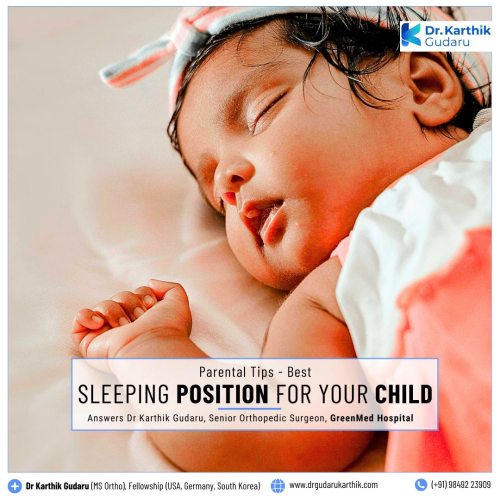
Why Are Sleeping Positions Important for a Child?
A child’s bones, joints, and muscles are still developing. The spine, in particular, is flexible and sensitive to sustained pressure or poor posture. Repeatedly sleeping in an unhealthy position may contribute to neck strain, shoulder discomfort, uneven spinal stress, or worsening of pre-existing posture problems.
Proper sleeping posture supports:
Healthy spinal alignment, balanced muscle development, improved breathing, reduced risk of stiffness or morning pain and better long-term posture
Children who consistently sleep in awkward positions may wake up tired, complain of neck or back discomfort, or show signs of poor posture during the day. Early guidance can help prevent minor habits from turning into structural problems.
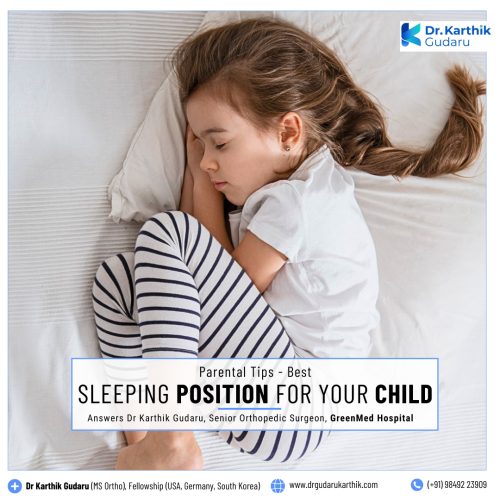
Best Sleeping Positions for Children
Sleeping on the Back
Sleeping on the back is often considered one of the healthiest positions for spinal alignment in older infants and children. In this position, the head, neck, and spine remain in a neutral position, reducing unnecessary strain.
Benefits include improved alignment and even distribution of body weight. It may also reduce pressure on the shoulders and hips.
Parents should ensure that: the pillow supports the natural curve of the neck without pushing the head too far forward, the mattress is firm enough to support the spine and the child’s head is not tilted excessively to one side
For infants, always follow safe sleep guidelines recommended by pediatric experts, placing babies on their back on a firm surface without loose bedding.
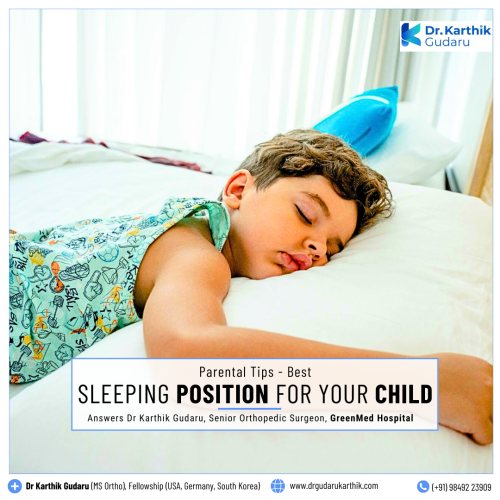
Sleeping on the Side
Side sleeping is another healthy option for many children. It can be especially helpful for those who snore or have mild breathing concerns.
To make side sleeping beneficial, a small pillow should support the head in line with the spine, a pillow between the knees can reduce strain on the hips and lower back and the shoulders should not be hunched forward
Side sleeping can be particularly comfortable for school-aged children. However, if the child curls tightly into a ball every night, it may strain the neck and upper back over time.
Avoid Sleeping on the Stomach
Sleeping on the stomach is generally not recommended for children. This position forces the neck to rotate to one side for long periods, which may strain the cervical spine. It can also flatten the natural curve of the lower back.
Children who frequently sleep on their stomachs may wake up with neck stiffness or shoulder discomfort. Encouraging a gradual transition to back or side positions can help improve posture over time.
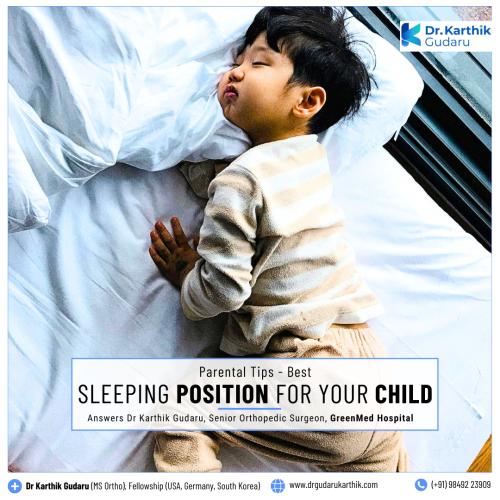
Fetal Position
Many children naturally curl into a fetal-like posture. A relaxed version of this position is usually harmless. However, if the child curls extremely tightly with knees pressed toward the chest and chin tucked down, it may contribute to rounded shoulders and forward head posture.
Parents can gently encourage a more relaxed side position by using supportive pillows and ensuring adequate mattress firmness.
Mattress and Pillow Considerations
Even the best sleeping position can become problematic if the mattress or pillow does not provide proper support.
A mattress should be firm yet comfortable. Very soft mattresses may cause the spine to sink unevenly. Pillows should match the child’s age and size. Oversized or overly thick pillows can strain the neck. As children grow, their sleep setup should be reassessed to ensure continued support.
Signs That a Sleeping Position May Be Causing Problems
Parents should watch for:
- Frequent complaints of neck or back pain.
- Morning stiffness
- Uneven shoulders
- Persistent slouching
- Limited neck movement
- Numbness or tingling in the arms
Occasional discomfort may not be serious, but repeated symptoms deserve attention.
Special Considerations for Growing Children
During growth spurts, children may experience temporary discomfort due to rapid bone growth. Good sleeping posture becomes even more important during this phase. Children involved in sports may also require extra attention to spinal alignment during sleep, as their muscles and joints undergo additional stress.
For children with conditions such as scoliosis, flat feet, or hip concerns, sleep positioning should be discussed with a medical professional to ensure it supports their specific needs.
When to Consult a Pediatric Orthopaedic Surgeon?
While minor posture concerns can often be corrected with better habits, certain signs require specialist evaluation.
Consult a pediatric orthopaedic surgeon if your child experiences persistent back or neck pain lasting more than a few weeks, visible spinal curvature, uneven hips or shoulders, difficulty walking, or restricted movement. Children who complain of nighttime pain that disrupts sleep should also be evaluated.
A pediatric orthopaedic surgeon specialises in bone and joint development in children and can assess whether posture, growth patterns, or structural issues are contributing to discomfort. Early evaluation ensures timely intervention and prevents long-term complications.
Sleeping posture plays a crucial role in a child’s musculoskeletal health. Back and side sleeping positions generally provide better spinal support, while stomach sleeping should be discouraged. Proper mattress and pillow support further enhances healthy alignment.
By observing your child’s sleep habits and addressing early warning signs, you can promote healthy growth, better posture, and long-term comfort. If symptoms persist or structural concerns arise, timely consultation with a pediatric orthopaedic specialist can ensure your child continues to grow strong and pain-free.

Dr Karthik Gudaru, MS Orthopaedics, MBBS, Fellowship in Knee and Hip Arthroplasty (USA), Fellowship in Computer-Assisted Navigation Joint Replacement Surgery (Germany), is one of Hyderabad’s leading orthopaedic surgeons with an outstanding reputation for precision, innovation, and excellence in joint replacement and orthopaedic care. Widely recognised as the best knee replacement specialist in Hyderabad, he brings a deep commitment to patient-centred care and cutting-edge surgical techniques.
Dr Karthik Gudaru is currently the Senior Orthopaedic and Joint Replacement Specialist, Department of Orthopaedics at GreenMed Hospital, Srinagar Colony, Hyderabad, Assistant Professor and Consultant Orthopaedic at BIRRD Hospital (Balaji Institute of Surgery, Research and Rehabilitation for the Disabled), Tirupati and Joint Replacement & Pediatric Orthopedic Specialist at Sri Maruthi Hospitals, Tirupati.
Dr Karthik Gudaru’s Treatment Specialisation are –
Knee Joint Treatments (Including Total Knee Replacement Surgery).
Shoulder Joint Treatments (Including Total Shoulder Replacement Surgery).
Hip Joint Treatments (Including Total Hip Replacement Surgery).
Elbow Joint Treatments (Including Total Elbow Arthroscopy).
Computer-Assisted Knee Replacement Surgery.
Stem Cell Therapy for key orthopaedic treatments.
Pediatric Orthopedics Surgeon for Cerebral Palsy, Congenital Anomalies, Poliomyelitis & Metabolic Bone Diseases