

Summary
- Long flights, prolonged sitting, and heavy luggage can increase the risk of back pain and spinal strain.
- Good posture, regular movement, hydration, and proper lifting techniques help protect spinal health while travelling.
- Persistent back pain or symptoms like numbness and leg pain should be evaluated by a spine specialist promptly.
This Article is Medically Reviewed by Dr Karthik Gudaru, MS Orthopaedics, Fellowship in Computer-Assisted Navigation and Joint Replacement Surgery (Germany), HOD, Orthopaedic Department, GreenMed Hospitals, Hyderabad.
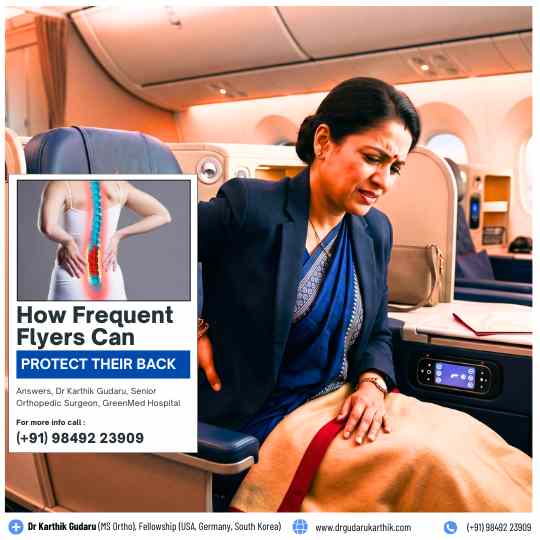
Whether you travel for business, leisure, or both, frequent flying can take a toll on your spine. Hours of sitting in cramped aeroplane seats, lifting heavy luggage, and disrupted sleep patterns can lead to back pain and worsen existing spinal conditions.
While occasional discomfort is common, recurring pain should never be ignored. By adopting a few spine-friendly habits, frequent flyers can protect their back and reduce the risk of long-term problems, shares Dr Karthik Gudaru, Senior Orthopaedic Surgeon, Pediatric Orthopaedic Doctor and Joint Replacement Specialist Surgeon in Hyderabad, Tirupati and in India.
How Does Frequent Flying Affect Your Spine?
Air travel often involves prolonged sitting with limited opportunities to move. Remaining in the same position for extended periods increases pressure on the spinal discs, particularly in the lower back. Poor posture, inadequate lumbar support, and carrying heavy bags can further strain the muscles and joints, leading to stiffness and discomfort during or after the journey.
“Your journey should create memories—not back pain. Protect your spine, and every destination becomes easier to enjoy.” Dr Karthik Gudaru, Senior Orthopaedic Surgeon and a Specialist in Backpain Treatments in Hyderabad, Tirupati and in India.
Prolonged Sitting Can Trigger Back Problems
Long-haul flights reduce movement and blood circulation, causing muscles to become tight and joints to stiffen. For individuals with conditions such as a slipped disc, spinal stenosis, or chronic lower back pain, sitting for several hours can aggravate symptoms. Standing up, stretching, and walking along the aisle whenever possible can help relieve pressure on the spine.
Smart Luggage Habits Make a Difference
Overloaded suitcases and poorly packed backpacks place unnecessary stress on the back. Lifting heavy luggage incorrectly can strain the spine and surrounding muscles. Choosing lightweight luggage, using suitcases with smooth-rolling wheels, and bending the knees instead of the back while lifting can significantly reduce the risk of injury.
Good Posture Is Essential During Travel
Maintaining proper posture while seated can help minimise spinal stress. Sitting with your back supported, keeping both feet flat on the floor, and avoiding slouching helps maintain the spine’s natural alignment. A small lumbar support pillow or a rolled-up towel placed behind the lower back can provide additional comfort during long flights.
Stay Active Before and After Your Flight
Simple stretching exercises before boarding and after landing can reduce muscle stiffness and improve flexibility. Gentle walks through the airport, calf raises, neck stretches, and shoulder rolls help keep the body mobile and improve circulation, making travel more comfortable.
Hydration Supports Spinal Health
Airplane cabins have low humidity levels, increasing the risk of dehydration. Staying hydrated is important because the spinal discs rely on adequate fluid to maintain their cushioning function. Drinking plenty of water throughout your journey and limiting excessive caffeine or alcohol can help support overall spinal health.
When does back pain require medical attention?
Occasional stiffness after travel is common, but persistent pain should never be ignored. Pain that radiates down the leg, numbness, tingling, muscle weakness, or difficulty walking may indicate an underlying spinal condition that requires prompt evaluation. If these symptoms persist, worsen over time, or interfere with your daily activities, it is important to consult a spine surgeon for a comprehensive assessment. Early diagnosis and timely treatment can help prevent complications, relieve pain, and improve long-term outcomes.
Travelling After Spine Surgery
Many patients can safely travel after spine surgery, but only after receiving clearance from their surgeon. The timing depends on the type of procedure performed and the individual’s recovery. Patients should follow their surgeon’s advice regarding mobility, lifting restrictions, medication, and the use of supportive braces during travel to ensure a smooth recovery.
Travelling doesn’t have to come at the expense of your spinal health. Simple measures such as maintaining good posture, moving regularly, lifting luggage correctly, and staying hydrated can go a long way in preventing back pain. If symptoms persist or interfere with your daily life, consulting a spine specialist can help identify the cause and ensure you continue your travels comfortably and safely.

Dr Karthik Gudaru, MS Orthopaedics, MBBS, Fellowship in Knee and Hip Arthroplasty (USA), Fellowship in Computer-Assisted Navigation Joint Replacement Surgery (Germany), is one of Hyderabad’s leading orthopaedic surgeons with an outstanding reputation for precision, innovation, and excellence in joint replacement and orthopaedic care. Widely recognised as the best knee replacement specialist in Hyderabad, he brings a deep commitment to patient-centred care and cutting-edge surgical techniques.
Dr Karthik Gudaru is currently the Senior Orthopaedic and Joint Replacement Specialist, Department of Orthopaedics at GreenMed Hospital, Srinagar Colony, Hyderabad; Assistant Professor and Consultant Orthopaedic at BIRRD Hospital (Balaji Institute of Surgery, Research and Rehabilitation for the Disabled), Tirupati; and Joint Replacement & Pediatric Orthopaedic Specialist at Sri Maruthi Hospitals, Tirupati.
Dr Karthik Gudaru’s treatment specialisations –
Total Knee Replacement Surgery.
Total Shoulder Replacement Surgery.
Hip Joint Treatments
Total Elbow Arthroscopy.
Computer-Assisted Knee Replacement Surgery.
Stem Cell Therapy for key orthopaedic treatments.
Pediatric Orthopaedics Treatments for Cerebral Palsy, Congenital Anomalies, Poliomyelitis & Metabolic Bone Diseases
Hospital Affiliations
OPD, GreenMed Hospital, 8-3-833/71, Srinagar Colony Main Rd, Kamalapuri Colony, Banjara Hills, Hyderabad, Telangana
Durgabai Deshmukh Hospital, Vidyanagar, Hyderabad
Sri Maruthi Hospitals, OPD, 19-3-30/C1, Near RTC Bus Stand, Kennedy Nagar, Tirupati, 517501
BIRRD Hospital, Tirupati (Consultant & Asst. Professor)
Education and Affiliation
MBBS: Kasturba Medical College, Manipal University, Karnataka (2012), Registration No: TSMC/FMR/16001
MS (Orthopaedics): Sri Ramachandra Medical College & Research Institute, Chennai (2016), Registration No: 119525
Knee & Hip Arthroplasty Fellowship: Dartmouth Hospital, USA (2018)
Robotic & Computer-Assisted Joint Replacement Fellowship: Asklepios Hospital, Germany (2018)
AO Trauma & Emergency Orthopaedic Care Fellowship: Guro National Hospital, South Korea (2019–2020)
Spinal Surgery Observer Training: Yonsei University, South Korea (2015)