

Is Your Child Tripping More Than Usual? Discover the Hidden Orthopaedic Causes (and When to Seek Help)
Summary
- Occasional falls are common in young children, but persistent tripping deserves attention.
- Toeing, foot posture, balance difficulties and gait abnormalities can contribute to frequent falls.
- Pain, limping, weakness, sudden unsteadiness, or developmental regression should prompt medical assessment.
This Article is Medically Reviewed by Dr Karthik Gudaru, MS Orthopaedics, Fellowship in Computer-Assisted Navigation and Joint Replacement Surgery (Germany), HOD, Orthopaedic Department, GreenMed Hospitals, Hyderabad and Senior Paediatric Orthopaedic Surgeon, Sri Maruthi Hospitals, Tirupati
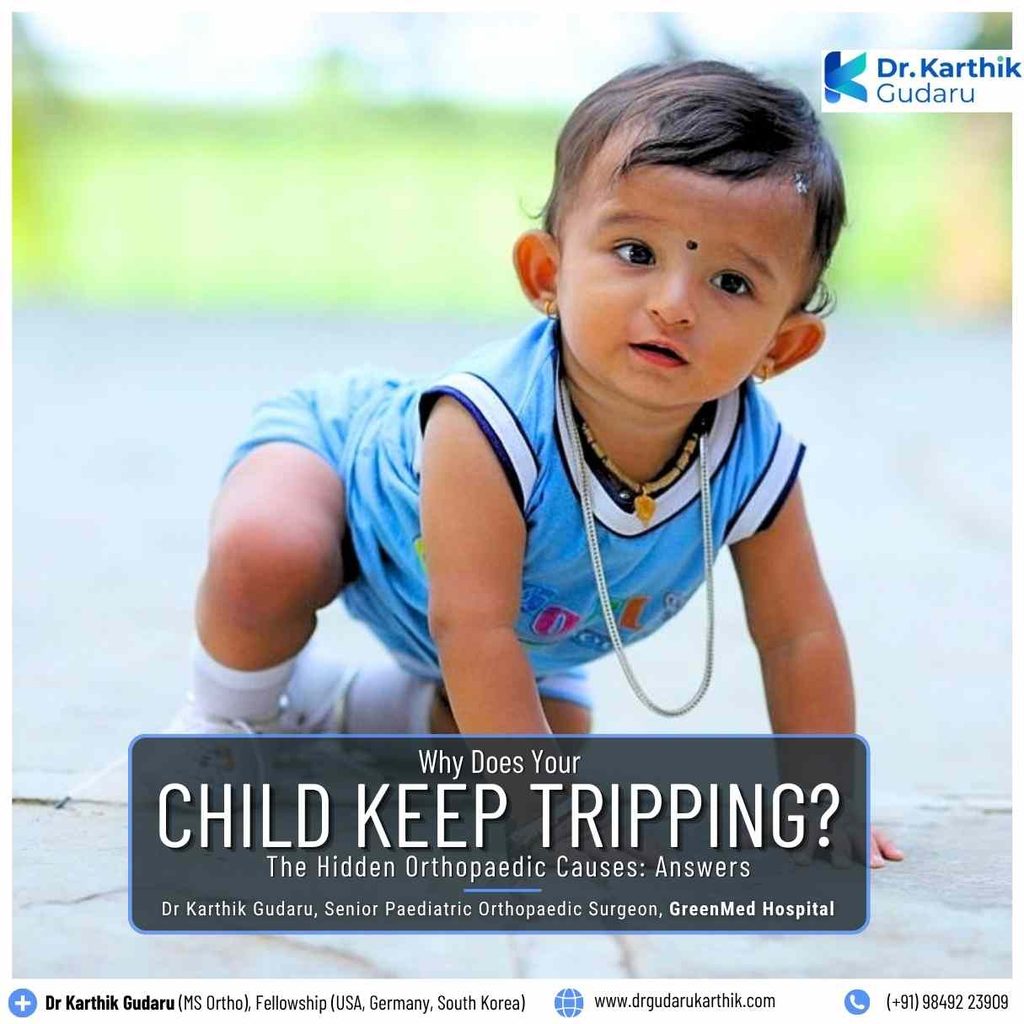
Children are naturally active, and occasional trips and falls are a normal part of growing up, particularly during the early years when balance and coordination are still developing. However, if a child keeps tripping, falls much more often than expected, or suddenly develops an unusual walking pattern, it may be worth looking beyond simple clumsiness.
Certain foot, leg and gait variations can contribute to frequent tripping. In some cases, the cause may involve balance, muscle strength or an underlying developmental or orthopaedic concern, says Dr Karthik Gudaru, Senior Orthopaedic Surgeon and a Total Knee Replacement Specialist in Hyderabad, Tirupati (Telangana), Vijayawada, and Guntur (Andhra Pradesh).
What Can Frequent Tripping Tell Parents About a Child’s Gait?
The way a child walks involves coordination between the feet, ankles, knees, hips and the muscles that support them. Changes in any of these areas can affect how a child places their feet and maintains balance.
Common variations such as intoeing, flexible flat feet or knock-knees can occur during normal childhood development and often improve as children grow. Intoeing, for example, is common in young children and may sometimes make them appear more prone to tripping, particularly when they are tired.
“Every child develops at their own pace, but a persistent change in the way a child walks is worth understanding rather than simply calling it clumsiness.” Opines Dr Karthik Gudaru, Senior Orthopedic Surgeon and a Specialist Paediatric Orthopaedic Doctor.
Intoeing Can Make the Feet Turn Inward
Intoeing, sometimes called pigeon-toeing, occurs when the feet point inward while walking or running. It can result from the position of the bones in the feet or legs.
Many children naturally grow out of intoeing as their bones and gait mature. However, persistent or functionally significant gait changes may warrant professional assessment, particularly when accompanied by other concerns.
Flat Feet May Affect Foot Function
Flat feet are common in babies and young children because the arch develops gradually. In many children, flexible flat feet are part of normal development and do not require treatment.
However, flat feet accompanied by pain, stiffness or difficulty with movement may need assessment. A healthcare professional can determine whether the foot posture is simply a normal variation or whether it is affecting function.
Poor Balance and Muscle Control Can Play a Role
Frequent tripping is not always caused by the bones or joints themselves. Children with difficulties in balance, coordination or postural control may trip while walking or running and may also struggle with stairs, uneven surfaces or activities requiring balance.
Muscle strength and coordination help children control their movements and recover when they lose balance. When these skills are delayed or affected, frequent falls may become noticeable.
Tiptoe Walking Can Change the Way a Child Moves
Some toe walking can occur during early development. However, persistent or asymmetrical toe walking, particularly when accompanied by other movement difficulties, may require evaluation.
An assessment can check ankle flexibility, muscle tightness, gait pattern and overall motor development to determine whether further care is needed.
When Frequent Tripping Needs More Attention?
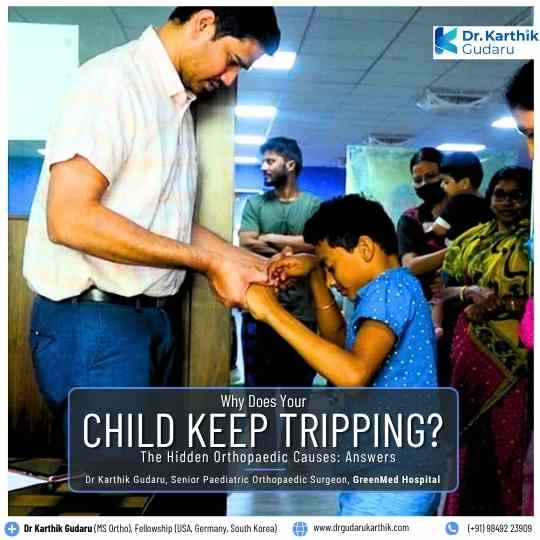
Parents should pay closer attention when frequent falls occur alongside pain, limping, weakness, stiffness, sudden changes in walking, difficulty bearing weight or loss of previously acquired movement skills.
A child who suddenly becomes unsteady or begins using one side of the body differently should also be assessed promptly. These signs can indicate that the problem is more than an ordinary developmental variation.
A Gait Assessment Can Reveal the Cause
During an assessment, a paediatric orthopaedic specialist or physiotherapist may observe how the child walks, runs and stands. They may also examine the feet, ankles, knees, hips, muscle strength, flexibility and balance.
The goal is not simply to treat tripping but to understand why it is happening. Depending on the findings, some children may only need observation, while others may benefit from physiotherapy or further specialist evaluation.
Early Assessment Can Provide Reassurance
Frequent tripping does not automatically mean that a child has an orthopaedic problem. Many gait variations are part of normal development and improve naturally with growth.
At the same time, persistent or unusual changes in walking should not be dismissed as clumsiness. Recognising concerning patterns early can help parents seek the appropriate evaluation and support when necessary.
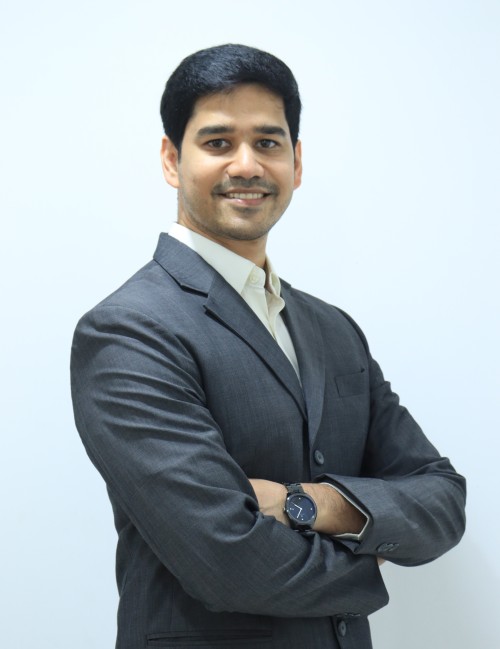
Dr Karthik Gudaru, MS Orthopaedics, MBBS, Fellowship in Knee and Hip Arthroplasty (USA), Fellowship in Computer-Assisted Navigation Joint Replacement Surgery (Germany), is one of Hyderabad’s leading orthopaedic surgeons with an outstanding reputation for precision, innovation, and excellence in joint replacement and orthopaedic care. Widely recognised as the best knee replacement specialist in Hyderabad, he brings a deep commitment to patient-centred care and cutting-edge surgical techniques.
Dr Karthik Gudaru is currently the Senior Orthopaedic and Joint Replacement Specialist, Department of Orthopaedics at GreenMed Hospital, Srinagar Colony, Hyderabad, Assistant Professor and Consultant Orthopaedic at BIRRD Hospital (Balaji Institute of Surgery, Research and Rehabilitation for the Disabled), Tirupati and Joint Replacement & Pediatric Orthopedic Specialist at Sri Maruthi Hospitals, Tirupati.
Dr Karthik Gudaru’s Treatment Specialisation are –
Knee Joint Treatments (Including Total Knee Replacement Surgery).
Shoulder Joint Treatments (Including Total Shoulder Replacement Surgery).
Hip Joint Treatments (Including Total Hip Replacement Surgery).
Elbow Joint Treatments (Including Total Elbow Arthroscopy).
Computer-Assisted Knee Replacement Surgery.
Stem Cell Therapy for key orthopaedic treatments.
Pediatric Orthopedics Surgeon for Cerebral Palsy, Congenital Anomalies, Poliomyelitis & Metabolic Bone Diseases