

Orthopaedic Expert’s Summary
- Barefoot walking may encourage natural foot movement, muscle engagement and balance.
- It does not have proven direct benefits for correcting posture or treating back pain.
- Foot structure, existing conditions and flooring should determine whether barefoot walking or supportive footwear is more suitable.
This Article is Medically Reviewed by Dr Karthik Gudaru, MS Orthopaedics, Fellowship in Computer-Assisted Navigation and Joint Replacement Surgery (Germany), HOD, Orthopaedic Department, GreenMed Hospitals, Hyderabad and Senior Paediatric Orthopaedic Surgeon, Sri Maruthi Hospitals, Tirupati
Walking barefoot at home is a common habit, particularly in households where people prefer removing their footwear indoors. Some believe it strengthens the feet, improves balance and encourages better posture. Others worry that walking without footwear on hard floors may contribute to heel pain, knee discomfort or back problems.
But is walking barefoot actually good for your back and posture?
According to orthopaedic principles, barefoot walking can offer certain benefits, but its effects depend on an individual’s foot structure, walking pattern, physical condition and the surface they walk on. It is not automatically beneficial for everyone, nor is it a proven treatment for back pain. Shares Dr Karthik Gudaru, Senior Orthopaedic Surgeon and specialist spine surgeon in Hyderabad.
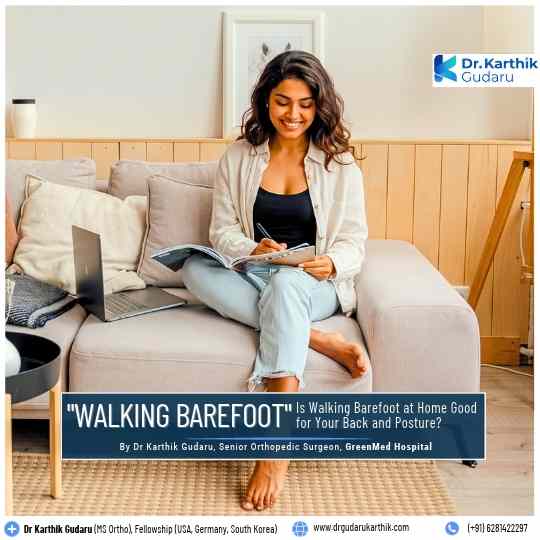
Can Walking Barefoot Improve Posture?
Your feet provide the foundation for your body’s movement and alignment. They influence how your ankles, knees, hips and spine distribute body weight while standing and walking. Walking barefoot allows the feet to move without the restrictions of conventional footwear. It may encourage the smaller foot muscles to work and improve sensory feedback from the ground.
However, better foot movement does not necessarily mean better spinal posture. Posture also depends on core strength, hip mobility, muscle balance and everyday movement habits. An orthopaedic expert would therefore assess the person’s overall movement pattern rather than recommend barefoot walking as a universal posture correction technique.
“Walking barefoot at home is not harmful for everyone, but it should not be considered a solution for back pain or poor posture. The right choice depends on an individual’s foot structure, walking pattern and existing musculoskeletal conditions. Comfort and proper support should always guide footwear decisions.” Says Dr Karthik Gudaru, Senior Orthopedic Surgeon, Pediatric Orthopaedic Doctor and specialist knee replacement surgeon in Hydearabad and Telanagana.
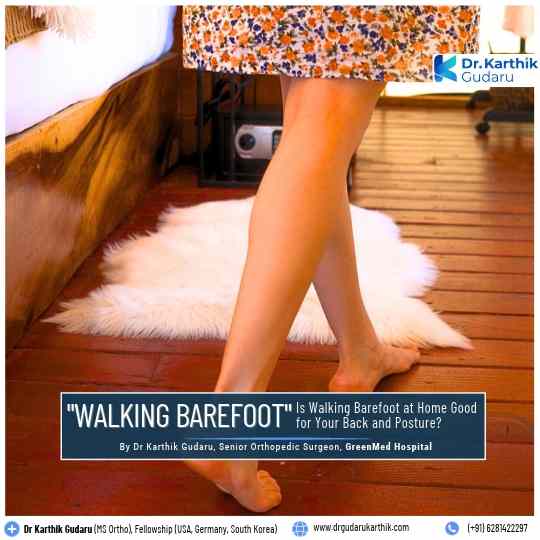
Does Walking Barefoot Help Relieve Back Pain?
There is no conclusive scientific evidence that walking barefoot directly treats or prevents lower-back pain. For some individuals, comfortable barefoot walking may support natural foot movement and balance. However, people with flat feet, excessive inward foot rolling, plantar fasciitis or other structural foot problems may experience discomfort without adequate support.
When foot discomfort changes the way someone walks, it can influence movement at the knees, hips and lower back. This does not mean barefoot walking inevitably causes spinal problems, but it highlights why individual assessment matters. Back pain can also result from prolonged sitting, weak core muscles, muscle strain, spinal conditions and previous injuries. Treating the underlying cause is more important than simply changing footwear habits.
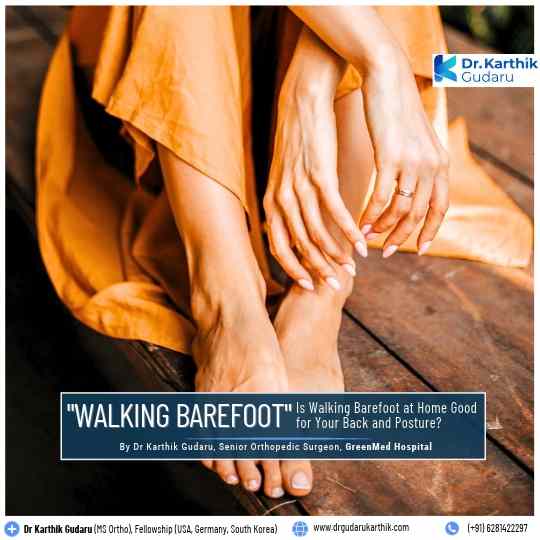
Is Walking Barefoot on Marble or Tile Flooring Safe?
Walking barefoot on marble, ceramic tiles or other hard flooring is not necessarily harmful. However, prolonged standing or walking on these surfaces may cause discomfort in people who need additional cushioning or foot support.
An orthopaedic specialist may recommend supportive indoor footwear for individuals who experience:
- Persistent heel or arch pain.
- Flat feet or significant overpronation.
- Plantar fasciitis or recurring foot discomfort.
- Knee or lower-back discomfort associated with walking.
- Reduced foot sensation or balance difficulties.
People with diabetes-related nerve damage should also avoid walking barefoot because unnoticed cuts or injuries can develop into serious foot complications.
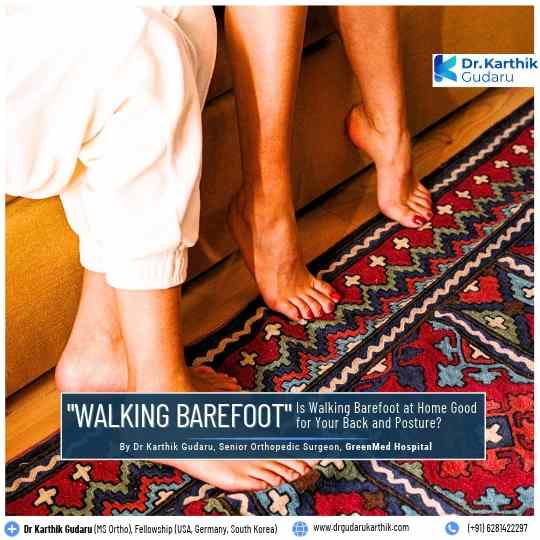
What Are the Benefits of Walking Barefoot at Home?
For individuals who tolerate it comfortably, walking barefoot for short periods may offer several potential benefits:
- Foot muscle engagement: Allows smaller muscles to work without the support structure of conventional shoes.
- Improved balance: Provides sensory feedback from the surface beneath the feet.
- Better foot awareness: Helps individuals understand how their feet contact the ground.
- Natural toe movement: Allows the toes to spread without restrictive footwear.
These benefits vary between individuals. Barefoot walking should be introduced gradually, particularly if someone has spent most of their life wearing supportive footwear.
How Much Barefoot Walking Is Recommended?
There is no universally recommended duration for barefoot walking at home. The appropriate amount depends on comfort, foot health and individual physical needs. An orthopaedic expert may suggest starting with a few minutes on a clean, safe surface and gradually increasing the duration if there is no discomfort.
People should avoid forcing themselves to walk barefoot simply because it is considered healthier. If hard flooring causes heel pain, arch discomfort or fatigue, cushioned indoor footwear may be more suitable. Regular walking, core-strengthening exercises, hip mobility work and appropriate footwear are often more useful components of an overall approach to musculoskeletal health.
When Should You Consult an Orthopaedic Expert?
Occasional discomfort after changing walking habits may not indicate a serious condition. However, persistent or recurring symptoms should not be ignored.
Consult an orthopaedic specialist if you experience:
- Lower-back pain that continues or repeatedly returns.
- Pain extending from the back into the legs.
- Persistent heel, arch or ankle discomfort.
- Difficulty maintaining balance while walking.
- Changes in walking pattern because of pain.
New leg weakness, significant numbness or bladder or bowel control problems associated with back pain require urgent medical assessment. An orthopaedic evaluation can help determine whether the problem originates in the feet, ankles, knees, hips or spine. The treatment approach should address the underlying cause rather than relying on barefoot walking alone.

What Is the Orthopaedic Expert Dr Karthik Gudaru’s Advice?
Walking barefoot at home is neither inherently good nor bad for your back. It may help some people develop foot awareness and balance, but it cannot independently correct posture or eliminate back pain.
The right approach is to understand your body’s requirements. If you have healthy feet and experience no discomfort, short periods of barefoot walking may be perfectly reasonable. If you have an existing foot condition, recurring pain or difficulty walking comfortably, supportive footwear and professional assessment may be more appropriate.