

Orthopaedic Doctor’s Answer Summary
- New recreational sports can place unexpected demands on muscles, tendons and joints.
- Knee, ankle, shoulder, wrist and elbow injuries can occur through falls, repetitive movements and sudden changes in direction.
- Proper conditioning, suitable footwear and early medical assessment can help reduce injury risks.
This Article is Medically Reviewed by Dr Karthik Gudaru, MS Orthopaedics, Fellowship in Computer-Assisted Navigation and Joint Replacement Surgery (Germany), HOD, Orthopaedic Department, GreenMed Hospitals, Hyderabad and Senior Paediatric Orthopaedic Surgeon, Sri Maruthi Hospitals, Tirupati
Pickleball & Court Sports Injuries: Orthopaedic Treatments & Prevention Tips in Hyderabad
Recreational sports are becoming an increasingly popular way to stay active, socialise and maintain physical fitness. From pickleball and padel to recreational badminton and indoor climbing, people are exploring activities that combine exercise with entertainment. However, as participation grows, orthopaedic specialists are also seeing the physical consequences of unfamiliar movements, sudden changes in direction and inadequate preparation.
Pickleball, in particular, has attracted attention because it is relatively easy to learn and can be played by people across different age groups. Although it may appear less physically demanding than some traditional sports, the game involves quick footwork, repeated lunges, sudden stops and frequent arm movements. These demands can place considerable stress on joints, muscles and tendons. Shares Dr Karthik Gudaru, Senior Orthopaedic Surgeon and specialist joint surgeon in Hyderabad.
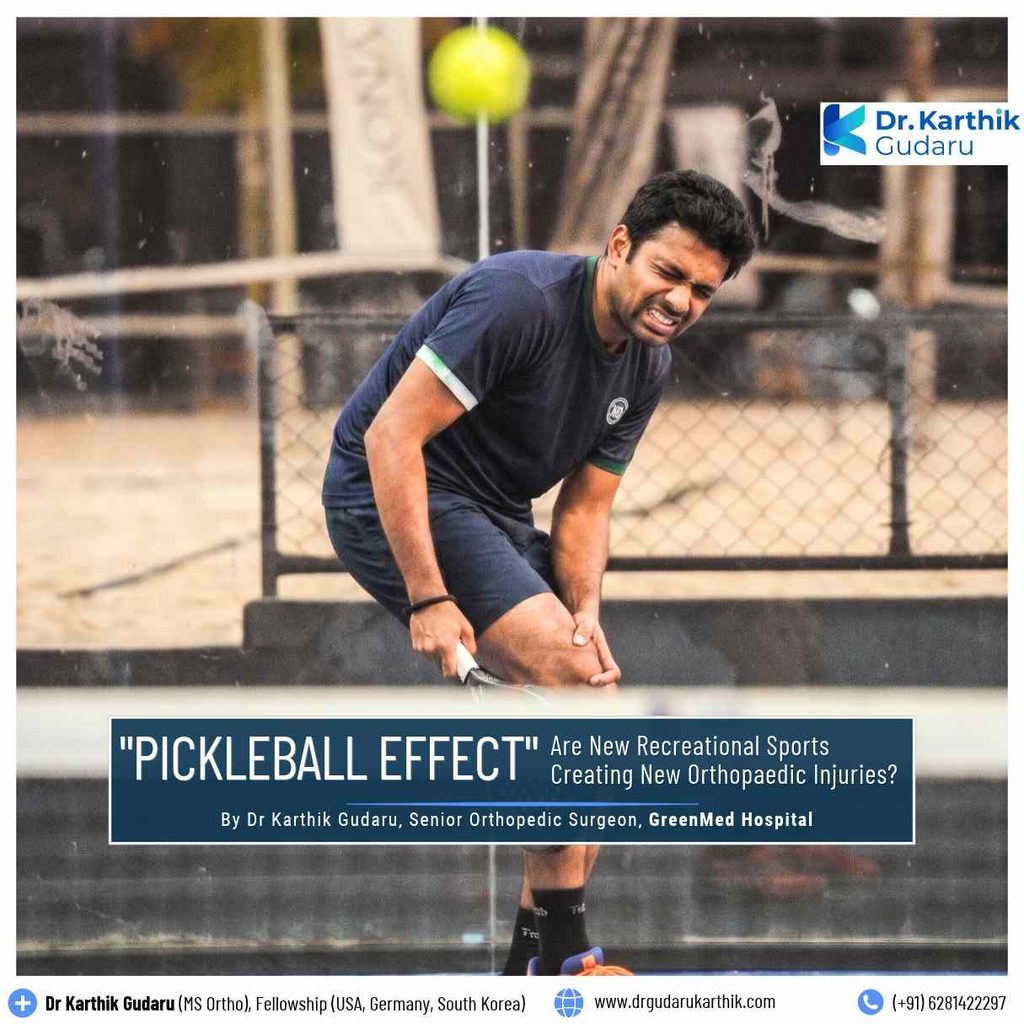
Can Recreational Sports Put Unexpected Stress on Your Joints?
The answer is yes. A sport does not have to involve heavy physical contact or intense competition to cause an injury. Even recreational activities can challenge the body’s strength, flexibility, balance and coordination.
Many people return to physical activity after years of limited exercise. Others begin playing regularly without gradually building the strength and endurance required for the sport. When the body is not adequately prepared, repetitive movements and sudden exertion can increase the likelihood of musculoskeletal injuries.
A review published highlighted the growing importance of understanding pickleball-related injuries and their prevention. Subsequent research has identified injuries involving the knees, shoulders, ankles, wrists and other areas of the body.
Which Orthopaedic Injuries Are Becoming More Common?
Different recreational sports place different demands on the body. However, several injury patterns are particularly relevant to activities involving quick movements, repetitive swings and sudden changes in direction.
1. Knee Injuries
Pickleball and similar court sports require players to bend, pivot, lunge and change direction frequently. These movements can place stress on the knee joint, particularly when performed without adequate muscular support. Players may experience knee pain, ligament sprains, meniscus injuries or aggravation of existing osteoarthritis. People with reduced quadriceps strength or previous knee problems may find these movements particularly challenging.
2. Ankle Sprains and Achilles Tendon Injuries
Sudden lateral movements, quick stops and changes in direction can cause the ankle to twist unexpectedly. This may result in ligament sprains, swelling and difficulty bearing weight. The Achilles tendon, which connects the calf muscles to the heel bone, is also exposed to repeated loading during acceleration and sudden push-offs. Excessive strain can cause tendon irritation or, in severe cases, a rupture.
3. Shoulder and Rotator Cuff Injuries
Repeated paddle swings, overhead movements and forceful shots can place stress on the shoulder. Without sufficient strength and mobility, players may develop shoulder irritation, rotator cuff injuries or tendon-related pain. These problems can affect everyday activities such as lifting objects, reaching overhead or getting dressed.
4. Elbow and Wrist Problems
Repetitive gripping and swinging movements may contribute to tendon irritation around the elbow, commonly associated with tennis elbow. Wrist discomfort can also develop through repeated loading or an awkward fall. In older players, falling onto an outstretched hand may result in a wrist fracture, making balance and fall prevention particularly important.
Why Are Beginners and Older Adults More Vulnerable?
Injury risk depends on several factors, including age, physical conditioning, previous injuries, playing frequency and movement technique. Older adults may have reduced muscle strength, joint flexibility and balance, while existing conditions such as arthritis can affect their ability to tolerate sudden physical demands. Bone fragility can also make falls more consequential.
Beginners face a different challenge. They may underestimate the physical demands of a new sport, play for extended periods or repeat movements before their muscles and tendons have adapted. Increasing playing frequency too quickly can also lead to overuse injuries, even among otherwise active individuals.
How Can Players Reduce the Risk of Orthopaedic Injuries?
Enjoying recreational sports does not require avoiding physical activity. Instead, players should prepare their bodies for the movements involved. A few practical precautions can make a difference:
- Warm up properly: Begin with light activity and dynamic movements to prepare the muscles and joints.
- Build strength: Strengthen the quadriceps, hamstrings, calves, core and shoulder muscles.
- Improve balance: Include balance and coordination exercises to support stability during quick movements.
- Choose suitable footwear: Use sport-appropriate shoes that provide adequate grip, cushioning and lateral support.
- Increase activity gradually: Avoid suddenly increasing playing time, intensity or frequency.
- Respect pain: Do not continue playing through persistent or worsening discomfort.
Players should also pay attention to court conditions, hydration and adequate recovery between sessions.
When Should You Consult an Orthopaedic Specialist?
Mild muscle soreness after unfamiliar exercise may settle with rest. However, persistent joint pain, recurring swelling, instability, restricted movement or difficulty bearing weight should not be ignored. Sudden severe pain, a visible deformity, an inability to walk after an injury or a suspected tendon rupture requires prompt medical assessment.
An orthopaedic specialist can evaluate the affected joint, identify the underlying problem and recommend an appropriate treatment plan. Depending on the injury, management may involve activity modification, medication, physiotherapy or, in selected cases, surgery.
Treatment Matrix
| Injury | Early Symptoms | Conservative Care | Advanced Orthopaedic Option | Typical Recovery Window |
|---|---|---|---|---|
| Knee Meniscus Tear & MCL Sprain | Joint-line tenderness, swelling after pivoting, clicking or catching | PEACE & LOVE protocol, hinged knee sleeve, quad & VMO strengthening | Ultrasound-guided PRP for degenerative tears; keyhole arthroscopic repair | 3–6 weeks (sprain); 6–12 weeks (arthroscopy) |
| Achilles Tendonitis & Ankle Sprain | Morning heel stiffness, pain on push-off, outer ankle instability | Heel-lift insert, eccentric calf drops (Alfredson), balance-board rehab | Shockwave therapy or PRP for chronic tendinopathy; tendon repair if ruptured | 4–8 weeks (tendonitis); 4–6 months (rupture) |
| Rotator Cuff Tendonitis | Pain reaching overhead or sleeping on shoulder, weak smash/serve | Activity load rest, scapular stabilization, band external rotations | Targeted subacromial injection / PRP; arthroscopic cuff repair for full tears | 4–8 weeks (rehab); 3–4 months (repair) |
| Pickleball / Tennis Elbow | Outer elbow ache gripping paddle or lifting a kettle or laptop bag | Counterforce forearm strap, grip-size check, eccentric wrist curls | Autologous PRP injection for refractory tendon micro-tears (>12 weeks) | 4–10 weeks with load modification |
Orthopaedic Surgeon’s Perspective
“Recreational sports are excellent for maintaining an active lifestyle, but the body needs time to adapt to new physical demands. Building strength, improving balance and recognising early signs of injury can help people remain active without unnecessarily compromising their joint health.” Says Dr Karthik Gudaru who is an experienced orthopaedic surgeon in Hyderabad.
The growing popularity of pickleball and other recreational sports highlights an important point: physical activity should be enjoyable, but preparation matters. Whether someone is returning to exercise or discovering a new sport, understanding the body’s limitations can help prevent avoidable injuries and support long-term mobility.