

Orthopaedic Surgeon’s Direct Answer Summary
- Repeated chopping, stirring, whisking, and lifting can place strain on the tendons and muscles around the elbow.
- Repetitive gripping and wrist movements may contribute to conditions such as tennis elbow and golfer’s elbow.
- Improving kitchen techniques, taking breaks, and strengthening the forearm muscles can help reduce the risk of elbow pain.
This Article is Medically Reviewed by Dr Karthik Gudaru, MS Orthopaedics, Fellowship in Computer-Assisted Navigation and Joint Replacement Surgery (Germany), HOD, Orthopaedic Department, GreenMed Hospitals, Hyderabad and Senior Paediatric Orthopaedic Surgeon, Sri Maruthi Hospitals, Tirupati
Cooking may seem like a low-impact activity, but preparing meals for hours can put considerable stress on the arms. From chopping vegetables and kneading dough to stirring heavy pots and lifting cookware, everyday kitchen tasks involve repeated movements of the wrists, hands, and elbows.
Over time, these movements can irritate the tendons around the elbow, particularly when performed with excessive force or without adequate rest. This type of discomfort is sometimes informally called “chef’s elbow”, although it is not a formal medical diagnosis. The symptoms may resemble repetitive strain injuries such as tennis elbow or golfer’s elbow. Shares Dr Karthik Gudaru, Senior Orthopaedic Surgeon and specialist elbow Replacement Surgeon in Hyderabad.
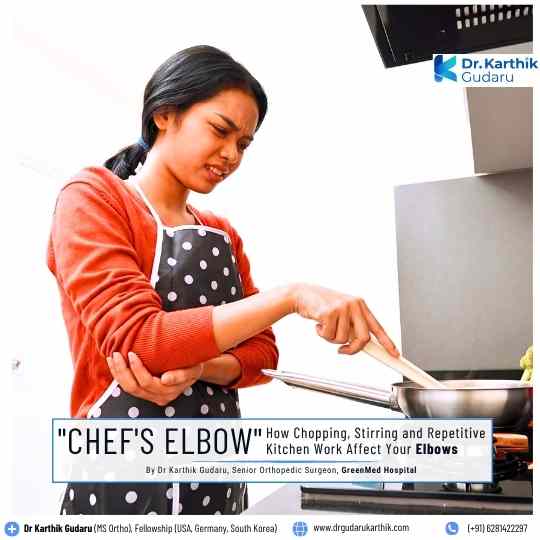
What Is Chef’s Elbow and Why Does Kitchen Work Cause It?
The elbow connects the upper arm to the forearm and helps coordinate movements involving the wrist and hand. Several muscles and tendons around this joint are responsible for gripping, lifting, rotating, and controlling objects.
When you repeatedly perform these movements, the tendons may experience more stress than they can comfortably tolerate. This is particularly common during prolonged food preparation, when the same movements are repeated without sufficient recovery time.
Activities such as chopping firm vegetables, whisking ingredients vigorously, kneading dough, and lifting heavy pans can increase the workload on the forearm muscles and their attachment points around the elbow.
“Healthy elbows depend on more than avoiding heavy lifting. Even everyday movements, when repeated without adequate recovery, can place significant stress on the tendons.” Says Dr Karthik Gudaru, MS Orthopaedics, MBBS, Fellowship in Knee and Hip Arthroplasty (USA), Fellowship in Computer Assisted Navigation Joint Replacement Surgery (Germany)
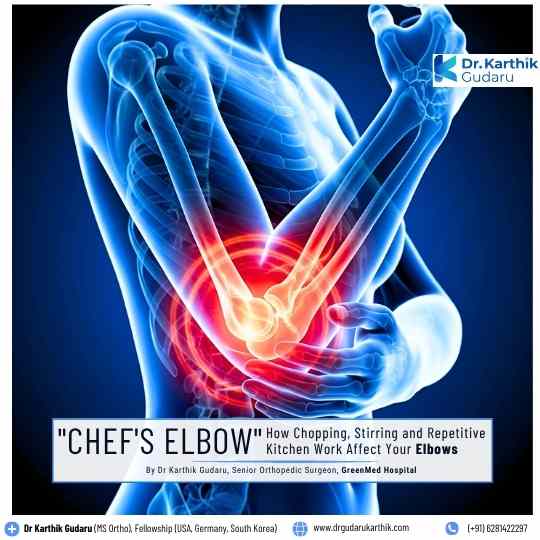
Which Kitchen Activities Put the Most Stress on Your Elbows?
Different kitchen tasks involve different combinations of gripping, twisting, lifting, and repetitive wrist movements.
| Kitchen Activity | Possible Effect on the Elbow |
| Chopping vegetables | Repeated gripping and wrist movements can strain forearm tendons. |
| Stirring thick mixtures | Sustained gripping and rotation can increase muscle fatigue. |
| Kneading dough | Repeated pushing and pulling can overload the forearm muscles. |
| Whisking ingredients | Rapid wrist movements may contribute to repetitive strain. |
| Lifting heavy pots | Increased gripping force and lifting load can stress the elbow. |
| Using heavy kitchen equipment | Repeated handling can contribute to muscle and tendon fatigue. |
The risk is generally higher when these tasks are performed for extended periods, particularly with poor technique or insufficient breaks.
Can Repetitive Chopping Cause Tennis Elbow?
Yes, repetitive chopping can contribute to tennis elbow, medically known as lateral epicondylitis or lateral elbow tendinopathy.
This condition affects the tendons attached to the outer side of the elbow. These tendons help control wrist extension and gripping movements. Repeated gripping, lifting, and wrist activity can overload them, leading to pain and tenderness.
A person experiencing tennis elbow may notice:
- Pain or tenderness on the outer side of the elbow.
- Discomfort while gripping a knife or lifting a pan.
- Pain when lifting objects with the palm facing down.
- Reduced grip strength.
- Discomfort that increases after prolonged kitchen work.
Although the condition is commonly associated with racket sports, it can also develop through repetitive occupational and household activities.

Can Stirring and Kneading Lead to Golfer’s Elbow?
Golfer’s elbow, also called medial epicondylitis or medial elbow tendinopathy, affects the tendons attached to the inner side of the elbow.
Repeated wrist bending, forceful gripping, and twisting movements can place stress on these tendons. Stirring thick mixtures, kneading dough, and repeatedly handling heavy cookware may aggravate the area.
Common symptoms include:
- Pain or tenderness on the inner side of the elbow.
- Discomfort while gripping or carrying kitchen utensils.
- Pain when bending the wrist against resistance.
- Weakness or stiffness in the forearm.
- Symptoms that become more noticeable after repetitive activity.
Tennis elbow and golfer’s elbow affect different sides of the joint, but both can interfere with everyday kitchen activities.
How Can You Tell If Your Elbow Pain Is More Than Ordinary Muscle Fatigue?
Temporary muscle tiredness after a long cooking session usually improves with rest. Tendon-related pain may persist, return during particular movements, or gradually become more noticeable.
Pay attention if you experience:
- Repeated pain in the same area around the elbow.
- Tenderness when pressing the inner or outer side of the joint.
- Difficulty gripping knives, lifting utensils, or carrying cookware.
- Pain that continues even after reducing kitchen activity.
- Weakness that interferes with routine tasks.
Persistent symptoms deserve medical assessment. Sudden severe pain, significant swelling, deformity, or an inability to move the arm normally should be assessed promptly.
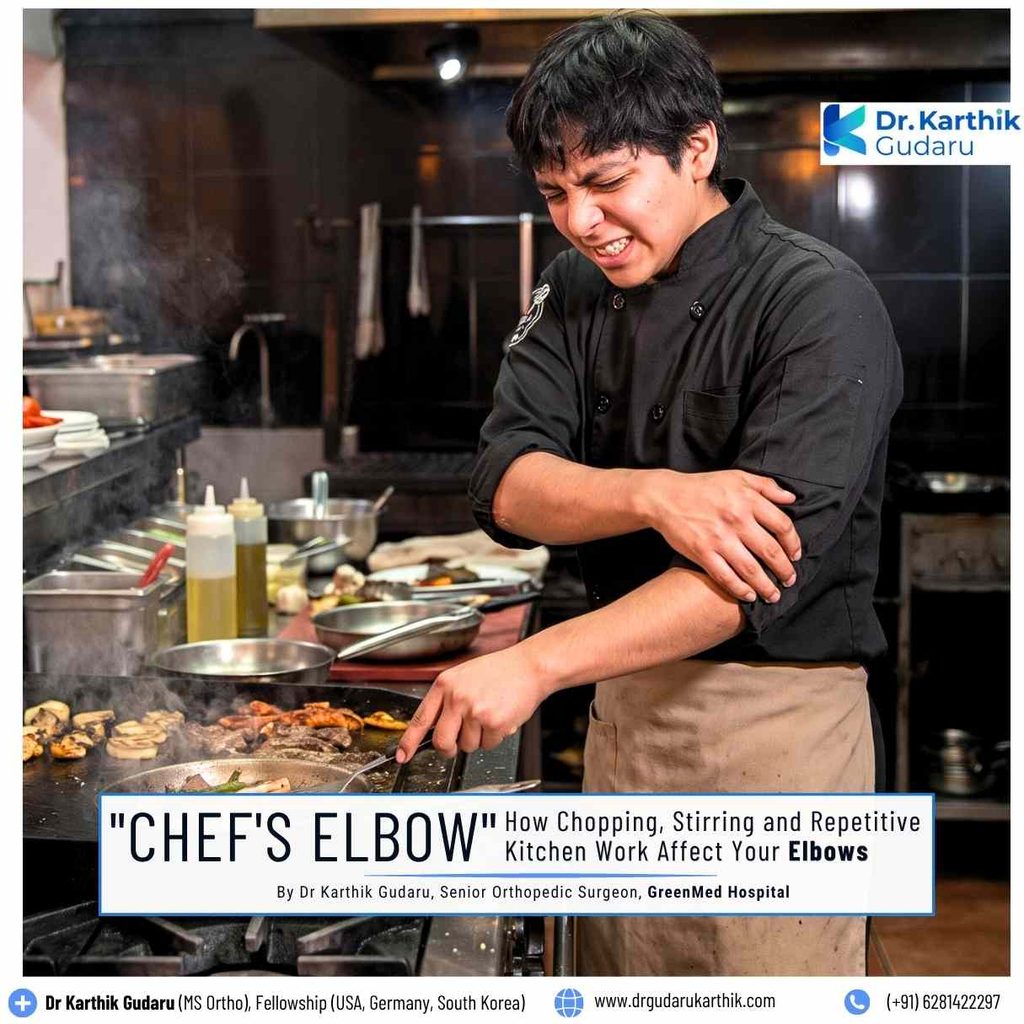
How Can You Protect Your Elbows While Working in the Kitchen?
Small changes in kitchen habits can reduce unnecessary strain on the elbow and forearm muscles.
1. Choose Ergonomic Kitchen Tools – Use knives with comfortable, appropriately sized handles. Lightweight utensils and equipment with a secure grip can reduce the force required during repetitive tasks.
2. Avoid Excessive Gripping – Holding a knife, whisk, or pan too tightly increases the workload on the forearm muscles. Use a relaxed but secure grip whenever possible.
3. Alternate Tasks – Instead of chopping, stirring, and kneading continuously, alternate between activities that use different muscle groups. This gives repeatedly used muscles an opportunity to recover.
4. Take Short Breaks – Brief breaks during prolonged food preparation can help reduce accumulated muscle fatigue. Avoid continuing through increasing pain.
5. Maintain a Comfortable Working Position – Keep frequently used ingredients and utensils within easy reach. Avoid repeatedly lifting heavy cookware from awkward positions or working with the wrists held in uncomfortable angles.
6. Build Forearm Strength Gradually – Appropriate strengthening exercises for the wrist and forearm can improve muscular capacity. However, exercises should be selected according to the individual’s symptoms and physical condition, preferably with guidance from a physiotherapist when pain is present.
What Treatment Helps When Kitchen Work Causes Elbow Pain?
Treatment depends on the underlying cause and severity of the symptoms. A doctor may examine the elbow, assess grip strength, and evaluate movements that reproduce the pain. Imaging is not always necessary but may be recommended when the diagnosis is unclear or another condition is suspected. Management may include:
- Activity modification: Temporarily reducing or adjusting movements that aggravate the elbow.
- Physiotherapy: Guided stretching and progressive strengthening exercises.
- Pain management: Suitable medication or other measures based on individual medical advice.
- Supportive equipment: A counterforce brace or other support may help selected patients.
- Further treatment: Persistent cases may require specialist assessment and a more individualised treatment plan.
Most cases of tennis elbow and golfer’s elbow can initially be managed without surgery. Recovery varies, and returning to repetitive activities too quickly may prolong symptoms.
Don’t Let Everyday Cooking Become a Source of Elbow Pain
Chopping, stirring, kneading, and lifting may appear harmless, but repeating these movements for hours can place considerable demands on the elbow tendons. The discomfort associated with “chef’s elbow” should not automatically be dismissed as ordinary tiredness, particularly when it keeps returning or affects grip strength.
Recognising early symptoms, adjusting kitchen techniques, and allowing adequate recovery can help protect elbow function. If pain persists despite reducing repetitive activity, a medical evaluation can identify the cause and guide appropriate treatment.