
This Article is Medically Reviewed by Dr Karthik Gudaru, MS Orthopaedics, Fellowship in Computer-Assisted Navigation and Joint Replacement Surgery (Germany), HOD Orthopaedic Department, GreenMed Hospitals, Hyderabad.
Key Summary
- The Age Myth Defied: Age alone is not a disqualifying constraint for primary knee replacement surgery; overall systemic health and functional joint limitations take priority.
- Primary Definition: The procedure serves as the initial surgical intervention to clean and replace a degenerated or trauma-worn knee joint with state-of-the-art implants.
- Younger Patients: Modern SOTA implant materials and advanced computer-assisted surgical techniques mean younger patients no longer need to wait out chronic pain for arbitrary age boundaries.
- Strategic Planning: Patient age shifts the surgical focus rather than the eligibility—younger patients receive options optimized for active durability, while older demographics are planned for immediate mobility and independent living restoration.
When considering primary knee replacement surgery, patients often worry if they are “too young” or “too old.” In this expert guide, Dr. Karthik Gudaru clarifies why biological age matters far less than joint degradation severity, mobility limitations, and overall systemic health when planning advanced orthopedic care in Hyderabad and Tirupati.
Knee pain can significantly affect a person’s quality of life, making everyday activities such as walking, climbing stairs, and even standing uncomfortable. For individuals suffering from severe knee arthritis or chronic joint damage, primary knee replacement surgery often becomes a viable solution. However, one question many patients ask is whether age plays a role in deciding if they are suitable candidates for this procedure. While age is an important consideration, it is not the only factor orthopaedic surgeons evaluate when recommending knee replacement surgery, says Dr Karthik Gudaru, Senior Orthopaedic Surgeon and a specialist in primary knee replacement in Hyderabad, Tirupati and in India.
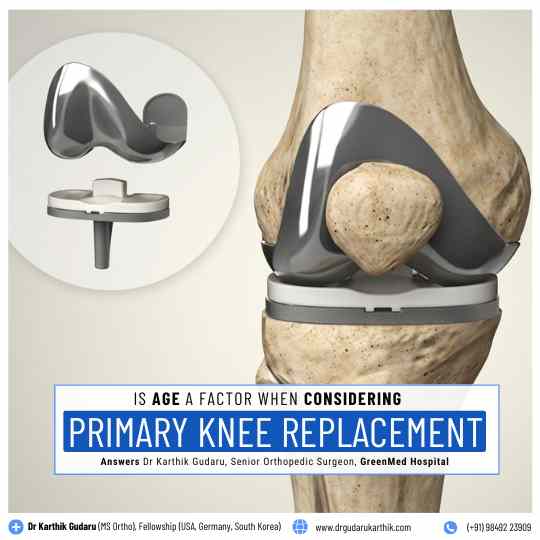
What Is Primary Knee Replacement?
Primary knee replacement is a surgical procedure performed to replace a damaged or worn-out knee joint with artificial components, commonly known as implants. It is called “primary” because it is the first knee replacement surgery performed on the joint. The procedure is typically recommended when the knee has been severely affected by osteoarthritis, rheumatoid arthritis, post-traumatic arthritis, or other degenerative conditions that cause chronic pain and restricted movement.
During the surgery, damaged cartilage and bone surfaces are removed and replaced with specially designed metal and plastic components that recreate the function of a healthy knee joint. The primary goal is to relieve pain, improve mobility, and help patients return to their daily activities with greater comfort.

Does Age Determine Whether You Need a Knee Replacement?
Many people assume that knee replacement surgery is only meant for elderly individuals. While it is true that the procedure is commonly performed in older adults, age alone does not determine eligibility. Surgeons focus more on the severity of joint damage, the level of pain experienced by the patient, mobility limitations, and the impact on daily life.
Advancements in surgical techniques and implant technology have made knee replacement a successful option for both younger and older patients when conservative treatments fail to provide relief. The decision is ultimately based on overall health and the condition of the knee rather than a specific age limit.
“The right time for knee replacement is not defined by age, but by how much knee pain is limiting your ability to live an active and comfortable life.” – Dr Karthik Gudaru, Senior Orthopaedic Surgeon, Pediatric Orthopaedic Doctor and Joint Replacement Specialist Surgeon
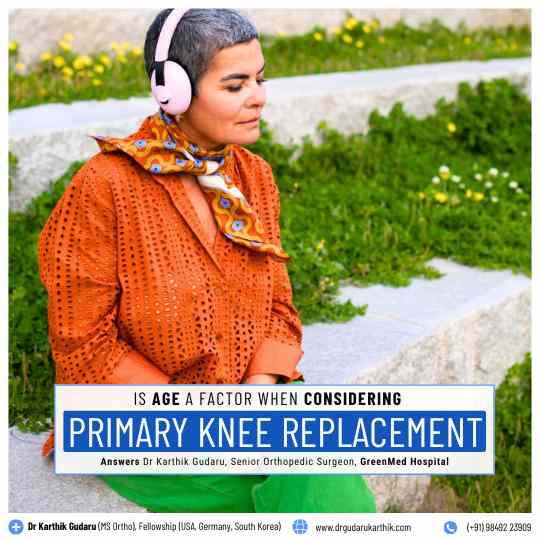
Why Younger Patients May Need Knee Replacement?
In the past, surgeons often delayed knee replacement in younger individuals due to concerns about implant longevity. Today, improved implant materials and surgical outcomes have changed this approach.
Some younger patients may develop severe knee arthritis due to sports injuries, trauma, obesity, inflammatory joint diseases, or genetic factors. When pain becomes persistent and significantly affects daily activities despite medication, physiotherapy, injections, or lifestyle modifications, knee replacement may be recommended regardless of age.
The goal is to restore function, reduce pain, and improve quality of life rather than making patients wait solely because they are younger.
How Age Influences Surgical Planning?
Although age is not the deciding factor, it does influence surgical planning and long-term expectations. Younger patients tend to be more active, placing greater demands on the artificial joint. Surgeons carefully discuss activity levels, implant durability, and the possibility of future revision surgery.
For older adults, the focus often shifts toward improving mobility, maintaining independence, and relieving chronic pain. Overall health conditions, bone quality, and recovery potential are also assessed before proceeding with surgery.
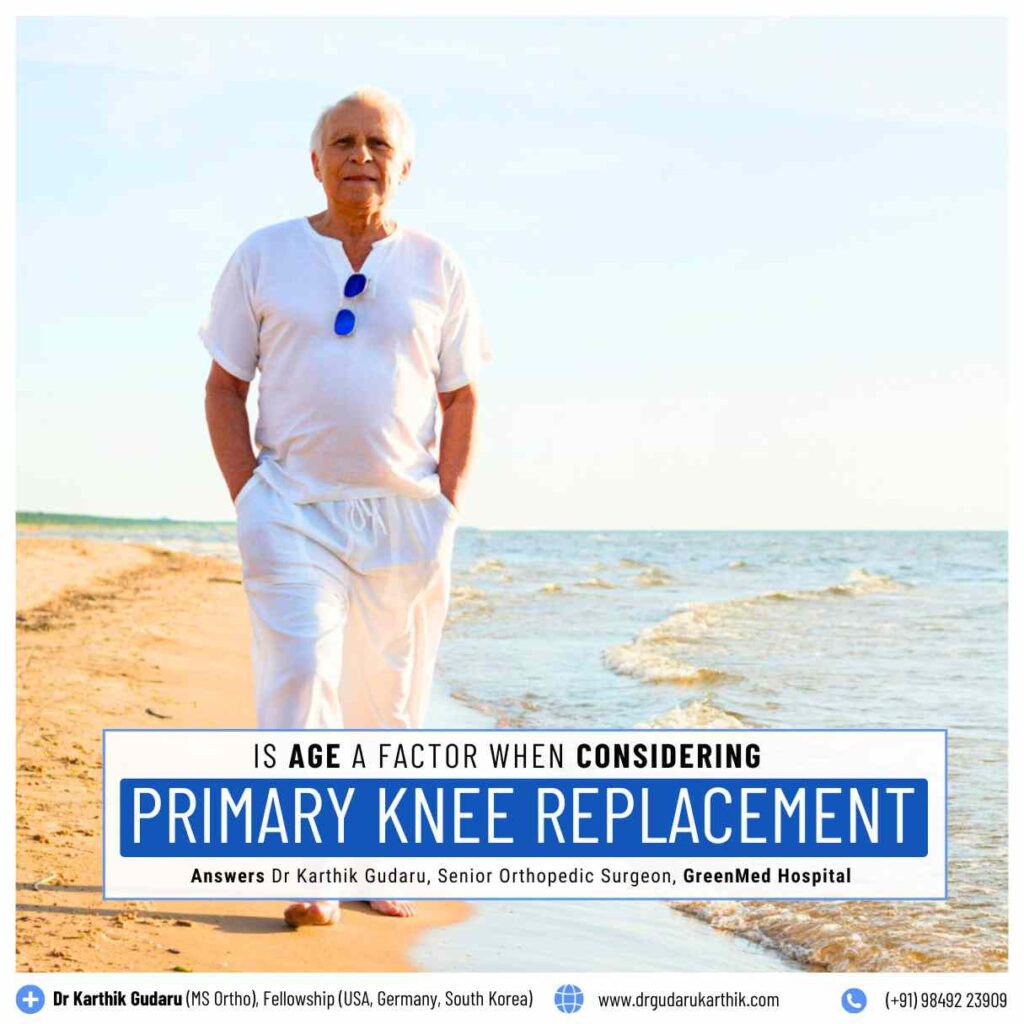
Are Older Patients Too Old for Knee Replacement?
There is no fixed upper age limit for primary knee replacement. Many patients in their seventies, eighties, and even beyond have successfully undergone the procedure and experienced significant improvements in mobility and comfort.
Instead of chronological age, surgeons evaluate biological age, which includes factors such as heart health, lung function, nutritional status, and the ability to participate in rehabilitation after surgery. Healthy older adults can often achieve excellent outcomes following knee replacement.
What Factors Matter More Than Age?
The severity of knee pain and disability often carries more weight than age when considering surgery. Persistent pain that interferes with sleep, difficulty performing routine activities, reduced mobility, and advanced joint damage visible on imaging studies are stronger indicators that knee replacement may be necessary.
Doctors also assess overall health, body weight, bone quality, existing medical conditions, and the patient’s expectations from surgery. A comprehensive evaluation helps determine whether the benefits of surgery outweigh the risks.
What Are the Benefits of Timely Knee Replacement?
Delaying knee replacement for too long can lead to worsening joint deformity, muscle weakness, reduced mobility, and a decline in overall physical health. Timely intervention can help restore movement, reduce chronic pain, improve independence, and allow patients to return to many activities they enjoy.
By addressing severe knee damage at the right time, patients often experience a significant improvement in their quality of life and overall well-being.
When Should You Not Ignore Your Knee Health?
Persistent knee pain should never be considered a normal part of aging. If you experience ongoing discomfort, stiffness, swelling, difficulty walking, pain while climbing stairs, or limitations in daily activities that continue despite rest and treatment, it is important to seek medical evaluation.
Ignoring these symptoms may allow joint damage to progress, making treatment more challenging in the future. Early assessment by an orthopedic specialist can help identify the underlying cause and determine the most effective treatment plan before the condition worsens.
Where Can You Find an Experienced Primary Knee Replacement Surgeon in Hyderabad?
Selecting an experienced orthopaedic surgeon is an important step when considering primary knee replacement. Patients should look for a specialist with extensive expertise in joint replacement procedures, advanced surgical training, and a patient-centred approach to care. In Hyderabad, Dr Karthik Gudaru is recognised for his experience in primary knee replacement and advanced joint replacement techniques. His focus on accurate diagnosis, personalised treatment planning, and modern surgical approaches has helped many patients regain mobility and improve their quality of life.
Age is certainly a consideration when planning primary knee replacement surgery, but it is not the deciding factor. The severity of symptoms, extent of joint damage, overall health, and impact on daily life are far more important in determining whether surgery is appropriate. Whether a patient is younger or older, the primary goal remains the same—relieving pain, restoring mobility, and improving quality of life through the most suitable treatment approach.

Dr Karthik Gudaru, MS Orthopaedics, MBBS, Fellowship in Knee and Hip Arthroplasty (USA), Fellowship in Computer-Assisted Navigation Joint Replacement Surgery (Germany), is one of Hyderabad’s leading orthopaedic surgeons with an outstanding reputation for precision, innovation, and excellence in joint replacement and orthopaedic care. Widely recognised as the best knee replacement specialist in Hyderabad, he brings a deep commitment to patient-centred care and cutting-edge surgical techniques.
Dr Karthik Gudaru is currently the Senior Orthopaedic and Joint Replacement Specialist, Department of Orthopaedics at GreenMed Hospital, Srinagar Colony, Hyderabad, Assistant Professor and Consultant Orthopaedic at BIRRD Hospital (Balaji Institute of Surgery, Research and Rehabilitation for the Disabled), Tirupati and Joint Replacement & Pediatric Orthopedic Specialist at Sri Maruthi Hospitals, Tirupati.
Dr Karthik Gudaru’s Treatment Specialisation are –
Knee Joint Treatments (Including Total Knee Replacement Surgery).
Shoulder Joint Treatments (Including Total Shoulder Replacement Surgery).
Hip Joint Treatments (Including Total Hip Replacement Surgery).
Elbow Joint Treatments (Including Total Elbow Arthroscopy).
Computer-Assisted Knee Replacement Surgery.
Stem Cell Therapy for key orthopaedic treatments.
Pediatric Orthopedics Surgeon for Cerebral Palsy, Congenital Anomalies, Poliomyelitis & Metabolic Bone Diseases